
Introduction
Imagine a continent hidden beneath the waves, its existence only recently discovered by scientists. A landmass so massive that it could alter our understanding of the Earth’s geography and history. Welcome to Zealandia, the eighth continent, waiting to be explored.
For centuries, humans have been fascinated by the mysteries of the ocean. From ancient myths about lost cities to modern-day discoveries of underwater landscapes, the allure of the unknown has captivated us all. Now, a new mystery is being unraveled, one that promises to challenge our understanding of the Earth’s geography and history. Meet Zealandia, the hidden continent, hiding beneath the Pacific Ocean.
What is Zealandia?
Zealandia is not just a myth; it’s a real continent, submerged beneath the Pacific Ocean for over 23 million years. The name “Zealandia” was coined by scientists in 2017 after a groundbreaking study revealed its presence. This new continent is distinct from other landmasses and has its own unique characteristics.
The discovery of Zealandia has sent shockwaves through the scientific community, with many experts hailing it as one of the most significant geological finds of the century. The fact that Zealandia was hidden beneath the waves for millions of years raises more questions than answers about our planet’s history and evolution.
The Submerged Continent
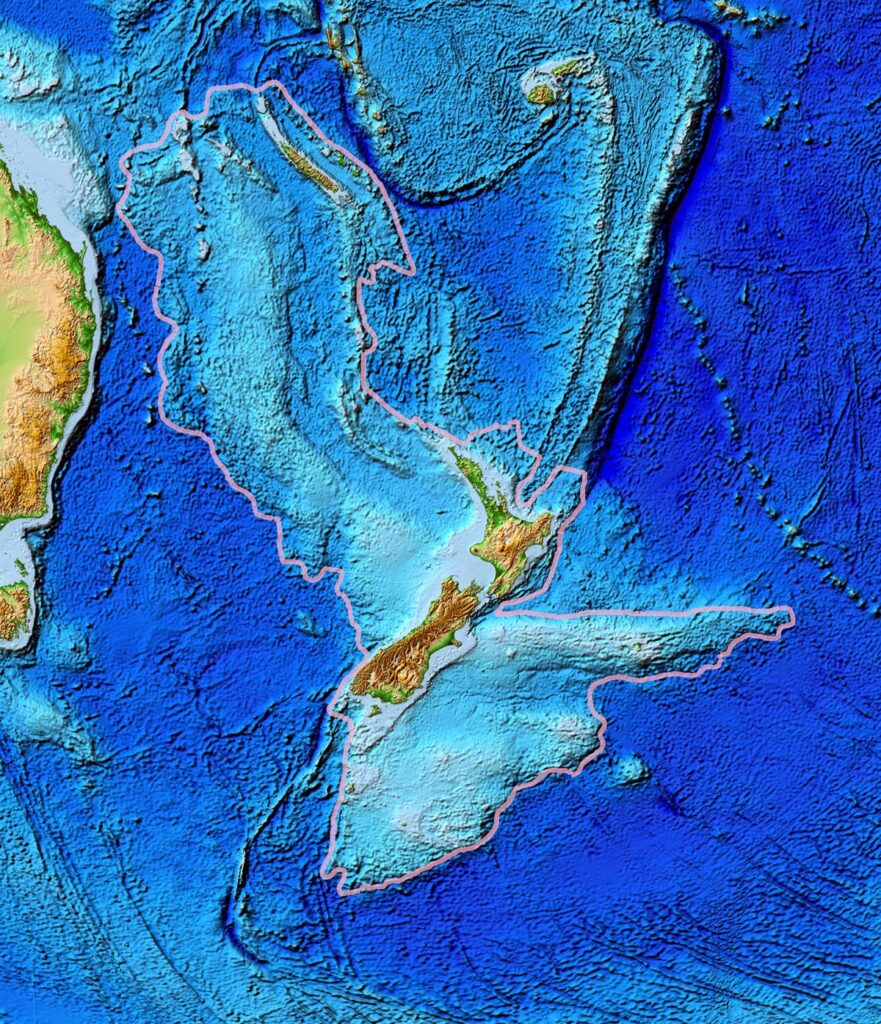
While it may seem like an impossible task to visualize, Zealandia’s existence is supported by satellite maps and gravitational terrestrial field studies. The continent is located in the southwestern Pacific Ocean, stretching from north-east of Australia to south of New Zealand islands. Its structure is distinct from the surrounding landmasses, with a uniform continental crust that separates it from Antarctica and Australia.
The discovery of Zealandia’s submerged terrain has sparked intense interest among geologists, oceanographers, and marine biologists. The sheer scale of this hidden continent is staggering, covering an area of approximately 5 million square kilometers. To put that into perspective, Zealandia is roughly the size of Europe or North America.
The History of Zealandia
Zealandia’s history dates back to the break-up of the supercontinent Gondwana, approximately 85-130 million years ago. As Zealandia separated from its parent continent, the Earth’s crust thinned, resulting in a massive landmass that eventually sank beneath the ocean. This event also led to the formation of unique endemic fauna and flora in New Zealand.
The story of Zealandia’s submersion is closely tied to the geological history of the Pacific region. The supercontinent Gondwana began to break apart around 180 million years ago, with Zealandia eventually drifting away from its parent continent. As it separated, the ocean currents and tectonic forces worked together to shape the landscape of Zealandia.
The Surface Remnants
Only about 6% of Zealandia’s surface remains above water, comprising islands such as New Zealand, New Caledonia, Campbell Plateau, Chatham Rise, Lord Howe Rise, Challenger Plateau, and Norfolk Ridge. These islands are the only clues to the existence of this hidden continent.
The islands that dot the surface of Zealandia offer a glimpse into the geological past. They are volcanic in origin, with many featuring active or dormant volcanoes. The unique geology of these islands provides insights into the tectonic processes that shaped Zealandia over millions of years.
Exploring Zealandia
While there are no direct tours available to explore Zealandia, exploring the continent through satellite images and stories can be an immersive experience. For those who enjoy science fiction, consider reading “My winter in Zeeroland,” a novel that might have taken inspiration from Zealandia. Alternatively, imagine the landmass rising above the waves on a glowing globe.
Satellite imaging has revolutionized our ability to explore and study Zealandia. High-resolution images of the submerged terrain reveal intricate patterns of fault lines, ridges, and valleys. These images also provide clues about the geological history of the continent, offering insights into the processes that shaped Zealandia over millions of years.
The Science Behind Zealandia
Zealandia’s discovery has sparked a flurry of scientific research, with experts from around the world contributing to our understanding of this hidden continent. The study of Zealandia is an interdisciplinary effort, involving geology, oceanography, marine biology, and physics.
One of the most significant challenges facing scientists is mapping the submerged terrain of Zealandia. Using advanced technologies such as sonar, seismic imaging, and gravitational field measurements, researchers are piecing together a detailed picture of this hidden continent.
The Potential Implications
Zealandia’s existence has far-reaching implications for our understanding of the Earth’s history, geography, and ecosystems. This hidden continent offers a unique window into the past, providing insights into the geological processes that shaped our planet over millions of years.
The discovery of Zealandia also raises questions about the potential for other submerged landmasses to exist around the world. Could there be other continents waiting to be discovered beneath the waves? The answer is unclear, but one thing is certain – Zealandia’s existence has opened up new avenues for scientific research and exploration.
Conclusion
Zealandia’s existence challenges our understanding of the Earth’s geography and history. This hidden continent offers a glimpse into the complexities of the planet’s past and present. As we continue to explore and learn more about Zealandia, we are reminded of the awe-inspiring mysteries that lie beneath our feet.
The discovery of Zealandia is a testament to human curiosity and ingenuity. It reminds us that there is still so much to be discovered about our planet, and that even in the most unexpected places, lies hidden secrets waiting to be uncovered.
As we look to the future, one thing is clear – Zealandia’s existence has set off a chain reaction of scientific inquiry, sparking new research and exploration efforts around the world. The story of this hidden continent is far from over; in fact, it has only just begun.


