
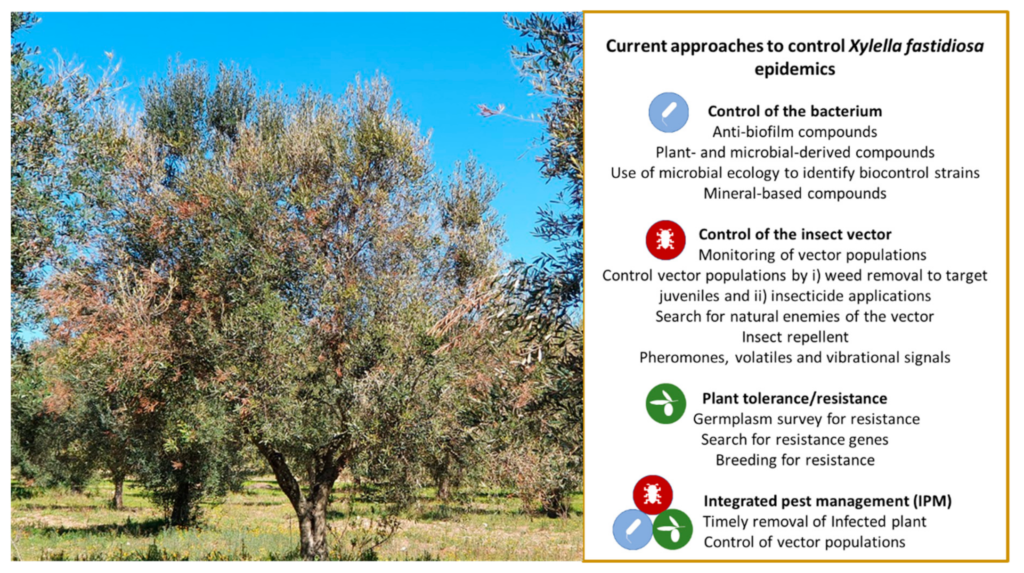
Xylella fastidiosa, also known as the olive quick decline syndrome (QDS), is a bacterial disease that affects olive trees. This bacterium is responsible for rapid dehydration of olives, leading to a complex of symptoms known as CoDiRO.
What is Xylella fastidiosa?
Xylella fastidiosa is a gram-negative bacteria that causes CoDiRO in olive trees. The disease has been identified on both sides of the Mediterranean Sea and can also be found in other parts of the world, including Australia, New Zealand, and South Africa.
The symptoms caused by Xylella fastidiosa are often accompanied by those of other diseases, making it challenging to diagnose. These symptoms include:
- Leaf curl
- Yellowing or browning leaves
- Premature defoliation
- Reduced yields
In severe cases, the disease can lead to rapid tree decline and even death.
The Rise of CoDiRO in Italy
CoDiRO was first observed in Italy between 2008 and 2010, causing significant damage to olive groves. However, it wasn’t until recent years that the full extent of its impact became clear. This disease has been particularly devastating in Puglia, where hundreds of olive trees have died.
How Does Xylella fastidiosa Work?
Xylella fastidiosa works by blocking xylem vessels (the plant’s circulatory system) and preventing water uptake, ultimately leading to tree death. The bacterium is currently widespread in Italy, with a focus on Puglia.
The bacteria are capable of surviving for long periods without food or water. They can also infect a wide range of hosts, including other plants, insects, and even vertebrates.
The Spread of Xylella fastidiosa: A Growing Concern
As a gram-negative bacteria, Xylella fastidiosa can spread through various means, including:
- Trade of infected olive trees
- Agricultural activities (e.g., pruning, grafting)
- Water distribution systems
While its impact has been limited to recent years, the potential for widespread infection is high if left unchecked.
Puglia: Ground Zero for Xylella fastidiosa
In Puglia, CoDiRO has caused significant damage to olive groves, particularly those older than 30 years. Younger trees have shown less severe symptoms. The 2013-2014 winter weather, which was unusually mild, exacerbated the spread of the disease.
Monitoring Xylella fastidiosa: The Fight Against CoDiRO
The Abruzzo region has launched a monitoring program to identify potential vectors (insect species) that could transmit the disease from Xylella fastidiosa. Research has identified several insect species as possible vectors, including:
- Aphrophoridae (Philaenus, Neophilaenus, and Aphrophora)
- Cercopidae
- Cicadellidae (specifically Cicadella viridis)
The Role of Insects in Spreading CoDiRO
Insects that feed on the bacterium can act as vectors, transferring it to other plants. The main vector identified is Philaenus spumarius, also known as the “spittlebug.” This insect is responsible for spreading CoDiRO through its feeding activities.
Combating Xylella fastidiosa: A Multi-Faceted Approach
The Abruzzo regional office of the Department of Plant Protection is working with olive growers and other stakeholders to develop effective defense strategies. One approach involves reducing the population of the spittlebug, which has been shown to decrease in areas where pesticides are used.
Other measures being taken include:
- Genetic analysis of olive trees
- Development of resistant tree varieties
- Monitoring for other potential vectors
Prevention vs. Eradication: A Complex Decision
While there is no cure for Xylella fastidiosa, preventing its spread can slow its progress. Preventive measures include:
- Monitoring for insect vectors
- Implementing integrated pest management (IPM) strategies
- Developing resistant olive tree varieties
- Reducing the use of pesticides in affected areas
The Future of Olive Production: Challenges and Opportunities
Xylella fastidiosa poses a significant threat to the Italian olive industry, with economic losses already mounting. However, by understanding the disease’s spread and working together to develop effective prevention strategies, we can mitigate its impact.
Olive growers must be aware of the risks associated with Xylella fastidiosa and take proactive measures to protect their trees. This includes:
- Monitoring for insect vectors
- Implementing IPM strategies
- Developing resistant tree varieties
- Reporting any suspected cases of CoDiRO to local authorities
Frequently Asked Questions (FAQs)
- Q: What is Xylella fastidiosa, and how does it affect olive trees?
A:** Xylella fastidiosa is a gram-negative bacteria that causes rapid dehydration of olives, leading to CoDiRO. - Q: How did CoDiRO originate in Italy?
A:** CoDiRO first appeared in Italy between 2008 and 2010, with significant damage reported in Puglia. - Q: What is the role of insects in spreading Xylella fastidiosa?
A:** Insects that feed on the bacterium can act as vectors, transferring it to other plants. - Q: Can Xylella fastidiosa be eradicated?
A:** While there is no cure for Xylella fastidiosa, preventing its spread can slow its progress. - Q: What measures are being taken to combat CoDiRO?
A:** The Abruzzo regional office of the Department of Plant Protection is working with olive growers and other stakeholders to develop effective defense strategies. - Q: How can I prevent Xylella fastidiosa from affecting my olive grove?
A:** Monitoring for insect vectors, implementing IPM strategies, and developing resistant olive tree varieties are key preventive measures. - Q: What is the economic impact of Xylella fastidiosa on the Italian olive industry?
A:** Economic losses due to CoDiRO are significant, with hundreds of olive trees already affected. - Q: Can Xylella fastidiosa be controlled through pesticides alone?
A:** While pesticides can reduce spittlebug populations, they should not be relied upon as a sole means of control.
In conclusion, Xylella fastidiosa is a growing concern for the Italian olive industry. By understanding its spread and working together to develop effective prevention strategies, we can mitigate its impact on our agricultural sector.


