
(H1)
As the Environmental Protection Agency (EPA) would attest, the most efficient car in the world is an Italian gem – the Fiat 500E. However, its reign might be short-lived as a new hybrid model hits the market, promising to outdo even the efficiency of the Fiat 500E: the Volkswagen XL1. The automotive world has been abuzz with excitement over this revolutionary vehicle, which boasts an incredible 261 miles per gallon equivalent. In this article, we will delve into the features and technology that make the Volkswagen XL1 a standout in the hybrid car market.
(H2)
A New Standard in Efficiency
The Volkswagen XL1 is not just a remarkable achievement in engineering; it represents a new standard for efficiency in the automotive industry. With its lightweight construction materials, advanced aerodynamics, and innovative hybrid system, this car promises to revolutionize the way we think about fuel consumption. The XL1’s impressive efficiency has been tested and verified by various organizations, including the EPA, which is a testament to its exceptional performance.
One of the key factors contributing to the XL1’s remarkable efficiency is its lightweight construction materials. From the chassis to the engine, every component has been carefully selected and designed to minimize weight while maintaining strength and durability. This approach not only reduces fuel consumption but also enhances handling and braking capabilities.
(H3)
Designing for Efficiency
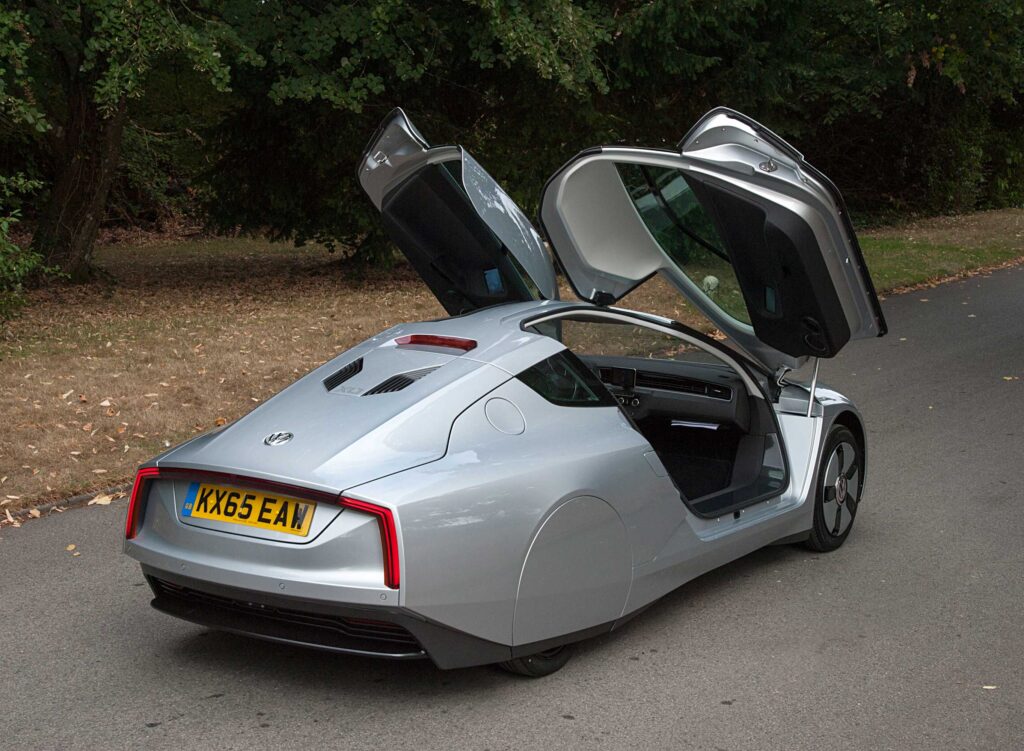
The Volkswagen XL1 presents itself with a sporty design, constructed within VW’s Osnabruck factory. The sole non-metallic component (excluding mechanical parts) is a lightweight carbon fiber monocoque. This innovative design allows the car to achieve exceptional aerodynamics and minimize weight, further contributing to its remarkable efficiency.
In addition to its striking appearance, the XL1’s design also prioritizes practicality and comfort. The interior features ergonomic seating, ample legroom, and a spacious cabin that provides an optimal driving experience. Whether cruising down the highway or navigating urban streets, the XL1 is designed to deliver a comfortable and enjoyable ride.
(H4)
A Revolutionary Hybrid System
The Volkswagen XL1 marks the first hybrid car that enables 100 kilometers of driving on just 0.9 liters of fuel, thanks to its remarkable efficiency in motor technology. The XL1’s hybrid system combines a turbocharged TDI common rail engine with an electric motor. The internal combustion engine is a 0.8-liter, twin-cylinder TDI producing 48 horsepower and 120 Nm of torque. The electric motor delivers 27 horsepower and 150 Nm of torque.
This revolutionary hybrid system allows the XL1 to seamlessly transition between electric and gasoline power, optimizing fuel consumption and reducing emissions. The result is a car that not only achieves exceptional efficiency but also provides an engaging driving experience, with a responsive acceleration and smooth ride.
(H2)
Designing for Efficiency
The Volkswagen XL1’s weight of just 795 kg further enhances its efficiency. Its low-rolling-resistance tires and aerodynamic design also contribute to this remarkable performance. This plug-in hybrid offers a unique driving experience, combining style with ergonomic seating and a spacious cabin.
In addition to its impressive specifications, the XL1 also features advanced safety technologies, including a comprehensive suite of airbags, anti-lock braking system (ABS), and electronic stability control (ESC). These advanced safety features provide an added layer of protection for drivers and passengers, ensuring a safe and enjoyable driving experience.
(H3)
Key Features
- Lightweight construction materials
- Advanced aerodynamics
- Plug-in hybrid system
- 0.9 L fuel consumption for 100 km
- 261 miles per gallon equivalent
By combining exceptional efficiency, advanced technology, and innovative design, the Volkswagen XL1 represents a new standard in the automotive industry. Its remarkable features make it an extraordinary vehicle that redefines driving experiences.
(H4)
Conclusion
The Volkswagen XL1 is not just a car; it’s a symbol of innovation and forward thinking. With its groundbreaking hybrid system, lightweight construction materials, and advanced aerodynamics, this vehicle promises to revolutionize the way we think about fuel consumption and driving experiences. Whether you’re looking for an environmentally friendly alternative or simply seeking a high-performance vehicle with exceptional efficiency, the XL1 is sure to impress.
As the automotive industry continues to evolve, it’s exciting to see companies like Volkswagen pushing the boundaries of what’s possible. The Volkswagen XL1 represents a new era in hybrid technology and sets a high standard for future vehicles. With its remarkable efficiency, advanced features, and sleek design, this car is sure to leave a lasting impact on the automotive market.
(FAQs)
Q: What makes the Volkswagen XL1 so efficient?
A: The XL1’s lightweight construction materials, advanced aerodynamics, and hybrid system contribute to its remarkable efficiency.
Q: Is the Volkswagen XL1 a conventional car or an electric vehicle?
A: The Volkswagen XL1 is a plug-in hybrid, combining an internal combustion engine with an electric motor.
Q: How does the Volkswagen XL1’s fuel consumption compare to other cars?
A: The XL1 achieves 261 miles per gallon equivalent, making it one of the most efficient cars on the market.
Q: Can I test drive a Volkswagen XL1?
A: While specific testing opportunities may be limited, the XL1 is available for purchase and offers a unique driving experience.
Q: What are some of the key materials used in the construction of the Volkswagen XL1?
A: The car features a lightweight carbon fiber monocoque, among other innovative materials.
Q: Is the Volkswagen XL1 suitable for long-distance driving?
A: Yes, its exceptional efficiency and hybrid system make it an excellent choice for extended road trips.
Q: Will the Volkswagen XL1 be produced in large quantities?
A: The production numbers have not been officially announced yet.


