
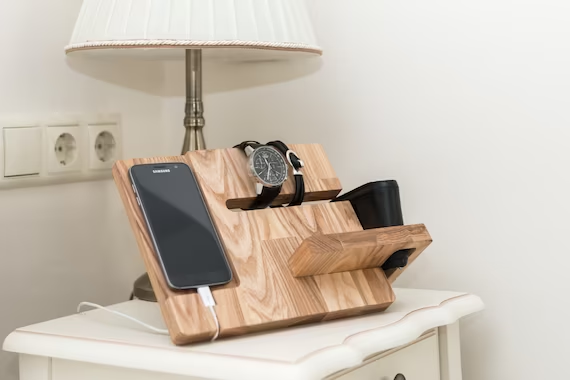
In a world where mass-produced technology often reigns supreme, there’s a growing demand for unique and artisanal products that add a touch of warmth and character to our daily lives. One such product is the wooden docking station, crafted by Joel, an Italian designer with a passion for woodworking.
The Art of Handcrafting
Joel’s journey as a woodworker began in his free time, experimenting with different woods and techniques to create one-of-a-kind pieces. His love for Manzanita wood, a common yet versatile tree, led him to develop a distinctive style that blends functionality with artistic expression.
Manzanita wood is a popular choice among woodworkers due to its unique characteristics, such as:
- Density: Manzanita wood is relatively dense, making it suitable for creating durable and long-lasting products.
- Grain pattern: The wood’s grain pattern features a mix of straight and curved lines, adding visual interest and depth to any piece.
Joel’s woodworking journey was not without its challenges. As an apprentice in the construction industry, he faced numerous obstacles, including:
- Limited resources: Working with limited materials and tools forced Joel to be creative and resourceful.
- Perfectionism: Joel’s attention to detail and commitment to quality led him to refine his skills through years of hands-on experience.
Unique Wooden Docking Stations
Joel’s wooden docking stations have gained popularity among iPhone and iPad users seeking an elegant and durable solution for charging their devices. Each station is carefully crafted from Manzanita wood, showcasing the natural curves and textures of the material.
The docking stations come in a range of designs, including:
- Compact models: Perfect for those with limited space, these compact models measure only a few centimeters.
- Large creations: For professionals or enthusiasts requiring extended functionality, Joel offers massive docking stations stretching up to six meters.
Meet Joel: The Master Craftsman
Joel’s woodworking journey began as an apprentice in the construction industry. He honed his skills through years of hands-on experience, eventually turning his passion into a full-fledged business.
Throughout his career, Joel has received numerous awards and recognition for his work. These accolades are a testament to his dedication to quality and attention to detail.
Production Process
To create each docking station, Joel follows a meticulous process that involves up to seven stages:
- Levigation: The wood is carefully leveled and smoothed to ensure uniformity.
- Polishing: The wooden surface is polished to bring out the natural beauty of the material.
- Finishing: A blend of natural oils, beeswax, and carnauba wax is applied to enhance durability and protection.
Design Variations
Joel’s docking stations are not just limited in size; they also come in a range of styles and designs. Each station is carefully crafted to meet the specific needs and preferences of its user.
Some popular design variations include:
- Minimalist chic: Simple, clean lines that complement any modern decor.
- Rustic charm: Distressed finishes that add warmth and character to any room.
- Modern luxury: Sleek, contemporary designs that blend functionality with style.
Pricing and Availability
While prices vary depending on the model, Joel’s wooden docking stations are generally priced between $50 and $500 (approximately €40-€390). Due to their exclusivity, each station is a limited-edition piece that can only be found through direct purchase from Joel or authorized resellers.
Conclusion
In an era where mass production dominates the market, Joel’s handcrafted wooden docking stations offer a refreshing alternative for those seeking unique and artisanal products. By combining traditional woodworking techniques with modern design principles, Joel has created a line of docking stations that not only function beautifully but also add a touch of elegance to any room.
FAQs
- What materials are used in Joel’s docking stations?
- Manzanita wood is the primary material used in Joel’s wooden docking stations.
- Can I customize my docking station with specific design elements or colors?
- Yes, clients can work with Joel to create custom designs and color schemes tailored to their preferences.
- How long does it take to produce a docking station?
- The production time for each docking station varies depending on the complexity of the design and the size of the order.
- Are the wooden docking stations water-resistant?
- Yes, Joel’s docking stations are treated with natural oils and waxes to ensure durability and protection against moisture.
- Can I return or exchange my docking station if it doesn’t meet my expectations?
- Each docking station comes with a warranty that covers manufacturing defects for a specified period.
- How do I care for my wooden docking station to maintain its appearance and longevity?
- Regular cleaning with mild soap and water, followed by applying natural oils and waxes as recommended by Joel, will help preserve the beauty of your docking station.
Additional Resources
For those interested in learning more about Joel’s woodworking process or purchasing a wooden docking station directly from him, please visit his official website or social media channels.


