
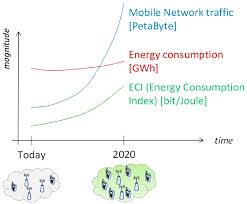
The Wireless Internet Revolution: How It’s Straining Our Energy Resources
As we increasingly rely on wireless internet, it’s essential to consider the hidden costs of this convenience. The truth is that our wireless networks are guzzling energy at an alarming rate, putting a strain on our planet’s resources.
What’s Behind the High Energy Consumption?
The rise of mobile devices and tablets has led to a significant increase in wireless connectivity. However, this shift comes with a price: higher energy consumption. Wireless networks require more power to transmit data than traditional wired connections. This is particularly true for high-bandwidth applications like streaming and online gaming.
Wireless networks also have an inherent latency that contributes to their high energy consumption. Latency is the delay between sending and receiving data, and it can be a significant factor in many wireless applications. The more complex the application, the higher the energy consumption due to increased latency.
Another significant contributor to the high energy consumption of wireless networks is the number of devices connected to the internet at any given time. As more people get their hands on smartphones and tablets, the number of devices connecting to the network grows exponentially. This increases the energy consumption of the network significantly.
The Numbers Are Alarming
A recent study by Audiweb Mobile revealed that 9.2 million smartphone users and 4 million tablet users were online in Italy during August 2013. This represents a significant increase from the previous year, with 35% more smartphones being used for internet access. Meanwhile, connections from desktop computers have decreased by 7%.
The study also showed that the number of devices connected to wireless networks is on the rise. In 2013, there were over 4 million Wi-Fi routers in Italy alone. This means that a significant portion of energy consumption is being generated by these devices.
The Future of Wireless Networks
According to the Centre for Energy-Efficient Telecommunications (Ceet), wireless networks will account for 90% of energy consumption in ICT infrastructure by 2015. This is a staggering figure, especially when compared to data centers, which are often considered the primary culprits behind high energy consumption.
Ceet also predicts that the number of devices connected to wireless networks will continue to grow exponentially in the coming years. This means that energy consumption will only increase as more devices become connected to the internet.
The Dark Side of Wireless Networks
Loose connections can cause energy waste. A recent study showed that wireless networks are responsible for about 10 times more energy waste than traditional data centers.
Another significant issue with wireless networks is their vulnerability to hacking and cyber attacks. This can lead to a loss of connectivity, which in turn increases energy consumption as devices try to reconnect to the network.
But what’s even more striking is that using online applications through an infrastructure cloud can actually save energy for a single business, while contributing to the collective energy consumption of many others. This paradox highlights the need for greater awareness and understanding of our reliance on wireless networks and their impact on our planet.
Conclusion
As we continue to move towards a wireless world, it’s essential that we acknowledge the hidden costs of this convenience. By understanding the impact of wireless networks on our energy resources, we can work towards creating more sustainable solutions for the future.
There are several potential solutions being explored to reduce energy waste from wireless networks. One solution is to implement more efficient communication protocols, such as Wi-Fi 6 and 5G, which can significantly reduce latency and increase data transfer speeds.
Another solution is to use mesh networking, which involves connecting devices in a network using multiple points of connection rather than traditional routers. This approach can significantly reduce energy consumption by minimizing the number of devices needed to maintain connectivity.
Potential Solutions for Reducing Energy Waste from Wireless Networks
- Implementing more efficient communication protocols: Newer protocols like Wi-Fi 6 and 5G can significantly reduce latency and increase data transfer speeds.
- Using mesh networking: Connecting devices in a network using multiple points of connection rather than traditional routers can minimize the number of devices needed to maintain connectivity, reducing energy consumption.
- Increasing device density: By increasing the number of devices connected to wireless networks, we can reduce latency and increase data transfer speeds.
- Improving data compression algorithms: More efficient data compression algorithms can significantly reduce the amount of data being transmitted over wireless networks.
Government and Company Initiatives
Governments and companies are starting to take notice of the energy consumption associated with wireless networks. In response, several initiatives have been launched to promote sustainable wireless networks.
One initiative is the development of more energy-efficient devices, such as smartphones and tablets that consume less power than their predecessors. Another initiative is the creation of more efficient communication protocols, such as Wi-Fi 6 and 5G.
Challenges Ahead
Despite these efforts, there are still significant challenges ahead in promoting sustainable wireless networks. One challenge is the cost of transitioning to new communication protocols and devices. Implementing these changes can be expensive, which may limit their adoption.
Another challenge is the lack of standardization among wireless network providers. This makes it difficult for consumers to choose energy-efficient options when selecting a provider.
Conclusion
As we continue to move towards a wireless world, it’s essential that we acknowledge the hidden costs of this convenience. By understanding the impact of wireless networks on our energy resources, we can work towards creating more sustainable solutions for the future.
There are several potential solutions being explored to reduce energy waste from wireless networks. These include implementing more efficient communication protocols, using mesh networking, increasing device density, and improving data compression algorithms.
Governments and companies are starting to take notice of the energy consumption associated with wireless networks. In response, initiatives have been launched to promote sustainable wireless networks.
However, there are still significant challenges ahead in promoting sustainable wireless networks. These include the cost of transitioning to new communication protocols and devices, and the lack of standardization among wireless network providers.
Frequently Asked Questions
- How much energy do wireless networks consume?
- What’s the impact of wireless networks on our energy resources?
- Will traditional data centers become obsolete in the future?
- Can we reduce energy waste by using online applications through infrastructure clouds?
- How can we balance individual energy savings with collective consumption?
- What are some potential solutions for reducing energy waste from wireless networks?
- How can governments and companies work together to promote sustainable wireless networks?
- Will the shift towards wireless networks have any negative environmental impacts?


