
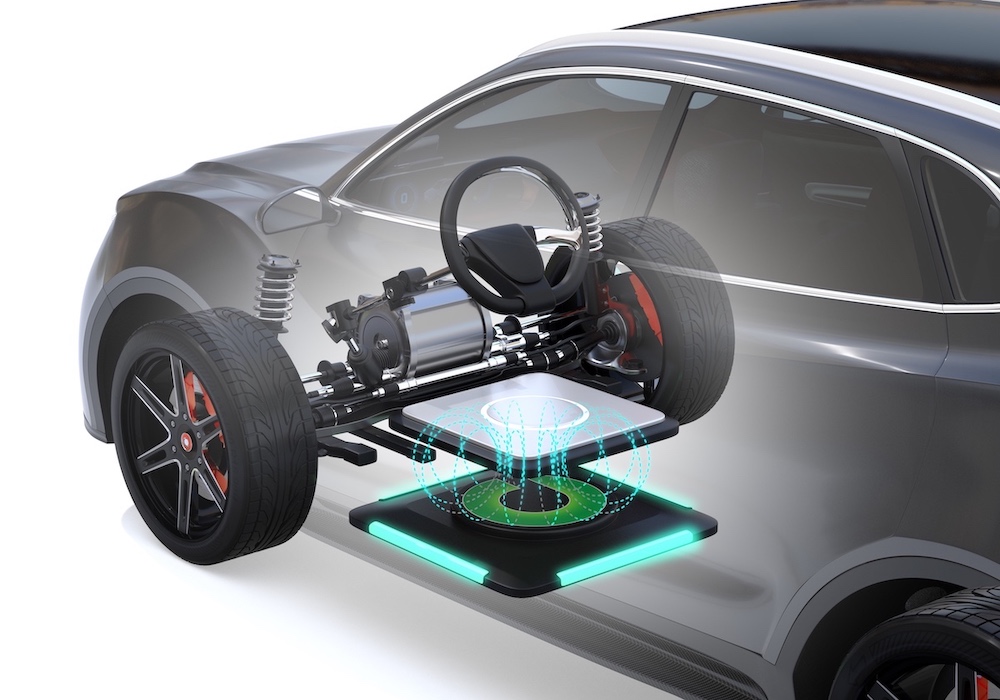
As we continue to transition towards a more sustainable transportation system, one major limitation that hinders the widespread adoption of electric vehicles (EVs) is their limited “driving range.” Currently, most EVs require several hours to fully recharge, which can be inconvenient for drivers who need to travel long distances. However, researchers at Stanford University have been working on a revolutionary new technology that could change this: wireless charging for electric cars.
A New Era in Roadside Charging
The idea of wireless charging is not new, but the team at Stanford has made significant breakthroughs in developing a system that can transfer large amounts of energy to an EV’s battery while it’s in motion. This technology uses magnetic resonance induction (MRI) to transmit electrical energy between two coils positioned a few meters apart. The first coil is connected to the power source, generating a magnetic field that induces a voltage in the second coil, which is attached to the EV.
How Does It Work?
The process is similar to how two tuning forks vibrate when struck by a mallet. When the power source and the EV’s coil are synchronized at the same frequency, they “resonate” with each other, transferring energy wirelessly between them. This technology has the potential to revolutionize the way we recharge our cars while driving.
The process can be broken down into several stages:
- Magnetic Field Generation: The power source generates a magnetic field that induces a voltage in the second coil.
- Energy Transfer: When the EV’s coil is synchronized with the power source, energy is transferred wirelessly between them.
- Battery Charging: The energy is then stored in the battery, providing an increase in driving range.
The Challenges Ahead
While this technology is promising, there are still several challenges that need to be overcome before it can become a reality. One of the biggest hurdles is ensuring that the magnetic fields generated by the coils don’t interfere with the EV’s onboard computer systems or other metal components in the vehicle.
Another challenge is achieving high efficiency rates, as the energy transfer process is not 100% efficient. However, researchers are working on improving the design and materials used in the coils to increase efficiency rates.
A Potential Game-Changer for Electric Cars
Wireless charging could not only make long-distance driving more convenient but also help reduce greenhouse gas emissions. By using renewable energy sources to power the wireless charging system, we can create a more sustainable transportation network. Additionally, this technology has the potential to enable autonomous vehicles by providing a means of navigation without GPS signals.
The Future of Electric Cars: A Wireless Revolution
As we look to the future of electric cars, it’s clear that wireless charging is going to play a major role in shaping the industry. With its potential to increase driving range and reduce emissions, this technology has the power to transform the way we travel. Whether you’re a car enthusiast or just looking for a more sustainable transportation option, wireless charging for electric cars is an exciting development that’s worth keeping an eye on.
Frequently Asked Questions
- Q: Will wireless charging be available for all EVs?
A: While the technology is promising, it’s unlikely to become widely available for all EVs at this stage. However, as the technology advances and becomes more cost-effective, we can expect to see wider adoption. - Q: How long will it take for wireless charging to become a reality?
A: Based on current developments, we’re looking at a timeline of 5-10 years before widespread adoption of wireless charging. - Q: Can wireless charging damage my EV’s battery?
A: No, the technology is designed to safely transfer energy to the battery without causing any harm. - Q: Will wireless charging replace traditional charging methods?
A: While it has the potential to increase driving range and reduce emissions, it’s unlikely to completely replace traditional charging methods in the near future. - Q: Can I use wireless charging with any EV model?
A: Currently, the technology is designed for specific EV models. However, as the technology advances, we can expect to see more compatibility options. - Q: Is wireless charging safe for passengers and pedestrians?
A: The technology is designed to ensure safe transmission of energy, minimizing the risk of harm to anyone in or around the vehicle. - Q: Can I use wireless charging with autonomous vehicles?
A: Yes, wireless charging has the potential to enable autonomous vehicles by providing a means of navigation without GPS signals. - Q: How much will wireless charging cost?
A: As the technology advances and becomes more widely available, we can expect to see decreases in costs as manufacturers compete for market share. - Q: Will wireless charging be limited to specific locations or can it be used anywhere?
A: While there are no plans to restrict wireless charging to specific locations, there may be regulations governing its use in certain areas.
Benefits of Wireless Charging
Wireless charging has several benefits that make it an attractive option for electric cars. Some of the key benefits include:
- Increased Driving Range: Wireless charging can increase driving range by up to 300%, making long-distance travel more convenient.
- Reduced Emissions: By using renewable energy sources to power the wireless charging system, we can reduce greenhouse gas emissions and create a more sustainable transportation network.
- Improved Safety: Wireless charging is designed to ensure safe transmission of energy, minimizing the risk of harm to anyone in or around the vehicle.
- Increased Efficiency: Wireless charging can improve efficiency rates by increasing the amount of energy transferred between the power source and the EV’s battery.
Challenges and Limitations
While wireless charging has several benefits, there are also some challenges and limitations that need to be addressed. Some of the key challenges include:
- Interference with Onboard Computer Systems: The magnetic fields generated by the coils can interfere with the EV’s onboard computer systems or other metal components in the vehicle.
- Low Efficiency Rates: The energy transfer process is not 100% efficient, resulting in low efficiency rates.
- High Cost: Wireless charging technology is still relatively expensive, making it inaccessible to some consumers.
Conclusion
Wireless charging for electric cars has the potential to revolutionize the way we travel. With its ability to increase driving range and reduce emissions, this technology has the power to transform the transportation industry. While there are challenges and limitations that need to be addressed, researchers are working on improving the design and materials used in the coils to increase efficiency rates and decrease costs.
As we look to the future of electric cars, it’s clear that wireless charging is going to play a major role in shaping the industry. Whether you’re a car enthusiast or just looking for a more sustainable transportation option, wireless charging for electric cars is an exciting development that’s worth keeping an eye on.


