
As we navigate our daily lives, it’s common to find ourselves in situations where a simple charging issue can become a significant inconvenience. Whether it’s a dead phone battery or multiple devices needing to be charged at the same time, wireless charging has been a long-awaited solution. In this article, we’ll explore the world of wireless charging, its history, and how it’s revolutionizing the way we interact with our technology.
What is Wireless Charging?
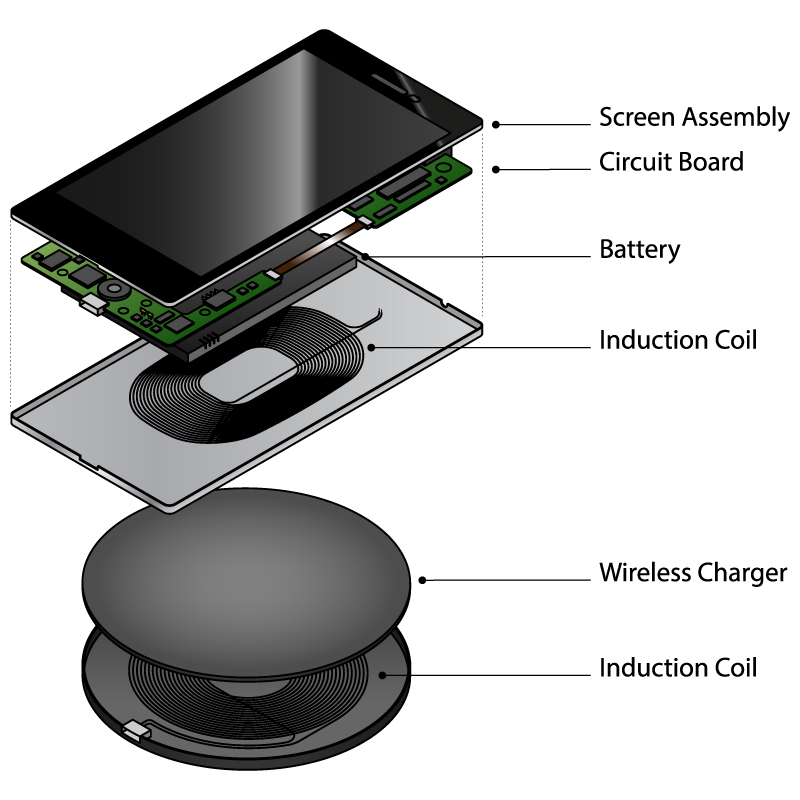
Wireless charging, also known as inductive charging, is a technology that allows devices to be charged without the use of cables or physical connections. This innovative method uses electromagnetic fields to transfer energy between a device and a charging surface, eliminating the need for wires.
The History of Wireless Charging
While the concept of wireless charging has been around for decades, significant advancements have been made in recent years. The first patent for a wireless charging system was granted in 1891 by Nikola Tesla, but it wasn’t until the early 2000s that wireless charging began to gain traction.
In the late 2000s, companies like Qualcomm and NXP started developing wireless charging technologies, leading to the creation of the first commercial wireless charging products. However, it wasn’t until the launch of Apple’s iPhone 8 in 2017 that wireless charging became a mainstream feature.
How Does Wireless Charging Work?
So, how does wireless charging work its magic? The process is quite simple:
- A device with a built-in coil (usually located under the battery) contains a tiny magnet.
- When placed on a compatible charging surface, the magnet interacts with the charging surface’s coil, creating an electromagnetic field.
- This field induces an electric current in both coils, allowing energy to be transferred between them.
The Benefits of Wireless Charging
Wireless charging offers several advantages over traditional wired charging:
- Convenience: No more tangled cords or lost charging cables!
- Portability: Devices can be charged anywhere, anytime.
- Health benefits: Reduced exposure to electromagnetic radiation from devices.
- Sustainability: No need for battery replacement or disposal.
Applications and Limitations
Wireless charging has a wide range of applications, including:
- Smartphones and tablets
- Laptops and desktops
- Electric vehicles
- Wearable devices (e.g., smartwatches)
- Home appliances
However, wireless charging also comes with some limitations:
- Compatibility: Not all devices support wireless charging.
- Efficiency: Wireless charging can be less efficient than wired charging due to energy loss.
JOS Energy Surface: A Revolutionary Innovation
One company that’s pushing the boundaries of wireless charging is JOS Technology. Their innovative energy surface, also known as a “wireless charging panel,” allows multiple devices to be charged simultaneously without the need for cables or physical connections.
This cutting-edge technology has several benefits:
- Convenience: Devices can be charged in any orientation.
- Capacity: Multiple devices can be charged at once.
- Green: The energy surface can be powered by solar panels, making it a sustainable option.
The Future of Wireless Charging
As we look to the future, wireless charging is expected to play an increasingly important role in our daily lives. With the rise of IoT (Internet of Things) and smart homes, wireless charging will become even more essential for seamless device connectivity.
In addition, advancements in materials science and nanotechnology are expected to improve the efficiency and sustainability of wireless charging. For example:
- New materials like graphene and superconductors could lead to faster and more efficient energy transfer.
- Nano-scale designs could enable smaller and more compact charging systems.
Wireless Charging in the Enterprise
Wireless charging is not just a consumer-focused technology; it also has significant applications in the enterprise sector. Companies are increasingly adopting wireless charging solutions for their employees, clients, and customers.
For example:
- Wireless charging desks can be used in conference rooms, meeting spaces, and other areas where multiple devices need to be charged.
- Wireless charging stations can be installed in public spaces, such as airports, train stations, and shopping malls.
Wireless Charging in Healthcare
Wireless charging also has a growing role in healthcare. For example:
- Patients with mobility issues or injuries may benefit from wireless charging systems that allow them to charge their devices without having to physically move.
- Wireless charging can be used to power medical implants, such as pacemakers and insulin pumps.
The Ethics of Wireless Charging
As we explore the future of wireless charging, it’s essential to consider the ethics surrounding this technology. For example:
- Security: How do we ensure that personal data is protected when using wireless charging systems?
- Safety: What are the potential health risks associated with prolonged exposure to electromagnetic fields?
Conclusion
Wireless charging is no longer just a futuristic concept; it’s a reality that’s transforming the way we interact with our technology. With its convenience, portability, and health benefits, wireless charging has become an essential feature in many devices.
As we look to the future, innovations like JOS Energy Surface are poised to take wireless charging to new heights. Whether you’re a tech enthusiast or just looking for a convenient solution to common charging issues, wireless charging is definitely worth exploring.
Frequently Asked Questions
- Q: Is wireless charging safe?
A: Wireless charging uses electromagnetic fields to transfer energy, which is generally considered safe. - Q: Can I use any device with wireless charging?
A: No, not all devices support wireless charging; check your device’s specifications for compatibility. - Q: How long does it take to charge a device wirelessly?
A: Charging times vary depending on the device and charger; typically, it takes 1-2 hours to fully charge. - Q: Is wireless charging more efficient than wired charging?
A: Wireless charging can be less efficient due to energy loss, but advancements in technology are improving its efficiency. - Q: Can I use multiple devices with the same charger?
A: Yes, most wireless chargers support simultaneous charging of multiple devices. - Q: Is JOS Energy Surface a commercial product?
A: JOS Energy Surface is a prototype developed by JOS Technology; it’s not yet commercially available. - Q: How do I know if my device supports wireless charging?
A: Check your device’s specifications or manufacturer website for information on wireless charging compatibility. - Q: Can I use solar power to charge devices wirelessly?
A: Yes, JOS Energy Surface can be powered by solar panels, making it a sustainable option.
Glossary
- Inductive charging: A type of wireless charging that uses electromagnetic fields to transfer energy between a device and a charging surface.
- Coils: Small loops of wire used in wireless charging systems to convert electrical energy into magnetic fields.
- Magnetic field: A region around a magnet where the magnetic force can be detected.
- Electromagnetic induction: The process by which an electric current is generated in a conductor when it is exposed to a changing magnetic field.
Conclusion
In conclusion, wireless charging is a revolutionary technology that’s transforming the way we interact with our devices. With its convenience, portability, and health benefits, wireless charging has become an essential feature in many devices.
As we look to the future, innovations like JOS Energy Surface are poised to take wireless charging to new heights. Whether you’re a tech enthusiast or just looking for a convenient solution to common charging issues, wireless charging is definitely worth exploring.
References
- “A brief history of wireless charging” by IEEE Spectrum
- “Wireless Charging: A Review” by Journal of Electronic Materials
- “The Future of Wireless Charging” by Wired Magazine


