
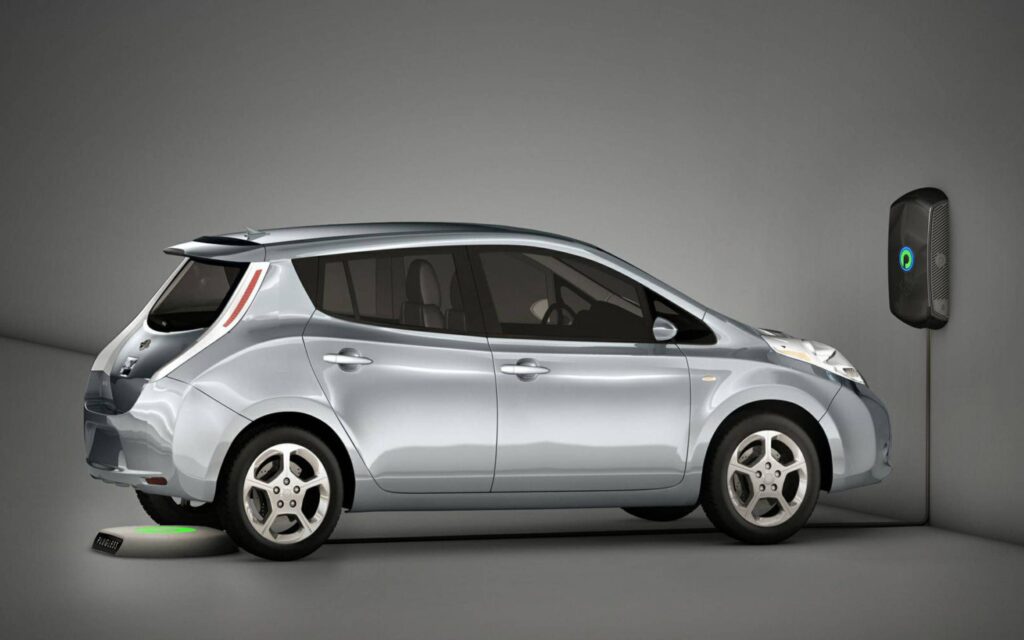
As we continue to explore the world of electric vehicles (EVs), one technology that’s gaining attention is wireless charging. In this article, we’ll delve into the world of wireless charging for EVs, specifically focusing on the Nissan Leaf and Chevrolet Volt.
What is Wireless Charging?
Wireless charging is a technology that allows electric vehicles to be charged without the need for cables or plugs. It’s like having a personal assistant that takes care of your vehicle’s needs while you’re busy with other things. In the context of EVs, wireless charging can be a game-changer, making it easier and more convenient for drivers to keep their vehicles charged on the go.
The Players: Plugless Power
So, who’s behind this innovative technology? Enter Plugless Power, a company that offers wireless charging stations for EVs. After conducting tests with top automotive companies like Audi and Mercedes, Plugless Power is set to launch its wireless charging system, which promises to revolutionize the way we think about EV ownership.
The Benefits of Wireless Charging
So, what makes wireless charging so attractive? For one, it’s incredibly convenient. No more worrying about finding a charging station or dealing with tangled cables. Just park your vehicle in a garage and let the magic happen! Additionally, with wireless charging, drivers can program their vehicles to charge during off-peak hours when electricity is cheaper.
Wireless charging also opens up new possibilities for EV owners, such as:
- Remote charging: No more worrying about finding a charging station. With wireless charging, you can charge your vehicle from the comfort of your own home.
- Increased mobility: Wireless charging allows drivers to travel farther without having to worry about running out of battery life.
- Improved safety: By eliminating the need for cables and plugs, wireless charging reduces the risk of electrical shocks and fires.
The Cost: Is It Worth It?
Now, we have to talk about the elephant in the room – cost. The initial investment for a wireless charging station can be steep, priced at around $3,500 (approximately €2,700). But, is it worth it? If you’re an EV owner who values convenience and ease of use above all else, then yes, wireless charging might be the way to go.
However, there are some potential drawbacks to consider:
- High upfront cost: The initial investment for a wireless charging station can be a significant expense.
- Limited availability: Wireless charging stations may not be widely available yet, which could limit their appeal to some EV owners.
- Efficiency concerns: Some tests have shown that wireless charging can result in slightly lower efficiency compared to traditional plug-in charging methods.
The Efficiency Debate
However, there’s one thing that’s been causing some debate – efficiency. Some tests have shown that wireless charging can result in slightly lower efficiency compared to traditional plug-in charging methods. But, this is a minor quibble in an otherwise groundbreaking technology.
In fact, many experts believe that the benefits of wireless charging outweigh any potential drawbacks:
- Increased convenience: Wireless charging makes it easier for EV owners to keep their vehicles charged on the go.
- Improved safety: By eliminating the need for cables and plugs, wireless charging reduces the risk of electrical shocks and fires.
Wireless Charging in the Future: A Game-Changer for EV Ownership?
So, where do we see wireless charging going in the future? With the rise of car-sharing services and autonomous vehicles, it’s likely that wireless charging will play a crucial role in making EV ownership more accessible and convenient. Imagine being able to charge your vehicle on the go, without having to worry about finding a charging station or dealing with cables.
In fact, many experts predict that wireless charging will become increasingly important as the world moves towards more sustainable forms of energy:
- Increased adoption: As more people switch to EVs, wireless charging is likely to become more widely adopted.
- Improved efficiency: Wireless charging technology is expected to improve significantly in the coming years, making it a more efficient and cost-effective option for EV owners.
The Future of Wireless Charging: A Roadmap for Success
So, what does the future hold for wireless charging? Here’s a possible roadmap:
- Short-term (2023-2025): Expansion of existing wireless charging networks and partnerships with automotive companies.
- Mid-term (2025-2030): Development of more efficient wireless charging technologies and increased adoption of wireless charging among EV owners.
- Long-term (2030+): Integration of wireless charging into autonomous vehicles and smart cities.
Frequently Asked Questions
Here are some answers to key questions about wireless charging for EVs:
- Q: Is wireless charging safe?
A: Yes, wireless charging is a completely safe technology that doesn’t pose any risk to drivers or passengers. - Q: How does it work?
A: Wireless charging uses electromagnetic induction to transfer energy between the vehicle and the charging station. - Q: What kind of vehicles can use wireless charging?
A: Currently, only Nissan Leaf and Chevrolet Volt are compatible with Plugless Power’s wireless charging system. - Q: Can I use wireless charging at home?
A: Yes, wireless charging stations can be installed in your garage or driveway for convenient home charging. - Q: Is wireless charging more expensive than traditional plug-in charging?
A: The initial investment for a wireless charging station is higher, but the cost per kilowatt-hour (kWh) is likely to be lower due to increased efficiency.
We hope this article has provided you with a comprehensive overview of wireless charging for EVs. While it’s not without its challenges, this technology has the potential to revolutionize the way we think about EV ownership and make electric vehicles more accessible to everyone.


