
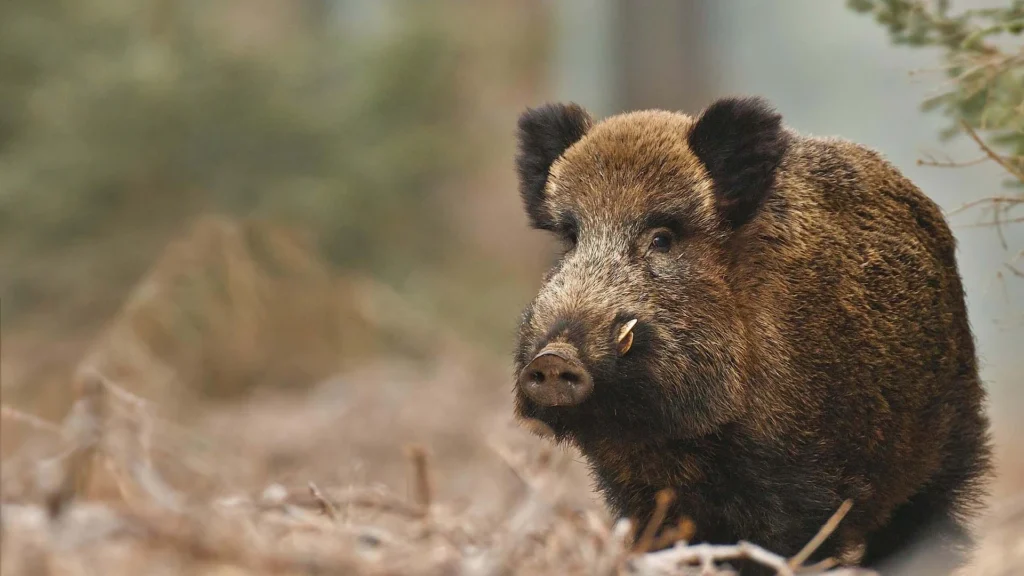
The wild boar, a majestic creature with a storied past in mythology, heraldry, cuisine, and history, is undoubtedly an animal under the spotlight. Depending on circumstances, it’s either lauded or maligned. Hailing from Eurasia and North Africa, this mammal has spread far and wide to various terrains. Describing its appearance can be a challenge, but as we explore different regions over time, the original strain has mixed with similar species giving rise to numerous variations in form, dimensions, and colors.
The Wild Boar: Appearance and Varieties
In general, the wild boar is an imposing creature of sturdy build. Its square body gives way to short, stumpy legs that appear agile despite its bulk. Each foot, adorned with four toes, moves swiftly and gracefully. The neck is short and stumpy, connecting the torso to a large, heavy head. The nose, often described as elongated, seems almost pinched in at the tip, boasting impressive tactile and olfactory capabilities. Its eyes, though not expressive, are angled laterally for better peripheral vision although clarity may be limited. The wild boar boasts 44 teeth, with its most notable features being the canines, or ‘teeth,’ which protrude from the mouth and curve upwards in males.
The boar’s skin is akin to armor, thick and relatively undervascularized, covered by robust setae (hairs) that provide additional protection. Its coat features a seasonal variation and coloration varying greatly depending on location and climate, from a reddish-brown to black with unique exceptions. The white wild boar originates from Asia Central.
The Wild Boar: Weight
Discussing the wild boar by the plural form allows for acknowledgment of its numerous variations in size. Length can reach up to 180 cm, while maximum height is approximately 1 meter tall. The average weight ranges between a quintal but with considerable fluctuations. In Russia, males can exceed three quintals; females are smaller but still substantial. Notably, smaller specimens exist in Spain weighing less than 80 kg.
In Italy, specifically on the Alps, “black” wild boars have been observed with grizzled gray-black coats weighing between 100 and 200 kg, decreasing towards southern areas like Sardinia to around 80 kg. The tail remains constant, serving as a useful makeshift fence against mosquitoes, reaching up to 40 cm in length and covered by setae, topped with an tuft of hairs.
The Wild Boar: Habitat and Distribution
Originating from Eurasia and North Africa, the wild boar has expanded globally since its population boom post-WWII. Being adaptable to almost any habitat, it is listed among the most invasive species harming ecosystems worldwide due to their ability to colonize all possible environments, except arid, rocky, or high-precipitation areas. In Europe, wild boars inhabit forests, particularly those dominated by quercetum trees. In Africa and Asia, they prefer marshlands.
Focusing on Italy, the wild boar is scattered but widespread, from the Valle d’Aosta to Calabria, with notable presence in Sardinia, Sicily, Elba Island, and other smaller islands. There are more restricted groups inhabiting mountainous regions between Lombardy, Veneto, Trentino, and Friuli.
To observe it naturally and not in urban settings, seek out national parks like the Pollino National Park or Gran Sasso National Park.
The Wild Boar: Problems Caused
Discussing the wild boar without acknowledging its current negative impact on humans and the environment is inaccurate. There are undeniable benefits to having these animals in certain ecosystems; however, when overpopulated, they cause harm. In natural habitats where they are native, they aerate the soil and contribute positively to forest growth.
However, their presence becomes problematic when there are too many of them in a limited space, causing damage to tree cover and threatening local deer populations and bird species. The situation worsens when they are introduced by humans; they outcompete native predators like wild boar, destroy forests, leading to extinction of various reptiles, amphibians, and small terrestrial birds.
Due to this, efforts such as organized hunts to reduce their numbers have become more prevalent. Wild boars also forage in agricultural fields, particularly around cities, devouring junk food, damaging urban vehicles, and even urban furniture.
The Wild Boar: Cuisine
Though often shunned in city dwellings but revered by many in culinary circles, the wild boar takes center stage in various dishes like Cinghiale alla Umida (Boar Stew), Cinghiale alla Cacciatora (Hunter-Style Boar), or Salmì (Boar Cutlets). Let’s explore how to make a classic dish: the Wild Boar in Umido.
For this recipe, you will need half a kilogram of meat, 350 grams of tomato sauce, along with carrots, onions, and a bit of celery; if desired, some garlic. Also, include four sprigs of fresh rosemary, blackberry ginseng berries (if available), and some thyme for added depth.
Begin by soaking your ingredients overnight in vino rosso (red wine). The next day, chop everything coarsely, separating the marinades from the meat. Add some ground spices to the mix for extra flavor. Then place all this on a baking sheet and cover it with aluminum foil before letting it simmer for an hour.
In another pan, sauté sliced carrots until they are tender along with onions and celery you have yet to use. Once done, add the remaining ingredients (meat, wine marinade, spices) into the pot.
Cook everything together for at least three hours or more, stirring occasionally. The final dish is ready when all liquid has evaporated and the meat is tender.
Traditional Wild Boar Hunting Methods
Wild boar hunting involves skillful tracking, camouflage, and sometimes the use of hunting dogs to track down their prey. Historically, hunters used crossbows and longbows to hunt these animals. In some regions like Italy, the “boar hunt” or “cinghiale hunt” is a cherished tradition that involves the local community coming together to chase the boars through the forest.
Conservation Efforts
Efforts are being made by governments, conservation organizations, and hunters’ groups alike to control the population of wild boars. These efforts include culling programs, habitat preservation, and education campaigns about the importance of wildlife management and coexisting with wild animals.
In addition, some countries have implemented regulations to limit hunting opportunities or restrict access to certain areas where wild boar populations are high. For example, Italy has a strict policy on wild boar hunting in national parks and protected areas.
Wild Boar Management
Wild boar management involves implementing measures that prevent the spread of disease and pests among native wildlife, as well as addressing human-wildlife conflict issues. This can be achieved by conducting regular monitoring of wild boar populations, maintaining healthy habitats through sustainable land-use practices, and educating the public about responsible wildlife viewing.
Efforts to promote coexistence between humans and wild boars must also focus on reducing conflicts over food sources, property damage, and potential threats to livestock or crops. This can be achieved by using non-lethal deterrents such as fencing, repellents, and other management techniques that prioritize both human safety and animal welfare.
Wild Boar Research
Wild boar research focuses on understanding the behavior, ecology, and conservation status of these animals. Scientists study their habitat preferences, diet, social structures, and population dynamics to better understand how they interact with their environment and each other.
Research also explores ways to mitigate the impact of wild boars on ecosystems, including efforts to reduce their numbers through controlled hunting programs or by developing more effective methods for controlling their populations in urban areas.
Wild Boar Control Methods
Several control methods are used to manage wild boar populations. These include:
- Hunting: Hunting is a widely accepted method of controlling wild boar populations, particularly in regions where they have become invasive.
- Culling programs: Targeted culling programs can help reduce the population of wild boars in specific areas.
- Habitat modification: Modifying the habitat to make it less suitable for wild boars can be an effective way to control their numbers.
- Fencing: Fencing can be used to exclude wild boars from certain areas, such as agricultural fields or urban zones.
These methods should be implemented in a responsible and sustainable manner to minimize harm to the animals and the environment.
Wild Boar Population Dynamics
The population dynamics of wild boars are complex and influenced by various factors. These include:
- Habitat availability: The availability of suitable habitat for wild boars can affect their population size.
- Food availability: Access to food sources, such as crops or livestock, can impact the population of wild boars.
- Human-wildlife conflict: Conflicts between humans and wild boars over resources, space, or safety can influence population dynamics.
Understanding these factors is crucial for developing effective management strategies that balance human needs with wildlife conservation goals.
Wild Boar Conservation Status
The conservation status of wild boars varies across different regions. In some areas, they are considered a threatened species due to habitat loss, hunting, and other human activities. However, in other regions, their populations are growing, and they may not be considered a priority for conservation efforts.
Conservation organizations, governments, and local communities can work together to protect wild boar habitats, reduce human-wildlife conflict, and promote sustainable land-use practices.
Education and Awareness
Education and awareness are key components of effective wild boar management. This includes:
- Public education: Educating the public about the importance of wildlife conservation, the risks associated with wild boars, and how to coexist peacefully.
- Research and monitoring: Conducting research and monitoring programs to better understand the behavior, ecology, and population dynamics of wild boars.
By promoting education and awareness, we can build a stronger foundation for effective management of wild boar populations and mitigate their impact on ecosystems and human communities.
Conclusion
Wild boars are fascinating creatures that play an important role in shaping ecosystems. However, their presence can also pose significant challenges to humans. By understanding the behavior, ecology, and population dynamics of these animals, we can develop more effective management strategies that balance human needs with wildlife conservation goals.
Conservation efforts must prioritize habitat preservation, reduce human-wildlife conflict, and promote sustainable land-use practices. Education and awareness are key components of this approach, as they help build a stronger foundation for coexistence between humans and wild boars.
By working together, we can ensure that wild boar populations continue to thrive while minimizing the risks associated with their presence in our communities and ecosystems.


