
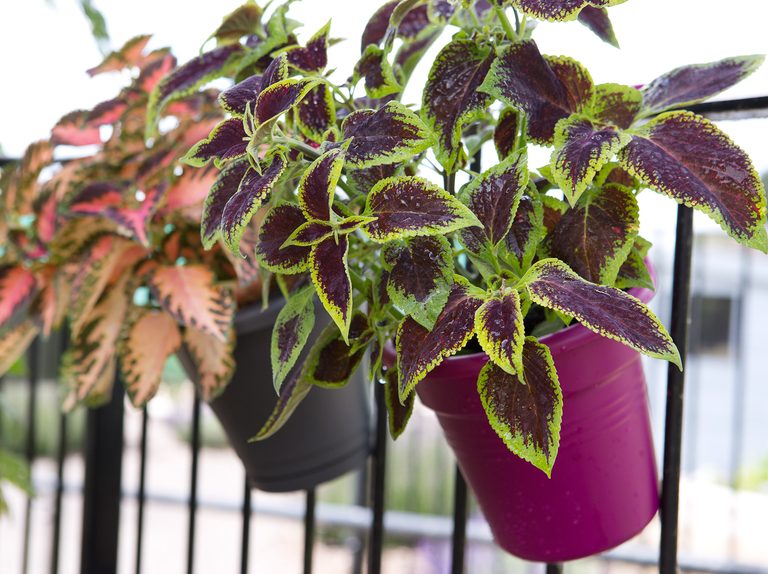
Every balcony is unique, with its own capacity and exposure. For example, if you have a shaded balcony, you’ll need to choose plants that thrive in partial shade or full shade. In this article, we’ll explore which plants are suitable for balconies based on their light exposure (balcony with southern, northern, western, or eastern exposure).
Plants for Balconies Exposed to the North
Let’s start with the most challenging scenario: a balcony exposed to the north or shaded. If your balcony receives limited sunlight, you’ll need to choose plants that can tolerate low light and strong winds (especially if you live on high floors). What plants are suitable for balconies in the shade?
Here are some options:
- Ortensia: A lovely choice for shaded balconies, with beautiful flowers and foliage.
- Heuchera: Known for its maple-like leaves, Heuchera is a great option for low-light conditions.
- Tradescantia: This plant has stunning foliage and can thrive in partial shade.
- Hosta: Hostas are popular shade-tolerant plants that come in a variety of sizes and colors.
- Aspidistria: With its unique, sword-shaped leaves, Aspidistria is a great choice for shaded balconies.
One particularly striking option is the Quercifolia Orchid, which offers beautiful flowers and foliage year-round. When selecting shade-tolerant plants, keep in mind that they may require more maintenance than sun-loving plants.
Plants for Balconies Exposed to the South
If your balcony receives full sun, you can choose from a wide range of colorful plants. A south-facing balcony can be a great spot for vibrant flowers and lush greenery.
Here are some options:
- Geraniums: These classic flowers come in a variety of colors and thrive in sunny conditions.
- Roses: Many types of roses love full sun, making them an excellent choice for southern balconies.
- Echinacees: With their striking flowers and foliage, Echinacees are perfect for sunny spots.
- Margarites: These daisy-like flowers come in a range of colors and can thrive in full sun.
- Petunias: Petunias are popular flowering plants that love full sun and well-drained soil.
When choosing plants for a sunny balcony, don’t forget to consider the potential benefits of aromatic herbs like lavender, rosemary, or thyme.
Plants for Balconies Exposed to the East or West
Balconies with eastern or western exposure receive indirect sunlight, making them suitable for a variety of plants. However, it’s essential to choose plants that can tolerate partial shade.
Here are some options:
- Osmantus: This flowering vine thrives in partial shade and can be trained to climb up walls or trellises.
- Mandevilla: With its stunning flowers and trailing habit, Mandevilla is a great choice for eastern- or western-facing balconies.
- Gelsomino: This flowering shrub loves partial shade and comes in a range of colors.
- Anemoni: These delicate flowers come in a variety of colors and can thrive in indirect sunlight.
- Dianthus: With their frilly, ruffled petals, Dianthus are perfect for adding a touch of elegance to your balcony.
When choosing plants for partial shade, remember that they may require more maintenance than sun-loving plants. Be sure to provide adequate support for climbing vines and prune regularly to keep them looking their best.
Caring for Potted Plants on Your Balcony
While it’s essential to choose the right plants for your balcony, it’s also crucial to consider their care requirements. Here are some tips:
- Prune plants regularly to maintain shape and promote healthy growth.
- Water plants thoroughly, but avoid overwatering, which can lead to root rot.
- Fertilize plants during the growing season (spring and summer) to promote healthy growth.
Common Mistakes to Avoid When Gardening on a Balcony
When gardening on a balcony, it’s easy to make mistakes that can harm your plants or even render them unusable. Here are some common mistakes to avoid:
- Overwatering: Water your plants only when the top inch of soil feels dry to the touch.
- Underwatering: Avoid neglecting your plants by failing to water them regularly.
- Inadequate drainage: Make sure your balcony has good drainage to prevent waterlogged soil.
- Poor air circulation: Keep an eye on wind direction and ensure that air can circulate around your plants.
Tips for Balcony Gardening
Here are some additional tips for balancing your balcony garden:
- Choose a mix of annuals, perennials, and succulents to create visual interest throughout the year.
- Consider using self-watering planters or planters with built-in water reservoirs.
- Keep an eye on temperature fluctuations by providing shade for plants during extreme heat or cold.
- Don’t be afraid to experiment with unusual containers or plant arrangements.
Conclusion
Choosing the right plants for your balcony is essential for creating a thriving outdoor space. By understanding your balcony’s light exposure and selecting plants that thrive in those conditions, you’ll be able to create a beautiful and functional outdoor area that brings joy and relaxation to your life.
FAQs: Balcony Gardening 101
- Q: What are the most challenging plants to grow on a shaded balcony?
A: Plants like orchids, ferns, and peace lilies can be finicky in shaded conditions, but with proper care, they can thrive. - Q: Which plants love full sun on a southern-facing balcony?
A: Geraniums, roses, echinacees, margarites, and petunias are all excellent choices for sunny spots. - Q: Can I grow climbing vines on my western- or eastern-facing balcony?
A: Yes! Osmantus, Mandevilla, and Gelsomino are just a few options that can thrive in partial shade. - Q: How often should I prune my potted plants to keep them healthy?
A: Prune your plants regularly to maintain shape and promote healthy growth, but avoid over-pruning, which can stress the plant. - Q: What’s the best way to fertilize my balcony plants during the growing season?
A: Use a balanced fertilizer (10-10-10) and follow the manufacturer’s instructions for application rates and timing.
By answering these FAQs and following our tips for balcony gardening, you’ll be well on your way to creating a beautiful and thriving outdoor space that brings joy and relaxation to your life.


