
Composting is a great way to reduce waste and create nutrient-rich soil for your garden. However, it’s easy to make mistakes when it comes to what you put in your compost bin. In this article, we’ll explore the dos and don’ts of composting, so you can avoid common pitfalls and create high-quality compost.
Why Composting Matters
Compost is a natural fertilizer that’s rich in nutrients and microorganisms. It helps plants grow strong and healthy, reduces the need for synthetic fertilizers, and supports a sustainable gardening practice. By composting, you’re not only reducing waste but also creating a valuable resource for your garden.
Composting has numerous benefits, including:
- Reduced greenhouse gas emissions from landfills
- Conserved water by reducing the amount of fertilizer needed
- Improved soil structure and fertility
- Increased crop yields and healthier plants
Where to Get Your Composting Bin
You can buy a compost bin at most gardening stores or online. There are also many DIY options available, including building your own compost bin using simple materials like wood and wire mesh. Whichever method you choose, make sure it’s well-ventilated and easy to access.
Some popular types of compost bins include:
- Plastic bins with lids
- Wooden pallets stacked on top of each other
- Wire mesh enclosures made from chicken wire or hardware cloth
- Compost tumblers that turn your compost as it breaks down
What Can Go in Your Compost Bin?
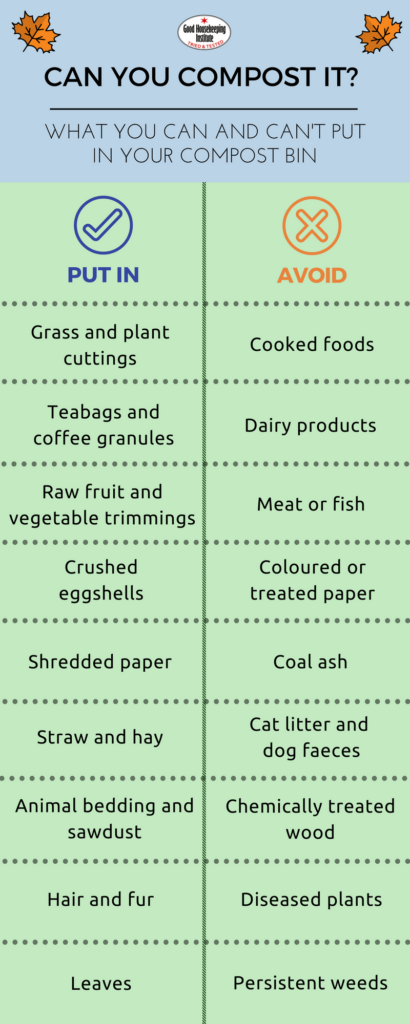
Composting is all about turning organic waste into a valuable resource. Here are some examples of what can go in your compost bin:
- Food scraps like fruit and vegetable peels, bread, and grains
- Yard trimmings like leaves, grass clippings, and branches
- Manure from herbivores like horses, cows, and goats
- Coffee grounds and tea bags
- Eggshells and other animal bones
When adding materials to your compost bin, remember to balance the carbon-to-nitrogen ratio. A general rule of thumb is:
- 2/3 “brown” materials (carbon-rich) like leaves, straw, or shredded newspaper
- 1/3 “green” materials (nitrogen-rich) like food scraps, grass clippings, or manure
What Not to Put in Your Compost Bin
While it’s easy to add organic matter to your compost bin, there are some things that can actually harm the process. Here are some common no-nos:
- Synthetic materials like plastic, polyester, and nylon
- Pet waste from carnivores like dogs and cats (can contain pathogens)
- Weeds with seeds, as they can sprout in your compost and spread invasive species
- Meat, dairy, and oily foods, which can attract pests and create odors
- Coal or charcoal ash, which can contain heavy metals
The Science Behind Composting
Composting is a complex process that involves breaking down organic matter into a nutrient-rich soil amendment. It’s like a mini-ecosystem, where microorganisms feed on the organic waste and produce heat, carbon dioxide, and water vapor.
When you add too many “no-no” items to your compost bin, it can disrupt this delicate balance and create problems. For example:
- Meat and dairy products can attract pests like rodents and flies
- Synthetic materials can prevent air and water from reaching the microorganisms
- Coal or charcoal ash can contain heavy metals that can leach into the soil
Tips for Successful Composting
To get the most out of your composting bin, here are a few tips to keep in mind:
- Keep your compost bin moist, like a damp sponge. Aim for a consistency similar to wet clay.
- Add a mix of “green” and “brown” materials to balance the carbon-to-nitrogen ratio.
- Turn your compost regularly to aerate it and speed up the process.
- Monitor the temperature and pH levels in your compost bin to ensure optimal conditions.
Common Composting Challenges
While composting is generally a straightforward process, there are some common challenges you may encounter. Here are a few:
- Odors: If your compost bin smells bad, it may be too wet or have too many “green” materials.
- Pests: Rodents, flies, and other pests can be attracted to food scraps and meat.
- Pathogens: Weeds with seeds or pet waste from carnivores can contain pathogens that can harm humans and plants.
Troubleshooting Composting Issues
If you encounter any problems while composting, here are some troubleshooting tips:
- Odors:
- Add more brown materials to balance the carbon-to-nitrogen ratio
- Turn your compost regularly to aerate it
- Monitor moisture levels and adjust as needed
- Pests:
- Remove food scraps and meat from the bin immediately
- Cover the bin with a lid or tarp to prevent pests from getting in
- Add more brown materials to balance the carbon-to-nitrogen ratio
- Pathogens:
- Remove weeds with seeds from the bin immediately
- Avoid adding pet waste from carnivores to your compost bin
- Monitor moisture levels and adjust as needed
Conclusion
Composting is a powerful tool for reducing waste and creating sustainable gardening practices. By understanding what can go in and out of your compost bin, you can create high-quality compost that’s rich in nutrients and microorganisms. Whether you’re a seasoned gardener or just starting out, composting is an easy and rewarding way to get involved in sustainable gardening.
Frequently Asked Questions
- What happens if I add meat to my compost bin?
Meat can attract pests and create odors in your compost bin. It’s best to avoid adding it altogether. - Can I compost plastic bags?
No, synthetic materials like plastic bags should not be added to your compost bin. They can prevent air and water from reaching the microorganisms. - How long does it take for compost to break down?
The length of time it takes for compost to break down depends on factors like temperature, moisture, and carbon-to-nitrogen ratios. On average, compost can take anywhere from a few weeks to several months to fully break down. - Can I use my compost bin as fertilizer?
Compost is a nutrient-rich soil amendment that can be used as fertilizer. However, it’s best to mix it into the soil rather than applying it directly. - How often should I turn my compost bin?
It’s recommended to turn your compost bin every 1-2 weeks to aerate it and speed up the process.
By following these tips and avoiding common mistakes, you can create high-quality compost that will benefit your garden for years to come. Happy composting!


