
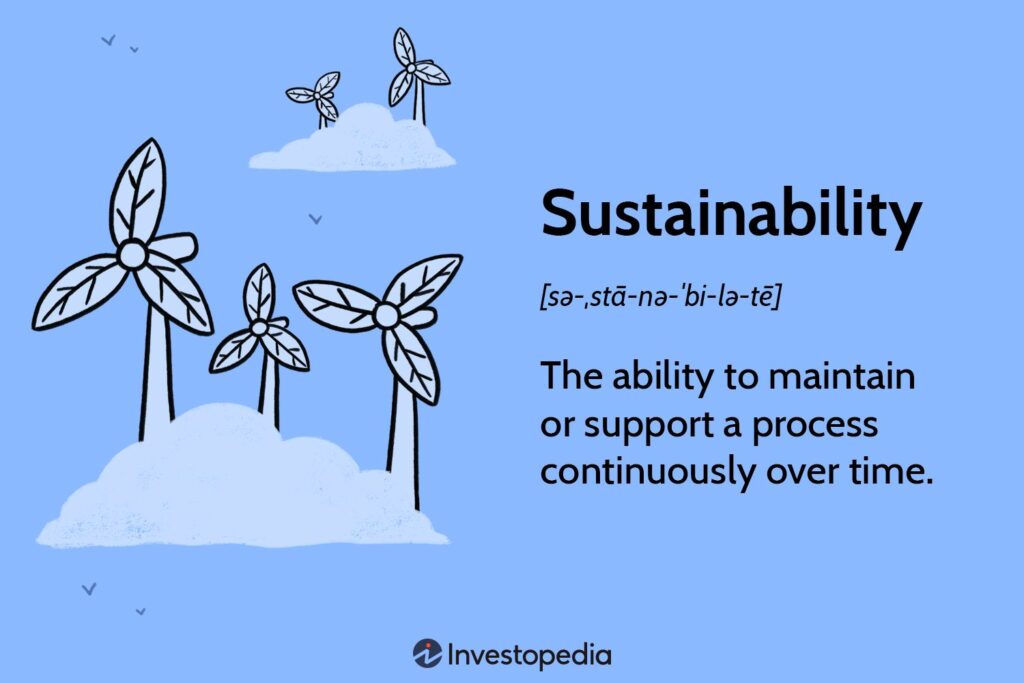
Sustainability has become a buzzword in recent years, with media outlets and experts touting its importance across various aspects. However, despite its growing popularity, many people remain unclear about what sustainability truly means or how it relates to environmental concerns.
This article aims to shed light on the concept of sustainability, exploring its different facets and providing insights into its significance.
What is Sustainability?
Sustainability refers to a state or process that can be maintained indefinitely. According to Wikipedia, it indicates “the characteristic of a process or state that can be maintained at a certain level indefinitely.” To truly grasp this definition, we need to delve deeper into the three fundamental types of sustainability: economic, social, and environmental.
Economic Sustainability
Economic sustainability refers to a condition where resources are produced in greater quantities than they are consumed. In households, this means that expenses should not exceed income. A household’s economy is sustainable if it maintains a balance between spending and earning. Similarly, on a national level, a country’s economy is sustainable if it produces more than it consumes.
However, if a country consumes more resources than it produces, its economic model becomes unsustainable, leading to a growing debt that can threaten the entire economy. As Mario Draghi has stated, “a debt good” one generated through investments, job creation, and opportunities that ensure future growth is sustainable, whereas an “unproductive debt” that burns resources without laying the groundwork for future growth is not.
In addition, economic sustainability also involves ensuring that the benefits of economic activity are distributed fairly among all members of society. This can be achieved by implementing policies such as progressive taxation, social safety nets, and education and training programs to equip workers with the skills they need to compete in the modern economy.
Social Sustainability
Social sustainability focuses on protecting human capital, which includes safeguarding social equity. It involves actions taken to achieve equality among people, ensuring they have access to a suitable economic and environmental context. A society is sustainable if it promotes fair treatment, allows individuals to express themselves freely, protects different cultures and religions, and safeguards minority rights while respecting the law.
On the other hand, measures that harm social sustainability include increasing prices of essential goods such as food, housing, energy, security, and even communication services. Another measure that goes against social sustainability is reducing salaries below a level that ensures not only survival but also comfortable living conditions.
Moreover, social sustainability requires addressing issues such as poverty, inequality, and discrimination. This can be achieved by implementing policies such as affordable healthcare, education, and job training programs to help individuals improve their socio-economic status. Additionally, ensuring that companies prioritize human rights, labor standards, and fair compensation practices is essential for achieving social sustainability.
Environmental Sustainability
The concept of environmental sustainability was first proposed in 1972 by the United Nations Conference on the Human Environment and later formalized in 1987 with the Brundtland Report. Environmental sustainability refers to a model of development that meets current needs without compromising future generations’ ability to satisfy their own needs.
This definition implies recognizing that Earth’s resources are finite, so they must be protected and preserved by avoiding waste and maintaining biodiversity and ecosystem integrity. One of the primary risks associated with unsustainable development is carbon dioxide emissions, which have caused global temperatures to rise and led to devastating climate-related events.
To mitigate these impacts, we need to transition away from fossil fuels towards renewable energy sources, increase energy efficiency in buildings and industries, and protect natural habitats that support diverse ecosystems. Furthermore, adopting sustainable agriculture practices such as permaculture, regenerative agriculture, and agroforestry can help maintain soil fertility, conserve water resources, and reduce synthetic fertilizer usage.
The Concept of Sustainability in Action
To put sustainability into practice, companies are now required to produce a sustainability report. This document aims to provide stakeholders (investors, customers, employees, etc.) with information on the company’s economic, social, and environmental performance over time. The goal is to enable informed decision-making regarding investments, consumption, and corporate actions.
For example, our company IdeeGreen S.r.l., a Società Benefit, has incorporated sustainability into its mission statement, emphasizing responsible and environmentally friendly practices in all its operations. As a result, we focus on promoting sustainable behavior through education, digitalization of processes, and collaboration with non-profit organizations that align with our values.
Global Development Goals
In 2015, the United Nations defined 17 Sustainable Development Goals (SDGs) and 169 target objectives to be achieved by 2030. These goals address economic, social, environmental, and cultural challenges worldwide, emphasizing interconnectedness and balance among these aspects.
The SDGs are divided into several categories, including:
- No Poverty: Ensure that everyone lives a life free of extreme poverty
- Zero Hunger: End hunger, achieve food security and improved nutrition, and promote sustainable agriculture
- Good Health and Well-being: Ensure healthy lives and well-being for all at all ages
- Quality Education: Ensure inclusive and equitable quality education and promote lifelong learning opportunities for all
- Gender Equality: Achieve gender equality and empower women, girls, and other marginalized groups
The SDGs also address environmental sustainability by emphasizing the importance of sustainable consumption patterns, climate action, and the conservation of biodiversity.
Challenges to Sustainability
Despite its growing popularity, achieving sustainability poses significant challenges. Some of these challenges include:
- Globalization: The increasing interconnectedness of the world has led to a rise in global consumption patterns that can strain local resources.
- Climate Change: The rapid pace of climate change is altering ecosystems and threatening biodiversity, which in turn impacts human well-being.
- Economic Inequality: Disparities in wealth and income have widened over time, leading to social injustice and economic instability.
To address these challenges, it’s essential for governments, businesses, civil society organizations, and individuals to work together to develop sustainable practices that prioritize people and the planet.
Conclusion
Sustainability is a multifaceted concept that encompasses economic, social, and environmental dimensions. Achieving sustainability requires balancing human needs with environmental limitations while ensuring equity among all members of society.
As we move forward in our journey towards sustainability, it’s crucial to recognize the interconnectedness of these aspects and prioritize them accordingly. By doing so, we can create a balanced, eco-friendly, and socially responsible future for ourselves and generations to come.


