
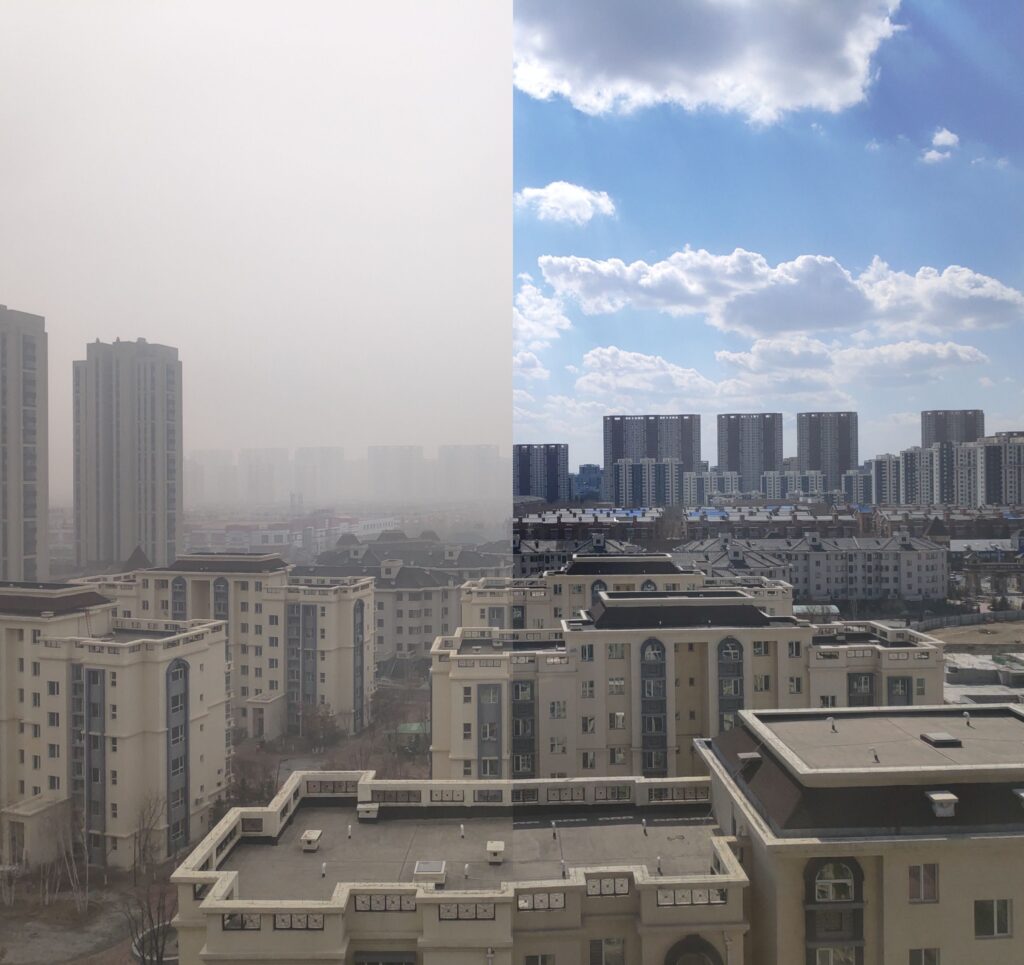
Smog, a term coined from the contraction of “smoke” and “fog,” was first observed in London in the 1950s. The name stuck, even as the city’s air quality improved over time. Today, smog is still a significant concern, but its form and impact have evolved.
What is Smog?
In the 1950s, smog was a real issue in London, caused by the use of coal as a fuel source. The emissions from these fires created pollutants like particulate matter, sulfur dioxide, and nitrogen oxides, which combined with cooler air near the ground to form a toxic cloud. This phenomenon was localized, but its effects on human health were severe.
Fast-forward to today, and smog has changed forms. While traditional smog is no longer as prevalent, photochemical smog, also known as smog, has become a major concern in many urban areas worldwide. This new type of smog is caused by the interaction of sunlight, pollutants, and atmospheric conditions, resulting in a haze that can cause respiratory problems, eye irritation, and even environmental damage.
The Evolution of Smog
In the 1950s, London’s air quality was severely impacted by coal-fired power plants and vehicle emissions. The city’s unique geography, with a basin shape and surrounding hills, trapped pollutants and created a “smog belt.” This phenomenon was particularly deadly during the winter months, when the cold air was trapped beneath the valley.
Fast-forward to today, and smog has become more complex. Photochemical smog forms when sunlight reacts with nitrogen oxides and volatile organic compounds (VOCs), creating ground-level ozone and other pollutants. These pollutants can travel long distances, affecting not only urban areas but also rural regions.
The Impact of Smog on Human Health
Smog is a significant public health concern, particularly for people with pre-existing respiratory conditions like asthma. The fine particles in photochemical smog can penetrate deep into the lungs, exacerbating existing conditions and causing new problems.
In addition to human health impacts, smog also affects the environment. Ground-level ozone can damage crops, forests, and aquatic ecosystems, while particulate matter can alter soil chemistry and affect plant growth.
Why is Smog Called “Photochemical”?
So why is smog called “photochemical” today? It’s because of the role that sunlight plays in its formation. When sunlight interacts with pollutants like nitrogen oxides and VOCs, it triggers a series of chemical reactions that produce ground-level ozone and other harmful compounds.
Examples of Smog around the World
Smog affects many cities worldwide, but some are more notorious than others. Los Angeles, California, is often called the “smog capital” due to its chronic photochemical smog episodes during the summer months. This is largely due to the city’s unique geography and climate, which traps pollutants and creates a perpetual haze.
Other cities around the world also struggle with smog-related issues. Beijing, China, for example, has implemented strict air quality controls in recent years, but still faces significant challenges from photochemical smog.
The History of Smog Regulation
In response to the growing concern about smog, governments and international organizations have established regulations and guidelines to reduce emissions and improve air quality. The United States, for instance, has implemented the Clean Air Act, which sets standards for emissions and requires industries to use cleaner technologies.
Similarly, the European Union has developed its own set of air quality directives, aimed at reducing emissions from transportation, industry, and energy production. These regulations have helped reduce smog levels in many cities worldwide, but more work remains to be done.
The Science Behind Smog
Smog is a complex phenomenon that involves the interaction of multiple factors, including atmospheric conditions, pollutants, and sunlight. To understand smog, it’s essential to grasp the underlying science behind its formation.
When sunlight interacts with pollutants like nitrogen oxides and VOCs, it triggers chemical reactions that produce ground-level ozone and other harmful compounds. These reactions are influenced by factors such as temperature, humidity, and wind patterns.
The Role of Urban Planning in Reducing Smog
Urban planning plays a crucial role in reducing smog levels, particularly in cities where photochemical smog is a major concern. By designing cities with green spaces, parks, and other natural features, urban planners can help reduce the amount of pollutants that are released into the air.
Additionally, urban planners can implement policies like congestion pricing, which encourages drivers to use cleaner transportation modes or to carpool. By reducing emissions from transportation, cities can significantly mitigate the impacts of smog on human health and the environment.
Conclusion
Smog is a complex and evolving problem that affects not only human health but also the environment. While traditional smog may be less prevalent today, photochemical smog remains a significant concern in many urban areas worldwide. By understanding the science behind smog and its impacts, we can work towards creating cleaner air for all.
Frequently Asked Questions (FAQs)
Q: What is smog?
A: Smog is a type of air pollution caused by the interaction of sunlight, pollutants, and atmospheric conditions.
Q: How did smog form in London?
A: In the 1950s, coal-fired power plants and vehicle emissions created pollutants that combined with cooler air to form a toxic cloud.
Q: What are the main causes of photochemical smog?
A: Photochemical smog is caused by the interaction of sunlight, nitrogen oxides, and volatile organic compounds (VOCs).
Q: How does smog affect human health?
A: Smog can cause respiratory problems, eye irritation, and other health issues, particularly for people with pre-existing conditions.
Q: What can be done to reduce smog?
A: Reducing smog requires a combination of policies like cleaner energy sources, reduced emissions from vehicles, and increased air quality monitoring.
Q: Are there any cities that have successfully reduced their smog levels?
A: Yes, cities like Los Angeles have implemented strict air quality controls and seen significant reductions in photochemical smog.
Q: What is the role of sunlight in smog formation?
A: Sunlight plays a crucial role in the formation of photochemical smog by triggering chemical reactions that produce ground-level ozone and other pollutants.
Q: Can smog be completely eliminated?
A: While it may not be possible to eliminate all smog, reducing emissions and improving air quality can significantly mitigate its impacts on human health and the environment.


