
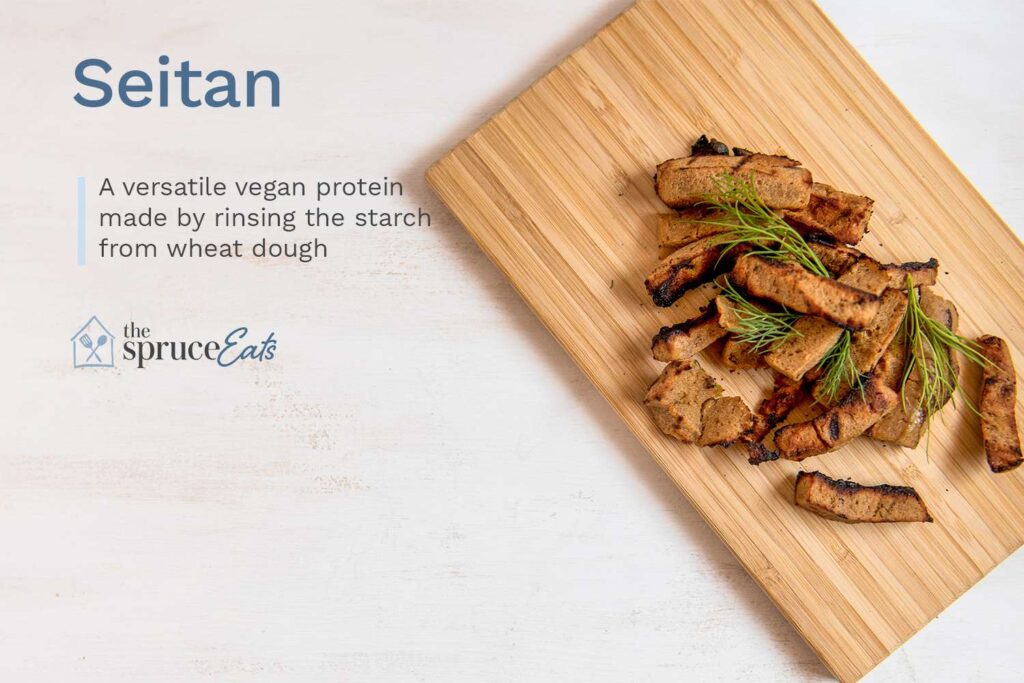
A Deeper Look at Seitan
Seitan, often referred to as “wheat meat,” has been gaining popularity in recent years due to its high protein content and versatility. But what exactly is seitan, and how does it differ from other plant-based proteins?
The History of Seitan
Seitan has a rich history that dates back thousands of years to ancient China, where it was first consumed as a meat substitute during the Tang Dynasty (618-907 AD). The practice of consuming seitan spread throughout Asia, and later became popular in Europe during the Middle Ages. However, its popularity declined after World War II, but has recently experienced a resurgence due to growing demand for plant-based protein sources.
What is Seitan Made of?
A Simple Explanation of Seitan Composition
Seitan is made from wheat gluten, which is extracted from wheat flour, particularly semolina flour. The process involves mixing the gluten with water to create a dough, which is then kneaded and cooked in various combinations of ingredients such as soy sauce, kombu seaweed, ginger, and salt.
The Process of Making Seitan
A Step-by-Step Guide to Seitan Production
Making seitan requires only simple processes:
- Mixing wheat gluten with water to create a dough
- Kneading the dough for an extended period (usually several hours)
- Filtering the dough through a colander and washing it in hot and cold water cycles
- Cooking the final product using various methods such as steaming, boiling, or pan-frying
Types of Seitan
There are two main types of seitan:
- Gluten-free seitan: Made from gluten-free flours such as rice flour, corn flour, or potato starch
- Traditional wheat-based seitan: Made from wheat gluten and semolina flour
Nutritional Value of Seitan
A Detailed Analysis of Seitan’s Nutrient Profile
While seitan is often referred to as “wheat meat,” its nutritional value leaves much to be desired. According to the World Health Organization (WHO), seitan is not a “noble” food and has low protein digestibility.
The Protein Content of Seitan
Seitan contains approximately 21 grams of protein per 100 grams of product, making it an attractive option for vegetarians and vegans looking for a high-protein food source. However, seitan lacks essential amino acids like lysine, which can lead to deficiencies if consumed as a sole source of protein.
Lysine Deficiency in Seitan
Seitan is particularly low in lysine, an essential amino acid that plays a crucial role in maintaining overall health. Consuming only seitan may lead to a deficiency in this vital nutrient, which can result in various health problems such as fatigue, weakness, and hair loss.
Vitamins and Minerals
A Close Look at Seitan’s Vitamin and Mineral Content
Seitan also lacks essential vitamins like vitamin B12 and iron. These nutrients are crucial for maintaining overall health, particularly in individuals with specific dietary requirements.
Vitamin B12 Deficiency
Vitamin B12 is a vital nutrient that plays a crucial role in the production of red blood cells and maintaining healthy nerve function. A deficiency in this essential nutrient can lead to anemia, fatigue, and neurological problems such as numbness and tingling in the hands and feet.
Iron Deficiency
Iron is another essential mineral found in seitan that plays a vital role in transporting oxygen throughout the body. Consuming only seitan may lead to iron deficiency, which can result in symptoms such as weakness, fatigue, and pale skin.
Energy Content
A Detailed Analysis of Seitan’s Energy Value
Seitan has a minimal amount of fat (1.5%) and contains approximately 120 calories per 100 grams of product. This energy content is comparable to that of lean meats without the added saturated fats and cholesterol.
Conclusion
In conclusion, while seitan may seem like an attractive alternative to traditional protein sources, its limitations cannot be ignored. A balanced diet that incorporates a variety of plant-based proteins can help alleviate concerns about seitan’s nutritional profile.
Frequently Asked Questions
- What is the primary ingredient in seitan?
- Wheat gluten
- How is seitan typically made?
- Mixing wheat gluten with water, kneading, and cooking
- Is seitan a suitable source of protein for vegetarians and vegans?
- Not recommended due to its low lysine content; must be paired with other plant-based proteins
- What nutrients does seitan lack?
- Vitamin B12 and iron
- Can seitan contribute to a balanced diet?
- Only when combined with other plant-based protein sources
- How much energy is in 100 grams of seitan?
- Approximately 120 calories
- Is seitan high in fat or cholesterol?
- No, contains minimal amounts (1.5%)
- Can anyone consume seitan as a primary source of protein?
- Not recommended; may lead to nutrient deficiencies


