
As we go about our daily lives, it’s easy to think that deforestation is a problem that exists in distant lands. But the truth is, forests all around us are disappearing at an alarming rate. The Amazon rainforest, often cited as the primary example, has lost over 11 million square meters of trees in 2020 alone. Meanwhile, globally, we’ve reached a staggering 30 million hectares of forest destruction – equivalent to the size of a football stadium filled with trees.
What is Deforestation?
The term “deforestation” speaks for itself – it’s the act of destroying or reducing forests and woodlands. But why does this happen? The answer lies in human activity, specifically our own actions that lead to deforestation. We’ve spent decades neglecting the importance of preserving our forests, while exploiting them as if they were infinite resources.
Deforestation: Causes
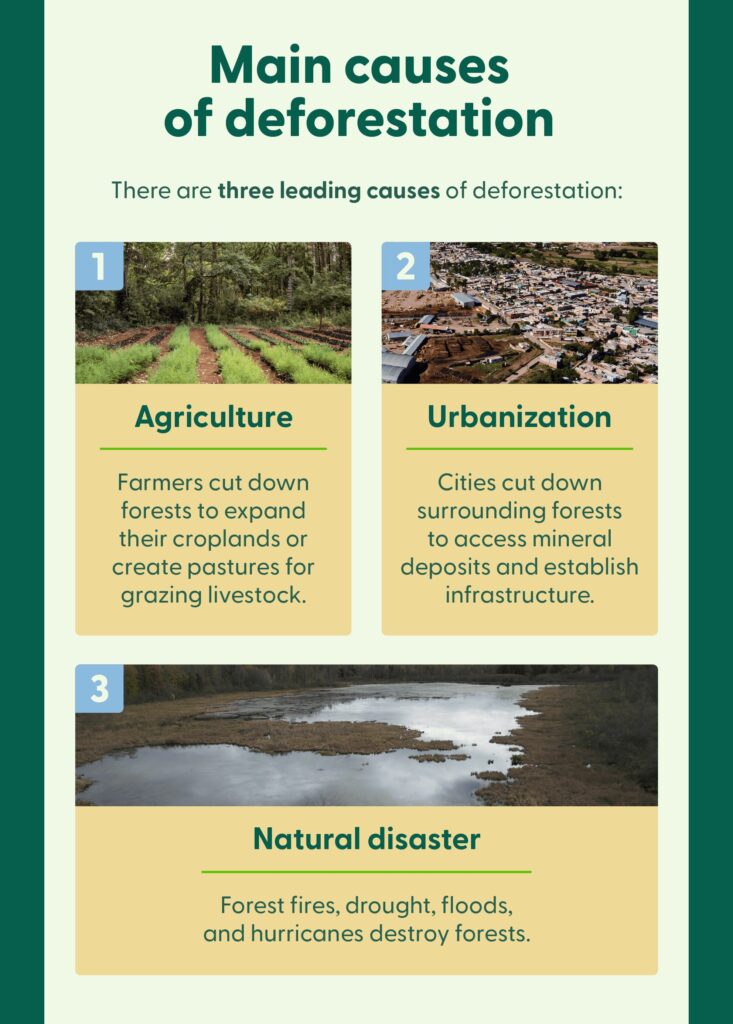
So, what drives us to destroy forests? There are many reasons, but some of the primary motivations include:
- Timber: Forests provide valuable timber for construction and other industries. The demand for wood products is high, and the supply chain often prioritizes profit over sustainability.
- Land conversion: We’re converting forests into agricultural land or pastures to feed our growing population. This not only destroys habitats but also leads to soil erosion and water pollution.
- Cosmetics and food industry: The demand for resources from these sectors drives deforestation. For example, palm oil plantations have led to widespread deforestation in Southeast Asia.
Deforestation: Consequences
The consequences of deforestation are far-reaching and devastating. Not only do we lose precious biodiversity, but we also contribute to climate change by releasing stored carbon into the atmosphere. This disrupts delicate ecosystems, leading to:
- Wildfires: As trees die, they become dry tinder, fueling massive wildfires that can spread rapidly.
- Mountain collapses: Deforestation can lead to soil erosion and landslides, causing catastrophic damage.
- Climate change: The loss of forests accelerates global warming, as the stored carbon is released into the atmosphere.
Deforestation and Climate Change
Forests play a critical role in regulating the climate. They absorb carbon dioxide, produce oxygen, and provide habitat for countless species. By preserving our forests, we can mitigate the effects of climate change. This requires:
- Sustainable land use: Implementing practices that promote forest conservation and regeneration.
- Policy changes: Governments must enact policies to protect forests from destruction.
Other Ways to Combat Deforestation
While awareness is key, we need more concrete actions to prevent deforestation. Here are some ways to make a difference:
- Support reforestation efforts: Organizations and governments are working tirelessly to plant trees and restore degraded forests.
- Make eco-friendly choices: By choosing products with sustainable forestry practices, we can reduce our demand for wood from logged forests.
The Role of Technology in Combating Deforestation
Technology is playing an increasingly important role in combating deforestation. Here are some ways technology is being used:
- Satellite imaging: Satellites can monitor forest cover and detect signs of deforestation.
- Drone surveillance: Drones equipped with sensors can quickly scan forests and identify areas of concern.
- Artificial intelligence: AI algorithms can analyze data from satellite images, drones, and other sources to identify patterns and trends.
The Impact of Deforestation on Indigenous Communities
Deforestation is often devastating for indigenous communities who rely heavily on forests for their livelihoods. Here are some ways deforestation affects these communities:
- Loss of traditional lands: When forests are cleared, indigenous communities lose access to their ancestral lands.
- Displacement and migration: As forests disappear, indigenous communities may be forced to move to new areas in search of food and shelter.
The Role of Education and Awareness
Education and awareness are crucial in combating deforestation. Here are some ways we can raise awareness about this issue:
- Documentaries and films: Documentaries and short films can highlight the devastating impact of deforestation on forests, communities, and the climate.
- Social media campaigns: Social media platforms can be used to share information, images, and personal stories about deforestation and its consequences.
The Future of Deforestation: A Global Challenge
Deforestation is a pressing issue that demands immediate attention. As individuals, we have the power to make a difference by adopting sustainable lifestyles and supporting initiatives that protect our forests. Together, we can create a better future for our planet and all its inhabitants.
By understanding the causes and consequences of deforestation, we can work together to protect our planet’s precious forests and all its inhabitants.


