
In the world of mathematics, prime numbers have long been a subject of fascination and intrigue. While many people associate prime numbers with literary works like “The Solitude of Prime Numbers,” the truth is that these numbers are more than just a plot device – they hold the key to understanding various aspects of mathematics, cryptography, and even geometry.
In this article, we’ll delve into the world of prime numbers, exploring their definition, characteristics, and significance in different fields. We’ll also examine why these numbers have captivated mathematicians and scientists for centuries.
What are Prime Numbers?
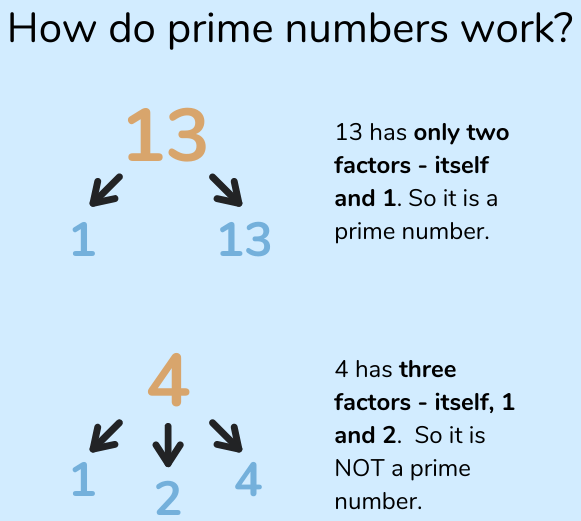
At its core, a prime number is an integer greater than 1 that has exactly two distinct positive divisors: 1 and itself. In other words, prime numbers are the building blocks of all other integers. They cannot be divided evenly by any other number except for 1 and themselves.
To illustrate this concept, let’s consider some examples of prime numbers:
- 2 (the only even prime number)
- 3
- 5
- 7
- 11
- 13
Notice that each of these numbers has exactly two divisors: 1 and itself. This unique characteristic makes them fundamental to understanding various mathematical concepts.
Why are Prime Numbers Important?
Prime numbers play a crucial role in numerous areas, including:
- Cryptography: Prime numbers are used to create secure encryption methods, ensuring that sensitive information remains confidential.
- Number Theory: The study of prime numbers and their properties has led to significant advancements in mathematics, particularly in the fields of algebra and geometry.
- Geometry: Prime numbers are essential in understanding geometric concepts, such as the distribution of prime gaps and the properties of prime numbers in relation to other mathematical structures.
The History of Prime Numbers
The concept of prime numbers dates back to ancient civilizations. However, it was Euclid who first formalized the definition of prime numbers around 300 BCE. In his book “Elements,” Euclid demonstrated that all natural numbers greater than 1 can be expressed as a product of prime numbers.
Throughout history, mathematicians and scientists have continued to explore the properties and significance of prime numbers. For example, the ancient Greek philosopher Pythagoras believed that prime numbers held spiritual significance, while modern-day mathematician Andrew Wiles used prime numbers to prove Fermat’s Last Theorem.
The Role of Prime Numbers in Mathematics
Prime numbers are fundamental to many mathematical concepts, including:
- Arithmetic Progressions: Prime numbers play a crucial role in the study of arithmetic progressions, which describe sequences of numbers with a common difference.
- Modular Arithmetic: The properties of prime numbers are essential in understanding modular arithmetic, which involves performing calculations modulo a specific number.
Real-World Applications
Prime numbers have numerous real-world applications, including:
- Computer Security: Prime numbers are used to create secure encryption methods, ensuring that sensitive information remains confidential.
- Random Number Generation: Prime numbers can be used to generate truly random numbers for various applications, such as simulations and modeling.
The Distribution of Prime Numbers
One of the most fascinating aspects of prime numbers is their distribution. The prime number theorem states that the distribution of prime numbers among natural numbers is approximately proportional to (\frac{x}{\ln x}) for large values of (x).
However, this theorem only provides a rough estimate, and researchers continue to study the distribution of prime numbers to better understand the underlying patterns.
The Prime Number Theorem
In 1896, the Swiss mathematician Jacques Hadamard proved that the prime number theorem is true. This theorem describes how the frequency of prime numbers decreases as (x) increases.
However, despite this significant achievement, researchers continue to study the distribution of prime numbers, searching for patterns and anomalies.
The Riemann Hypothesis
One of the most famous unsolved problems in mathematics is the Riemann Hypothesis. This problem involves the distribution of prime numbers and has far-reaching implications for many areas of mathematics and science.
The Riemann Hypothesis states that all non-trivial zeros of the Riemann zeta function lie on a vertical line in the complex plane, which can be expressed as (s = \sigma + i\tau).
This hypothesis was first proposed by Bernhard Riemann in 1859 and has since become one of the most famous unsolved problems in mathematics.
The Importance of Prime Numbers in Cryptography
Prime numbers play a crucial role in cryptography, which involves secure communication over an open channel. In this field, prime numbers are used to create secure encryption methods, ensuring that sensitive information remains confidential.
Cryptography is essential for maintaining online security and protecting personal data from unauthorized access. The use of prime numbers in cryptography ensures that even with the most advanced computers, it would be computationally infeasible to break the encryption.
The Use of Prime Numbers in Random Number Generation
Prime numbers can be used to generate truly random numbers for various applications, such as simulations and modeling. In these contexts, prime numbers are essential for creating unbiased and unpredictable results.
Random number generation is a critical component of many fields, including science, engineering, and finance. The use of prime numbers ensures that the generated numbers are highly unpredictable and resistant to attacks from malicious actors.
The Impact of Prime Numbers on Science
Prime numbers have far-reaching implications for many areas of science, including physics, chemistry, and biology. In these contexts, prime numbers play a crucial role in understanding complex systems and phenomena.
For example, prime numbers are essential in the study of chaos theory, which involves understanding complex and dynamic systems. The use of prime numbers ensures that researchers can model and simulate complex behavior accurately.
Conclusion
Prime numbers are more than just a mathematical concept – they hold the key to understanding various aspects of mathematics, cryptography, and even geometry. By exploring the definition, characteristics, and significance of prime numbers, we can gain a deeper appreciation for the beauty and complexity of mathematics.
Whether you’re a seasoned mathematician or simply curious about the world of numbers, prime numbers are sure to captivate and inspire. So next time you encounter a prime number, remember its importance in shaping our understanding of the universe and driving scientific progress.
Frequently Asked Questions (FAQs)
-
What is the definition of a prime number?
A prime number is an integer greater than 1 that has exactly two distinct positive divisors: 1 and itself.
2. Why are prime numbers important?Prime numbers play a crucial role in various areas, including cryptography, number theory, and geometry.
3. Can I find all prime numbers by trial division?No, it is not possible to find all prime numbers using trial division. However, you can use algorithms like the Sieve of Eratosthenes or the Miller-Rabin primality test to efficiently identify prime numbers within a given range.
4. How are prime numbers used in cryptography?Prime numbers are used to create secure encryption methods, ensuring that sensitive information remains confidential.
5. Can I use prime numbers to generate random numbers?Yes, prime numbers can be used to generate truly random numbers for various applications, such as simulations and modeling.
By exploring the fascinating world of prime numbers, we can gain a deeper understanding of mathematics, cryptography, and even geometry. Whether you’re a seasoned mathematician or simply curious about the world of numbers, prime numbers are sure to captivate and inspire.


