
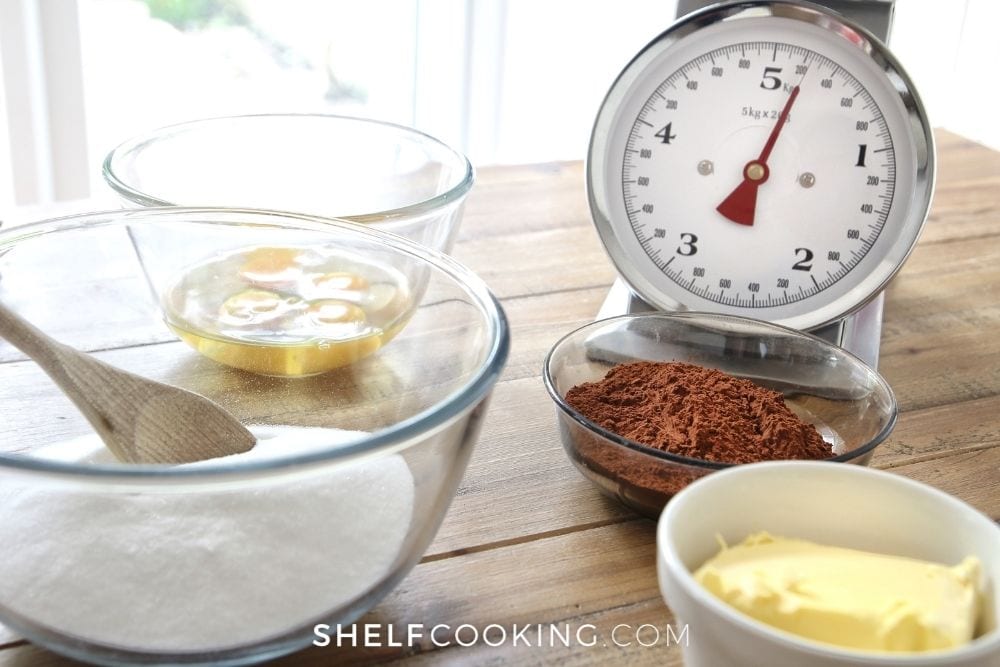
Measuring Without a Scale: A Practical Guide
As any cook knows, having a digital kitchen scale is an indispensable tool in measuring ingredients with precision. However, there are situations where you might not have access to one, and that’s when improvising becomes necessary. In this article, we’ll explore how to measure without a scale using common household items like cups or jars.
Why Measure Without a Scale?
Measuring without a scale may seem daunting, but it’s not as difficult as you think. While only a scale can provide precise measurements, making do with what you have can be a useful skill in emergency situations or when traveling. Plus, learning to measure by volume and weight will help you develop a better understanding of ingredient ratios and cooking techniques.
Getting Started
When measuring without a scale, it’s essential to remember that each ingredient has its own unique composition and weight. A spoonful of flour won’t equal a spoonful of sugar, so always consult online tables or reference guides to find the correct correspondence between volume measurements and weights.
Common Ingredients Measured Without a Scale
In this section, we’ll cover some of the most common ingredients in Italian cuisine and how to measure them without using your scale. Keep in mind that there may be some approximations involved!
Flour
To measure flour without a scale, know that:
- One spoonful corresponds to about 10 grams
- One tablespoon corresponds to about 20 grams of flour
- A cup of coffee corresponds to approximately 35 grams of flour (not the same as flour)
- A standard glass corresponds to approximately 130 grams of flour
Granulated Sugar
When measuring sugar without a scale:
- One spoonful corresponds to about 5 grams
- One tablespoon corresponds to about 20 grams of granulated sugar
- A cup corresponds to about 60 grams of granulated sugar (not the same as flour)
- A standard glass corresponds to approximately 200 grams of granulated sugar
Milk
Milk is another common ingredient that can be measured without a scale:
- One spoonful corresponds to about 6 grams
- One tablespoon corresponds to about 12 grams of milk
- A cup corresponds to approximately 60 grams of milk (not the same as flour)
- A glass corresponds to approximately 220 grams of milk
Cocoa Powder
Measuring cocoa powder without a scale is similar to measuring sugar:
- One spoonful corresponds to about 7 grams
- One tablespoon corresponds to about 15 grams of cocoa or powdered sugar
- A cup corresponds to approximately 120 grams of cocoa or powdered sugar (not the same as flour)
- A glass corresponds to approximately 100 grams of cocoa or powdered sugar
Butter
Butter is another ingredient that can be measured without a scale:
- One spoonful corresponds to about 7 grams
- One tablespoon corresponds to about 15 grams of butter
Oil
When measuring oil without a scale, keep in mind that:
- One spoonful corresponds to 6 grams of oil
- One tablespoon corresponds to approximately 12 grams of oil
- A standard glass corresponds to approximately 220 grams of oil
Rice
Finally, let’s cover how to measure rice without a scale:
- One spoonful corresponds to about 9 grams
- An entire tablespoon corresponds to approximately 20 grams of rice
- A cup corresponds to 80 grams of rice (not the same as flour)
- A glass corresponds to approximately 165 grams of rice
Conclusion
Measuring without a scale may seem daunting, but with practice and patience, you’ll become proficient in using volume measurements to estimate ingredient weights. Always remember that each ingredient has its own unique composition and weight, so consult online tables or reference guides whenever possible.
Frequently Asked Questions
-
What happens if I don’t have access to a scale?
- If you’re unable to find a digital kitchen scale, there are alternative methods for measuring ingredients without one.
-
How do I convert volume measurements to weights?
-
Online tables and reference guides can help you find the correct correspondence between volume measurements and weights for specific ingredients.
-
Can I use any household item as a substitute for a scale?
-
While some items may be used as makeshift scales, they’re not always accurate or reliable.
-
What’s the best way to measure ingredients in emergency situations?
-
In situations where access to a scale is limited, it’s essential to have a basic understanding of ingredient ratios and cooking techniques.
-
Can I use digital kitchen scales for measuring liquids?
-
Digital kitchen scales are designed specifically for measuring dry ingredients like flour or sugar; they may not provide accurate measurements for liquids like milk or oil.
-
How do I measure butter with a scale that’s prone to error?
-
When using a potentially inaccurate scale, it’s best to use volume measurements as an estimate and adjust accordingly.
-
Can I measure ingredients in small quantities without a scale?
-
Measuring small quantities of ingredients like flour or sugar can be done accurately using volume measurements or digital scales with precision settings.
-
How do I know if my homemade flour substitute is accurate?
-
When creating your own flour substitutes, it’s crucial to test them for accuracy and adjust the recipe as needed.
By mastering the art of measuring without a scale, you’ll become a more confident cook, capable of improvising in any situation. Happy cooking!


