
Understanding the Challenge
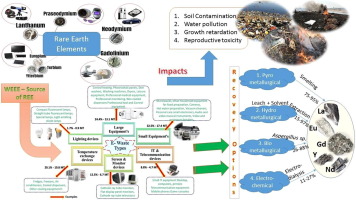
As the world becomes increasingly dependent on technology, the amount of electronic waste (e-waste) generated is on the rise. If not managed properly, e-waste can have devastating environmental and economic consequences. In this article, we will explore the potential of rare earth elements (REEs) extraction from e-waste, a crucial step towards reducing our reliance on primary materials and mitigating the impact of human activities on the environment.
The State of E-Waste Recycling in Europe
Currently, only about 33% of e-waste is recycled correctly in Europe. However, with the EU’s ambitious recycling targets looming, there is a growing need for efficient and effective solutions. According to ReMedia, a leading Italian non-profit organization specializing in eco-sustainable e-waste management, the European Union generates approximately 10 million tons of e-waste annually.
The Rise of REEs Extraction from E-Waste
REEs are 17 essential elements found in many high-tech products, including smartphones and laptops. The global production of REEs reached 110,000 tons in 2012, with China accounting for 87% of the market share. However, this dominance is set to change as new mining operations begin in the United States and Australia.
The EU’s Import Dependency on REEs
While Europe does not produce its own REEs, it relies heavily on imports. In recent years, the EU has become a net importer of these critical materials, with approximately 12,000 tons imported annually. This trend is expected to continue, driven by increasing demand from industries such as electronics and renewable energy.
The Economics of REE Recycling
Estimating the true value of REEs extraction from e-waste is challenging due to inconsistent pricing and market volatility. However, if even a significant portion of e-waste could be recycled correctly (e.g., 80%), it would potentially generate over €1 billion in material recovery value.
The Market for Clandestine E-Waste
One of the biggest obstacles to efficient e-waste recycling is the illicit trade in waste materials. The European Union’s own data reveals that about 20-25% of all transportations are made up of illegal shipments, resulting in significant economic losses and environmental degradation.
The Dangers of Planned Obsolescence
Another pressing issue is planned obsolescence, which might be deliberately implemented by manufacturers to accelerate the disposal of products. This has sparked controversy in France and Germany, with recent calls for legislation aimed at mitigating this practice.
Conclusion
As we strive to minimize our ecological footprint, unlocking the potential of REEs extraction from e-waste presents a crucial opportunity. By addressing issues related to recycling, market instability, and waste management, we can significantly reduce primary material consumption and decrease environmental damage.
Frequently Asked Questions (FAQs)
- What are rare earth elements (REEs)?
Rare earth elements are 17 essential elements used in various high-tech products, including electronics and renewable energy systems. - Why is the recycling of REEs from e-waste so important?
Proper REE recycling can help reduce primary material consumption, mitigate environmental damage, and create new economic opportunities. - What percentage of e-waste is recycled correctly in Europe today?
Only about 33% of e-waste is recycled correctly, leaving significant room for improvement. - How much are rare earth elements currently worth on the market?
The prices of REEs can fluctuate significantly due to market volatility and demand factors, making it difficult to estimate their true value. - What role do planned obsolescence and clandestine e-waste trade play in the recycling challenge?
Planned obsolescence is an industry practice that could lead to increased waste generation and loss of material resources, while the illicit trade in e-waste causes significant environmental damage and economic losses. - What initiatives are being taken globally to address e-waste management challenges?
Efforts include increasing recycling efficiency, improving regulatory frameworks, and developing more effective technologies for REEs extraction from e-waste. - Can e-waste recycling help reduce the world’s reliance on primary materials?
Yes, by recovering valuable resources like REEs from e-waste, we can significantly decrease our dependence on primary material production, reducing waste generation and environmental impact. - What steps can individuals take to support efficient e-waste recycling practices?
By making informed purchasing decisions, donating working electronics, or participating in community-driven e-waste collection initiatives, individuals can contribute to a more sustainable future for both the environment and economies worldwide.
The Benefits of REEs Extraction from E-Waste Recycling
- Conservation of Natural Resources: By extracting REEs from e-waste, we can reduce the need for primary mining operations and conserve natural resources.
- Reducing Energy Consumption: Recycling REEs from e-waste requires less energy than producing new materials from raw ores, which contributes to greenhouse gas emissions and climate change.
- Job Creation and Economic Growth: Establishing efficient e-waste recycling facilities can create employment opportunities in the sector and contribute to local economic development.
Challenges Associated with REEs Extraction from E-Waste
- Technical Challenges: The extraction of REEs from e-waste requires advanced technologies, including mechanical separation, hydrometallurgy, and electrometallurgy.
- Environmental Concerns: Improperly managed e-waste recycling can result in environmental pollution, affecting air quality, water sources, and soil health.
- Regulatory Frameworks: Effective regulations are needed to ensure that e-waste recycling operations comply with environmental and safety standards.
Future Directions for REEs Extraction from E-Waste Recycling
- Research and Development: Continued innovation in e-waste recycling technologies is necessary to improve efficiency, reduce costs, and develop more sustainable practices.
- Industry Collaboration: Manufacturers, recyclers, and governments must work together to establish common standards, share best practices, and address emerging challenges.
- Education and Awareness: Raising public awareness about the importance of e-waste recycling and the benefits of REEs extraction from e-waste can encourage individuals to adopt sustainable behaviors.
Conclusion
The extraction of rare earth elements (REEs) from electronic waste presents a crucial opportunity for reducing primary material consumption, mitigating environmental damage, and creating new economic opportunities. By addressing technical challenges, regulatory frameworks, and market instability, we can unlock the potential of REEs recycling from e-waste and contribute to a more sustainable future for both the environment and economies worldwide.
Recommendations
- Establish Clear Regulatory Frameworks: Governments should establish and enforce regulations that ensure responsible e-waste recycling practices.
- Invest in R&D: Continued investment in research and development is necessary to improve the efficiency, cost-effectiveness, and sustainability of REEs extraction from e-waste.
- Promote Public Awareness and Education: Educating the public about the benefits of REEs recycling from e-waste can encourage individuals to adopt sustainable behaviors.
The Role of Governments in Addressing E-Waste Management Challenges
- Set Ambitious Recycling Targets: Governments should set and implement ambitious recycling targets, such as increasing the percentage of e-waste recycled correctly.
- Provide Funding for R&D: Governments should invest in research and development to improve REEs extraction technologies and reduce costs.
- Establish Regulations and Standards: Governments should establish clear regulations and standards for e-waste recycling operations.
The Role of Industry in Addressing E-Waste Management Challenges
- Implement Extended Producer Responsibility (EPR): Manufacturers should be responsible for the waste generated by their products, promoting a culture of sustainability.
- Develop Closed-Loop Recycling Systems: Companies should aim to design and produce products with recyclability in mind, facilitating closed-loop recycling systems.
- Collaborate on Shared Technologies: Industry players should collaborate on shared technologies, reducing duplication of efforts and costs.
The Role of Civil Society in Addressing E-Waste Management Challenges
- Raise Awareness about E-Waste Issues: Organizations and individuals can raise awareness about e-waste issues through campaigns, educational programs, and advocacy.
- Promote Sustainable Behaviors: Individuals can adopt sustainable behaviors by choosing products with recyclable materials, donating working electronics, or participating in community-driven e-waste collection initiatives.
- Support Policy Initiatives: Organizations can support policy initiatives aimed at addressing e-waste management challenges through lobbying, advocacy, and public engagement.
Conclusion
The extraction of rare earth elements (REEs) from electronic waste presents a crucial opportunity for reducing primary material consumption, mitigating environmental damage, and creating new economic opportunities. By addressing technical challenges, regulatory frameworks, market instability, and industry practices, we can unlock the potential of REEs recycling from e-waste and contribute to a more sustainable future for both the environment and economies worldwide.


