
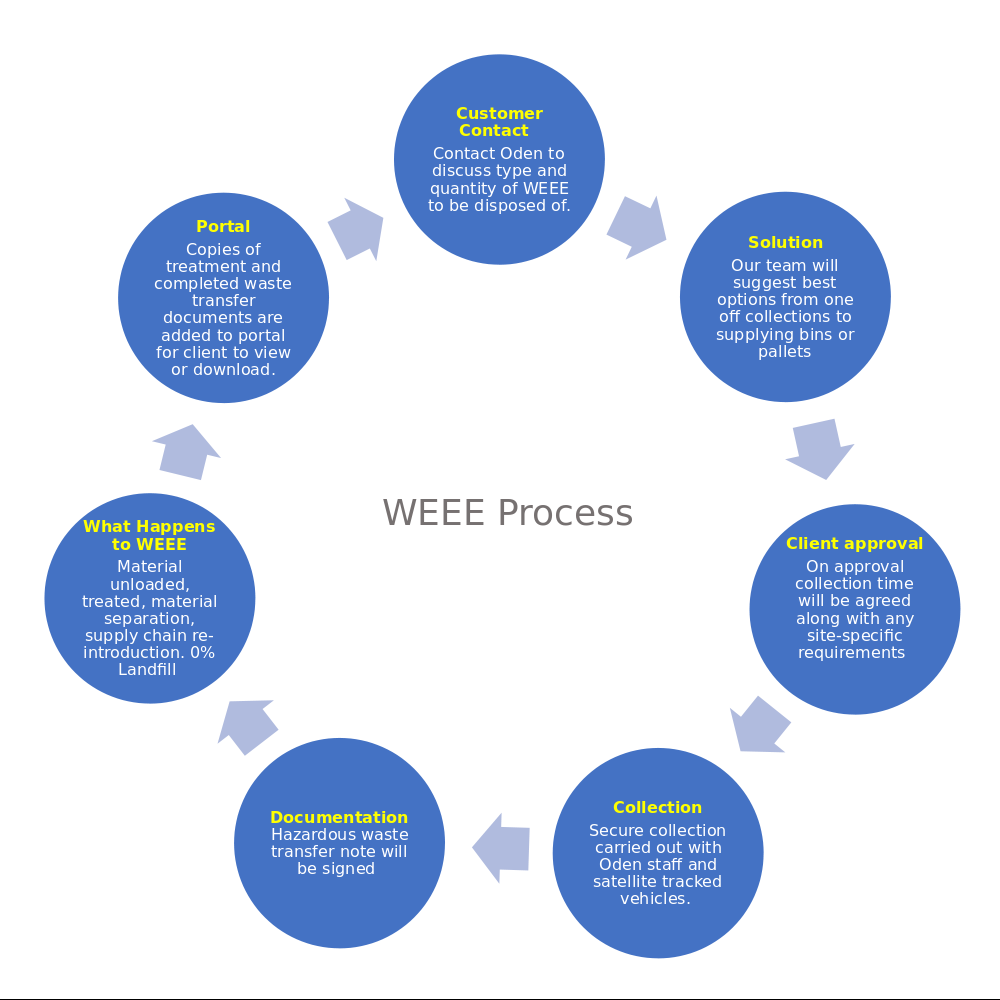
As Italians, we produce a staggering amount of electronic waste (RAEE) every day – from smartphones and laptops to toasters, vacuum cleaners, and even clocks. In fact, the production of RAEE in Italy increased by 4.3% between 2014 and 2015 alone. The era of consumerism has led to a society that produces more waste than it can consume.
So, how do we manage this growing problem? What can we do with our old electronics when they’re no longer needed or useful? In this comprehensive guide, we’ll explore the different categories and classifications of RAEE, as well as the rules and regulations surrounding their disposal. We’ll also provide tips on how to recycle RAEE correctly and discuss the various approaches employers can take to manage electronic waste.
Categories and Classifications of RAEE
RAEE can be broadly categorized into five groups:
- R1: Refrigerators and air conditioning units
- R2: Large appliances like washing machines, dryers, and dishwashers
- R3: Televisions and computer monitors
- R4: Small appliances like coffee makers, toasters, and microwaves
- R5: Light bulbs and other sources of light
For the proper disposal of RAEE, it’s essential to identify which category your item falls under. Some items, like large appliances and televisions, may require special collection and recycling programs.
RAEE Normativa: What Does the Law Say?
In 2016, the Italian government introduced a new law (normativa 121/2016) that applies the “Uno contro zero” principle to all electronic waste. This means that even non-functional electronics can be recycled if they meet certain size requirements.
The law applies to small appliances like:
- Smartphones
- Tablets
- Laptops
- Rasoi elettrici (electric razors)
- Telefoni (cell phones)
These items can be dropped off at participating retailers, which are required to recycle them for free. On the other hand, large appliances require a more complex recycling process.
Smaltimento RAEE: What You Need to Know
To dispose of RAEE correctly, follow these tips:
- Do not crush or compact electronic waste in your trash cans.
- Avoid mixing e-waste with non-e-waste materials.
- Do not store e-waste in basements or attics, as this can lead to contamination and damage.
For small appliances like smartphones and tablets, it’s best to drop them off at participating retailers. For larger items like refrigerators and air conditioning units, you may need to schedule a special pickup or drop-off with a collection service.
Smaltimento RAEE in Azienda: What Employers Need to Know
If you’re an employer, managing the electronic waste generated by your business requires careful planning and coordination. You’ll need to identify the best recycling options for your specific needs and work with suppliers to ensure compliance with regulations.
In this section, we’ll explore the different approaches employers can take to manage their e-waste, from on-site collection to partnering with specialized recycling services.
Smaltimento RAEE, Cosa Non Fare
To avoid common mistakes when disposing of electronic waste:
- Do not mix e-waste with non-e-waste materials.
- Avoid compacting or crushing e-waste in your trash cans.
- Do not store e-waste in basements or attics, as this can lead to contamination and damage.
By following these guidelines, you’ll be well on your way to becoming an environmentally responsible e-waste manager.
Smaltimento RAEE: Cosa Fare
To dispose of RAEE correctly:
- Drop off small appliances like smartphones and tablets at participating retailers.
- Schedule a special pickup or drop-off for larger items with a collection service.
- Partner with specialized recycling services to manage your e-waste.
By taking these steps, you’ll be reducing the amount of electronic waste that ends up in landfills and helping to protect the environment.
Consorzi Obbligatori per lo Smaltimento dei RAEE
If you’re looking for guidance on managing your electronic waste, consider partnering with a consorzio (obligatory consortium) dedicated to e-waste recycling. These organizations provide expert advice and support to help you comply with regulations and ensure responsible disposal practices.
Some notable consorzi include:
- Ecodom: The largest Italian consortium for the recovery and recycling of e-waste.
- EcoLamp: A consortium specializing in the collection and recycling of lighting fixtures.
- Ecolight: A consortium focused on the collection and recycling of batteries and accumulators.
Conclusion
Managing electronic waste is a critical issue that requires individual effort, employer responsibility, and government support. By understanding the different categories and classifications of RAEE, adhering to regulations, and adopting best practices for e-waste disposal, we can all play a role in reducing our environmental impact.
Remember, every small action counts, and together we can make a big difference!
Frequently Asked Questions (FAQs)
- What is the Uno contro zero principle?
The Uno contro zero principle requires that electronic waste be recycled or disposed of responsibly, even if it’s no longer functional. - Can I recycle my old smartphone at any retailer?
Yes, many retailers now offer e-waste recycling programs for smartphones and other small appliances. - What happens to large appliances after they’re collected?
Large appliances are typically sent to specialized facilities for disassembly and recycling. - How can I ensure that my employer is properly managing its electronic waste?
Encourage your employer to partner with a reputable e-waste recycling service or consorzio. - Can I recycle my old computer monitor at home?
No, it’s best to take your old computer monitor to a participating retailer for recycling. - What is the difference between a consorzio and a recycling service?
A consorzio is an obligatory consortium that provides guidance and support for e-waste management, while a recycling service specializes in the collection and processing of e-waste. - Can I recycle my old light bulbs at home?
Yes, many retailers now offer e-waste recycling programs for light bulbs and other small appliances. - How can I ensure that my e-waste is disposed of responsibly?
Follow the guidelines outlined in this article, and encourage your employer to do the same.
Additional Tips
- Keep track of your electronic waste collection schedule and make sure to participate regularly.
- Consider using eco-friendly packaging materials for your electronics when purchasing new devices.
- Encourage your colleagues to recycle their e-waste responsibly by providing educational resources and support.
- Support organizations that work to promote sustainable e-waste management practices.
By following these tips, you’ll be taking an important step towards reducing the environmental impact of electronic waste in Italy.


