
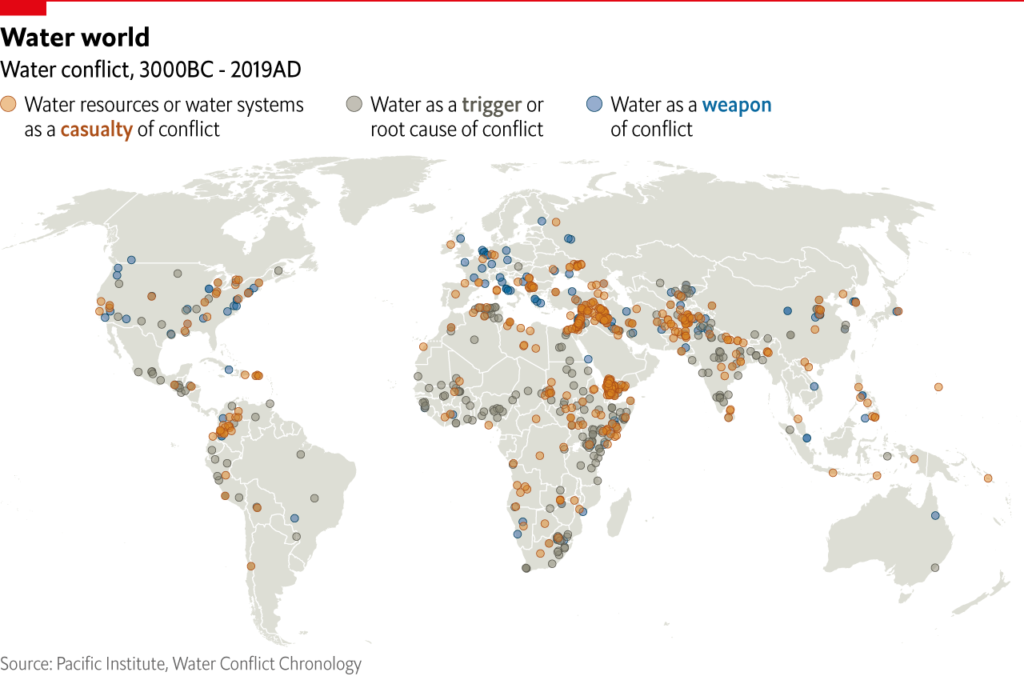
As water scarcity increases, conflicts over this essential resource are on the rise. The term “water wars” refers to battles fought for access to clean water or its impact on agriculture. This phenomenon is not limited to developing countries; even industrialized nations are experiencing water-related tensions.
The Hollywood Dream vs. Reality
In popular culture, movies like Mad Max: Fury Road depict a world where the power struggles revolve around control of water resources. This apocalyptic scenario might seem far-fetched, but the reality is that many parts of the world are already witnessing water-related conflicts.
One notable example is the case of Cochran County, Texas, in the United States. In 2017, residents of this small town fought over access to a limited water supply, resulting in violent confrontations and the eventual destruction of several homes. This incident highlights how desperate individuals can become when competing for an increasingly scarce resource.
Land and Water Grabs: The New Frontier in Conflicts
The concept of “land grabbing” refers to the acquisition of land by private entities or governments for agricultural, industrial, or other purposes. Similarly, “water grabbing” involves the control of water resources, often at the expense of neighboring communities. These practices have contributed to escalating tensions and conflicts over access to clean water.
For instance, in 2014, the Mexican government approved a permit for the construction of a pipeline that would carry water from the Colorado River to the city of Tijuana. However, local residents opposed the project, citing concerns about water pollution and the potential displacement of indigenous communities.
Global Water Scarcity: A Growing Concern
As the global population grows, so does the demand for water. Climate change exacerbates this issue by altering precipitation patterns and increasing evaporation rates. The consequences are far-reaching:
• Crop yields decline due to drought: This can lead to food shortages and economic losses, particularly in regions where agriculture is a significant contributor to the economy.
• Food production is affected, leading to economic losses: The scarcity of water for irrigation can have devastating effects on agricultural productivity, ultimately impacting local economies.
• Water scarcity creates social unrest and conflicts: When communities compete for limited resources, tensions rise, and violence can erupt.
• Private companies exploit public resources, further straining water supplies: Corporations often prioritize profits over environmental concerns, exacerbating the crisis.
Case Studies: Conflicts over the Mekong River
The Mekong River in Southeast Asia is a prime example of a water-related conflict. The river supports agriculture, fishing, and irrigation for millions of people, but its decreasing water levels threaten these industries.
• Dam construction: The Chinese government has built seven dams on the Mekong River, while Laos plans to build eleven more. These projects alter the natural flow of the river, affecting fish populations and sedimentation.
• Regional tensions: Countries like Thailand, Cambodia, and Vietnam are engaged in a delicate balance to ensure fair access to the Mekong’s water resources.
• Economic implications: The construction of dams may lead to significant economic losses for local communities, particularly those reliant on fishing and agriculture.
Global Water Governance: A Challenge
The management of global water resources is an intricate task. International cooperation and agreements are necessary to prevent conflicts and ensure equitable distribution of this vital resource.
• Water treaties: Governments and organizations have established international agreements to regulate water use, but these pacts often face challenges in implementation.
• Transboundary water governance: Effective management requires coordination between countries sharing the same water resources. This can be achieved through the development of comprehensive frameworks that address issues like dam construction, water allocation, and environmental protection.
Solutions to the Water Wars
To mitigate tensions and ensure equitable access to clean water for all, several strategies can be employed:
- Promote sustainable water management practices: Encourage individuals, businesses, and governments to adopt water-efficient technologies and strategies.
- Support international cooperation: Foster collaboration between countries sharing the same water resources to develop comprehensive frameworks for managing transboundary waters.
- Foster public awareness: Educate communities about the importance of water conservation and the consequences of conflict over this scarce resource.
Conclusion
The global conflict over water is a pressing issue. As climate change intensifies, competition for this scarce resource will only increase. Understanding the complexities of this phenomenon and working towards sustainable solutions can help mitigate tensions and ensure equitable access to clean water for all.
Frequently Asked Questions (FAQs)
- What are the main causes of global water conflicts?
- Climate change, water scarcity, and exploitation of public resources by private companies.
- How does climate change impact water availability?
- Changes in precipitation patterns and increased evaporation rates due to rising temperatures.
- What is the significance of the Mekong River in Southeast Asia?
- Supports agriculture, fishing, and irrigation for millions of people, but its decreasing water levels threaten these industries.
- How can international cooperation help prevent conflicts over water resources?
- Establishing treaties, agreements, and coordinated management strategies among countries sharing the same water resources.
- What are some potential consequences of dam construction on local communities?
- Economic losses, displacement of people, and disruption of traditional livelihoods.
Case Studies
- Cochran County, Texas (United States): A 2017 conflict over access to a limited water supply resulted in violent confrontations and the destruction of several homes.
- The Colorado River Basin (North America): The allocation of this vital water resource has led to tensions between countries sharing the same watershed.
Global Initiatives
- The Paris Agreement: An international accord aimed at mitigating climate change by reducing greenhouse gas emissions and promoting sustainable development.
- The United Nations Water Conference: A global platform for discussing water-related issues, including conflict prevention and management.
By understanding the complexities of this phenomenon and working towards sustainable solutions, we can ensure that clean water remains a precious resource for future generations.


