
As we go about our daily lives, it’s easy to take for granted the water that flows through our taps, quenches our thirst, and nourishes our bodies. But the reality is that we consume far more water than we realize. In fact, it’s estimated that a significant portion of the water we use is not even visible to us.
The Water Footprint: A New Perspective on Water Consumption
In the early 1990s, geographer Tony Allan coined the term “water footprint” to describe the invisible impact of human activity on our planet’s water resources. Since then, the concept has evolved into a valuable tool for understanding the true cost of our daily habits.
What is Water Footprint?
Water footprint refers to the total amount of water used by all stages of a product’s life cycle, from production to consumption. It includes not only the water directly used in agriculture but also indirect water usage, such as transportation and processing. In essence, it measures the hidden cost of our drinking water.
The Water Footprint Calculation
Calculating water footprint involves adding up the water used at each stage of a product’s life cycle. For example, to calculate the water footprint of a pair of jeans, you would need to consider not only the water used in textile production but also the water required for cotton cultivation and transportation.
For instance, let’s break down the calculation for a pair of jeans:
- Water used in textile production: 10,000 liters
- Water required for cotton cultivation: 8,000 liters
- Transportation and processing: 1,500 liters
Total water footprint: 19,500 liters
This simple example illustrates how the water footprint can add up quickly. By understanding these calculations, we can begin to see the impact of our daily choices on the environment.
The Impact of Climate on Water Footprint
Climate plays a significant role in shaping our water footprint. In humid climates, crops can be grown without irrigation, while in drier regions, irrigation is essential. The type of agriculture practiced also affects water usage, with rain-fed agriculture generally requiring less water than irrigated farming.
For example, the Amazon rainforest provides natural shade and cooling to crops, reducing the need for irrigation. In contrast, the arid regions of Australia require extensive irrigation to grow crops.
The Two Faces of Water Footprint: Green and Blue
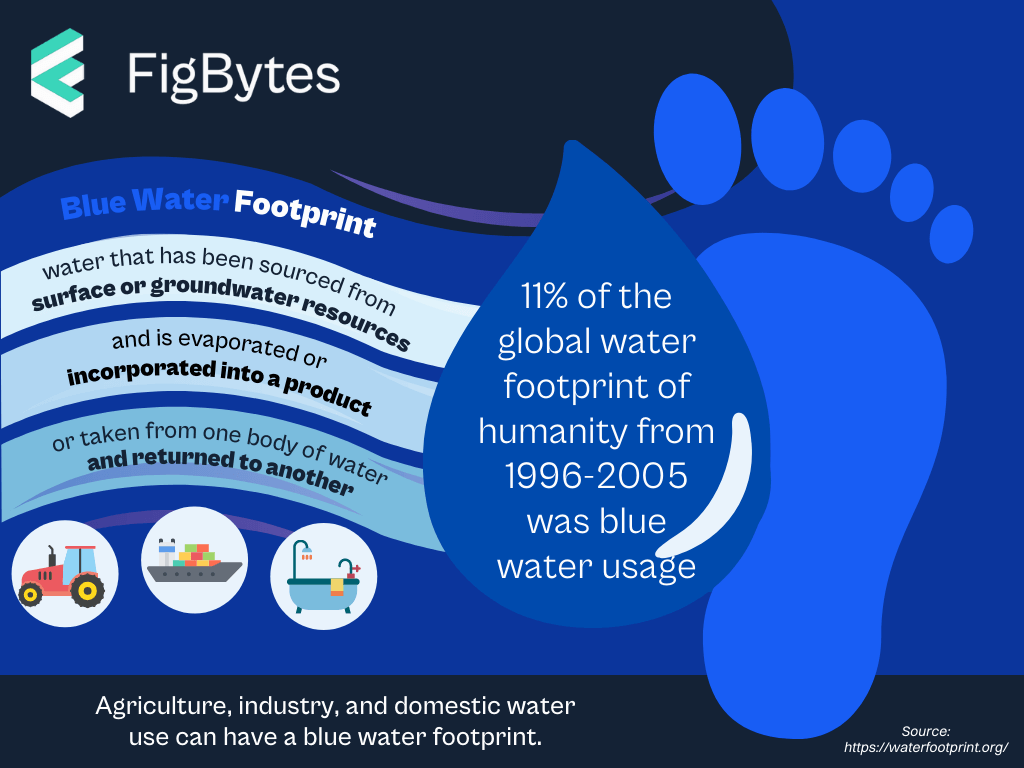
Our water footprint has two main components: green (rain-fed) and blue (irrigation). While green water is abundant in humid climates, blue water requires significant amounts of energy to pump from underground sources. The difference between these two types of water usage has a profound impact on our environment.
Green water accounts for approximately 70% of the world’s freshwater resources, while blue water makes up around 30%. Understanding the distinction between green and blue water is crucial for addressing the environmental impacts of our daily habits.
The Importance of Distinguishing Between Green and Blue Water
Understanding the distinction between green and blue water is important because it highlights the need to adopt sustainable agricultural practices. Rain-fed agriculture tends to have fewer negative consequences than irrigated farming, which can lead to soil salinization, groundwater depletion, and reduced crop yields.
For instance, research has shown that rain-fed agriculture can reduce carbon emissions by up to 50% compared to irrigated farming. By adopting more water-efficient agricultural practices, we can not only conserve water but also mitigate climate change.
The Global Picture: Countries with the Highest Water Footprints
Our individual water footprint varies greatly depending on our dietary choices. In Italy, for example, a person’s daily water intake is around 5,600 liters, making us one of the countries with the highest per-capita water consumption.
On the other hand, some countries have relatively low water footprints due to their agricultural practices and water management strategies. For example, Costa Rica has implemented sustainable agriculture practices that reduce its water footprint by up to 70%.
Global Trade and the Water Footprint Connection
International trade plays a significant role in shaping our global water footprint. The importation of agricultural products from vulnerable regions exacerbates water scarcity issues.
For instance, the demand for cotton in the United States has led to widespread irrigation practices in countries such as Uzbekistan, which can deplete groundwater resources and threaten local ecosystems.
Conclusion: The Hidden Cost of Our Drinking Water
The concept of water footprint highlights the invisible costs of our daily habits on our planet’s water resources. By understanding the true extent of our water consumption, we can make more informed choices to reduce our environmental impact.
As individuals, we have the power to shape our own water footprints by making conscious decisions about our dietary choices, transportation habits, and energy usage. By working together, we can create a more sustainable future for generations to come.
Sustainable Solutions
Fortunately, there are many ways to reduce our individual water footprint. Here are some practical solutions:
- Adopt a plant-based diet: Animal agriculture is a significant contributor to greenhouse gas emissions and water pollution.
- Reduce meat consumption: Choose leaner meats or opt for plant-based alternatives.
- Use public transportation: Using public transportation can reduce our carbon footprint and alleviate pressure on local water resources.
- Conserve energy: Simple actions like turning off lights and electronics when not in use can make a significant impact on our overall water footprint.
- Support sustainable agriculture practices: Look for certifications such as Fairtrade, Organic, or Rainforest Alliance, which promote environmentally friendly farming methods.
Frequently Asked Questions (FAQs)
- What is water footprint?
Water footprint refers to the total amount of water used by all stages of a product’s life cycle. - How is water footprint calculated?
Water footprint is calculated by adding up the water used at each stage of a product’s life cycle, including direct and indirect water usage. - What affects climate on water footprint?
Climate plays a significant role in shaping our water footprint, with humid climates generally requiring less water than drier regions. - Why is it important to distinguish between green and blue water?
Understanding the distinction between green and blue water is crucial for addressing the environmental impacts of our daily habits. - How can we reduce our individual water footprint?
Reducing our individual water footprint requires changes in dietary habits, such as adopting a plant-based diet or reducing meat consumption. - What role does international trade play in shaping global water footprints?
International trade plays a significant role in shaping global water footprints, with the importation of agricultural products from vulnerable regions exacerbating water scarcity issues. - How can we promote sustainable agriculture practices?
Promoting sustainable agriculture practices requires support for farmers who adopt environmentally friendly methods, such as conservation tillage and drip irrigation. - What are the long-term consequences of neglecting our water footprint?
Neglecting our water footprint can lead to severe environmental consequences, including soil degradation, reduced crop yields, and increased greenhouse gas emissions.
By understanding the true extent of our water consumption and making conscious decisions about our daily habits, we can work towards creating a more sustainable future for generations to come.


