
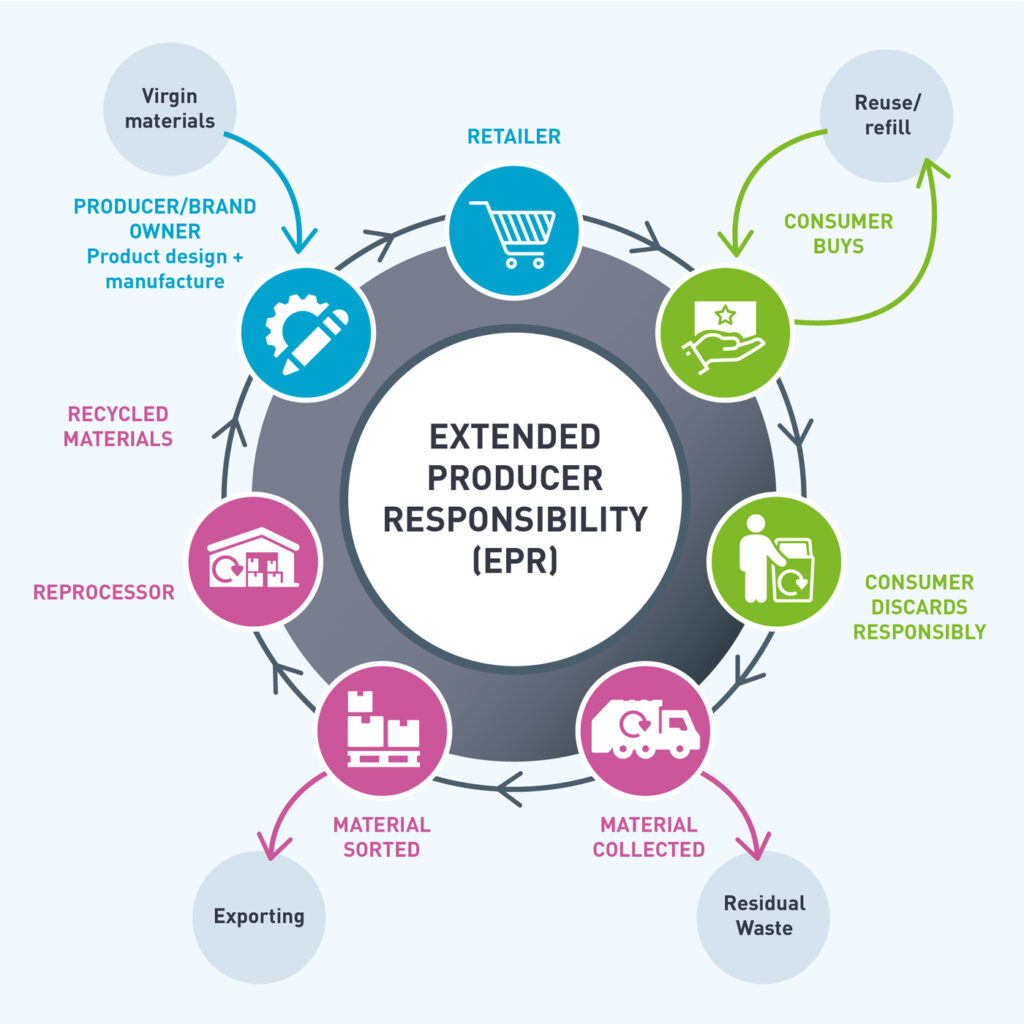
As consumers, we often think about the environmental impact of our purchases, but have you ever stopped to consider who’s responsible for managing the waste generated by those products? According to the European Community, it’s not just the consumer or the company that sold the product – it’s anyone involved in the production, transformation, treatment, sale, or importation of the goods. This is where Extended Producer Responsibility (EPR) comes in, a principle introduced in Directive 2008/98/CE to ensure companies take responsibility for the waste they create.
1. Introduction to Extended Producer Responsibility
Extended Producer Responsibility (EPR) is a principle that requires companies to take responsibility for the waste they create. This concept has gained significant attention in recent years as countries strive to reduce their environmental footprint and meet waste management targets. EPR is not just about assigning blame, but rather about creating a system where companies are incentivized to design products and packaging that minimize waste and promote recycling.
2. The Need for Sustainable Waste Management
With the European Union’s targets set for recycling and waste management by 2020, Italy must find ways to meet these goals while addressing concerns about waste management becoming a cost for society. Will EPR be an effective tool in achieving this? And what actors will be responsible for meeting this obligation?
Italy is required to achieve the following targets by 2020:
- 50% overall recycling of paper, plastics, metals, glass, wood, and organic fractions of municipal solid waste
- 70% recycling of waste generated from construction and demolition projects
Additionally, Italy must reduce biodegradable waste as final disposal by 2018.
3. The Benefits of Extended Producer Responsibility
EPR can act as an economic lever both in prevention and the production of more recyclable products. Can it decrease waste production and minimize its danger? And how?
By implementing EPR, companies can take a proactive approach to reducing waste, designing more sustainable products, and minimizing their environmental footprint.
- Reduced Waste Production: Companies can reduce waste generation by designing products with recyclability in mind, using biodegradable materials, and optimizing packaging.
- Increased Recycling Rates: By making it easier for consumers to recycle, EPR can lead to increased recycling rates and a more efficient waste management system.
- Cost Savings: Companies can save money by reducing waste disposal costs and increasing revenue from the sale of recycled materials.
4. Efficient Waste Management: A Key to Cost-Effective Producer Responsibility
However, we still need to determine adequate policies of intervention and make the waste management system more efficient. We also need to define the role of the public and various consortia.
This requires a comprehensive approach that balances economic, social, and environmental considerations.
- Waste Management Infrastructure: Developing a robust waste management infrastructure is crucial for efficient EPR implementation.
- Public Education and Awareness: Educating the public about EPR and its benefits can lead to increased participation in recycling programs.
- Consortia and Collaboration: Collaborative efforts between companies, governments, and other stakeholders can facilitate effective waste management.
5. The National Programmatic Assembly: A Step Towards Sustainable Waste Management
On September 16, 2014, the National Programmatic Assembly on Extended Producer Responsibility took place at ENEA headquarters in Rome, discussing the role of EPR in Italy’s waste management system. This event marked an important step towards achieving sustainable waste management goals.
6. Challenges and Opportunities for Sustainable Waste Management
As we move forward, it’s essential to address the challenges facing our waste management systems while exploring opportunities for growth and innovation.
By working together – governments, companies, and individuals – we can create a more sustainable future where producer responsibility is a driving force behind environmental stewardship.
- Challenges: Inadequate policies, inefficient systems, and a lack of public awareness and engagement are some of the challenges facing Italy’s waste management system.
- Opportunities: EPR offers opportunities for growth, innovation, and cost savings. By working together, we can create a more sustainable future.
7. Conclusion: A Path Forward for Sustainable Waste Management
In conclusion, Extended Producer Responsibility holds great promise for Italy’s waste management system. By understanding its benefits, challenges, and opportunities, we can work towards creating a more sustainable future where producer responsibility is a guiding principle.
EPR requires a multifaceted approach that involves government policies, company practices, public education, and collaborative efforts between stakeholders. While there are challenges to overcome, the potential rewards of EPR make it an attractive solution for achieving sustainable waste management goals.
FAQs
- Q: What is Extended Producer Responsibility (EPR)?
- EPR is a principle that requires companies to take responsibility for the waste they create.
- Q: Why is EPR important?
- EPR helps reduce waste, promotes sustainability, and encourages companies to design more eco-friendly products.
- Q: What are the EU targets for recycling and waste management by 2020?
- Italy must achieve a minimum of 50% overall recycling of municipal solid waste and 70% recycling of construction and demolition waste.
- Q: What is the role of the public in EPR?
- The public plays a crucial role in promoting sustainable practices, reducing waste, and supporting companies that adopt environmentally friendly strategies.
- Q: How can EPR decrease waste production and minimize danger?
- By designing more sustainable products, reducing packaging, and promoting recycling, companies can significantly reduce waste and mitigate its environmental impacts.
- Q: What are the challenges facing Italy’s waste management system?
- Challenges include inadequate policies, inefficient systems, and a lack of public awareness and engagement.
- Q: How can we create a more sustainable future for waste management?
- By working together – governments, companies, and individuals – we can develop innovative solutions, promote sustainability, and ensure that producer responsibility is a guiding principle in our efforts to address environmental challenges.


