
The Power of Volcanic Products: Understanding the Different Types and Stages of a Volcanic Eruption
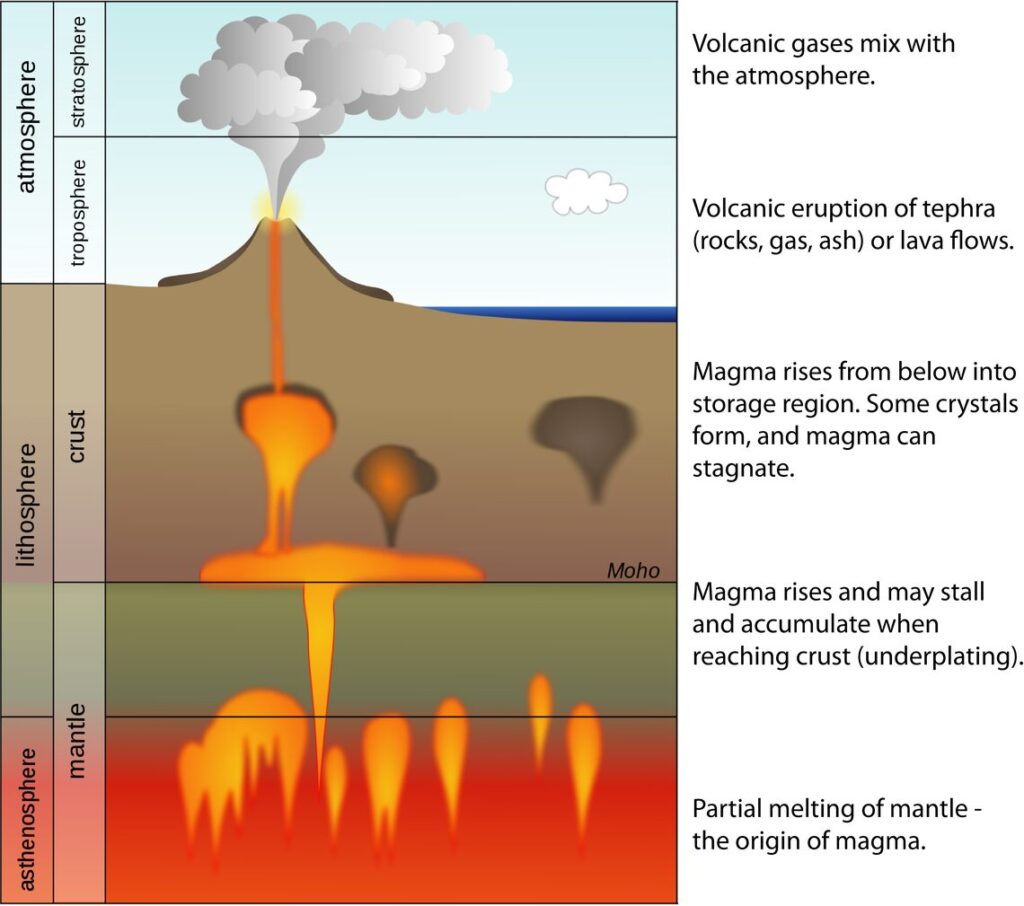
Volcanoes are often referred to as “fissures in the Earth’s crust” where magma, incandescent materials that release enormous amounts of energy and heat, is pushed out through the surface. The interaction between these molten materials and the surrounding environment can be quite fascinating.
Understanding Volcano Types
Volcanoes can be classified into three main categories: active, dormant, and extinct. Active volcanoes are characterized by frequent eruptions, while dormant volcanoes exhibit periodic activity, but with less frequency than active ones. Extinct volcanoes have not shown any signs of volcanic activity for a long time.
Active Volcanoes
Active volcanoes are those that show regular activity, often producing lava flows, ash clouds, and pyroclastic flows. These volcanoes can be found at subduction zones where tectonic plates are being pushed beneath each other. The interaction between the Earth’s crust and the mantle leads to the formation of magma chambers.
Dormant Volcanoes
Dormant volcanoes are characterized by periodic activity, but with less frequency than active ones. These volcanoes may exhibit occasional eruptions, but they do not show any signs of ongoing volcanic activity. Dormant volcanoes can be found at rift zones where tectonic plates are moving apart.
Extinct Volcanoes
Extinct volcanoes have not shown any signs of volcanic activity for a long time. These volcanoes may still have magma chambers and gas emissions, but they do not produce lava flows or ash clouds.
Volcanic Products
The primary cause of volcanic eruptions is the release of gases contained in magma. However, this process is often hindered by the molten material itself. When magma is fluid, it can degas peacefully, producing less explosive results. Conversely, when magma is highly viscous, the degassing process can lead to violent explosions that rival those of ten hydrogen bombs.
There are two primary types of volcanic products: liquid and solid.
Liquid Volcanic Products
Liquid volcanic products consist of lava flows that vary in composition based on their silica content:
- Basic Lava: Low-silica lava with a dark color, highly fluid, and rapid flow rates.
- Neutral Lava: Lava with moderate silica content, light color, and moderate flow rates.
- Acidic Lava: High-silica lava with a clear color, low flow rate, and slow movement.
The viscosity of magma determines the type of product released during an eruption. Low-viscosity magma produces fluid lava flows, while high-viscosity magma leads to explosive eruptions.
Solid Volcanic Products
Solid volcanic products, also known as piroclastic materials, include:
- Cinders and Ash: Fine particles of rock and ash that are ejected into the atmosphere during an eruption.
- Lapilli: Small rocks with a gray color that can travel long distances through the air.
- Bombs: Hot, molten rocks that fall from the sky during an explosive eruption.
- Pompeii: Viscous lava flows that solidify into blocks, often retaining their original shape.
Stages of a Volcanic Eruption
Volcanic eruptions can be divided into four primary stages:
- Pre-Eruptive Stage
- Explosive Stage
- Effusive Stage
- Solfataric or Quiescent Stage
Pre-Eruptive Stage
This stage is marked by signs of unrest, such as earthquakes, ground deformation, and changes in gas emissions.
During this stage, scientists may detect increased seismic activity, ground swelling, or changes in the volcano’s shape. These signs indicate that magma is moving beneath the surface, preparing for an eruption.
Explosive Stage
During this stage, the volcano erupts violently, releasing a massive amount of energy and ash into the atmosphere. This can lead to pyroclastic flows that can travel long distances at high speeds.
Pyroclastic flows are hot, fast-moving clouds of ash, gas, and rock that form during an explosive eruption. These flows can be deadly and destructive, causing widespread damage to surrounding areas.
Effusive Stage
In this stage, lava flows out of the volcano, often producing slow-moving rivers of molten rock. The flow rate and velocity of these lava streams depend on various factors, including the viscosity of the magma and the slope of the volcano.
During an effusive eruption, scientists may observe continuous lava flows that can travel long distances before solidifying. These eruptions are typically characterized by a steady stream of lava that flows out of the volcano without any violent explosions.
Solfataric or Quiescent Stage
After the main eruption phase has ended, the volcano enters a state of dormancy, characterized by continued gas emissions and occasional minor eruptions.
During this stage, scientists may detect decreased seismic activity, ground deformation, or changes in gas emissions. These signs indicate that the magma chamber is no longer active, and the volcano is in a state of quiescence.
Conclusion
Understanding volcanic products and stages is crucial for grasping the complexities of volcanic eruptions. By recognizing the different types of products and stages, scientists can better predict and prepare for potential eruptions.
Frequently Asked Questions:
- What causes volcanic eruptions?
Volcanic eruptions are caused by the release of gases contained in magma. - How do volcanic products form?
Volcanic products form when magma interacts with the surrounding environment, releasing gases and molten rock. - What is the difference between liquid and solid volcanic products?
Liquid volcanic products consist of lava flows that vary in composition based on their silica content, while solid products include cinders, ash, lapilli, bombs, and pompeii. - How do pyroclastic flows form during an eruption?
Pyroclastic flows are formed when hot, molten rocks are ejected into the air during an explosive eruption, traveling long distances at high speeds.
By recognizing the different types of volcanic products and stages, scientists can better predict and prepare for potential eruptions. Understanding volcanic products and stages is essential for grasping the complexities of volcanic eruptions.


