
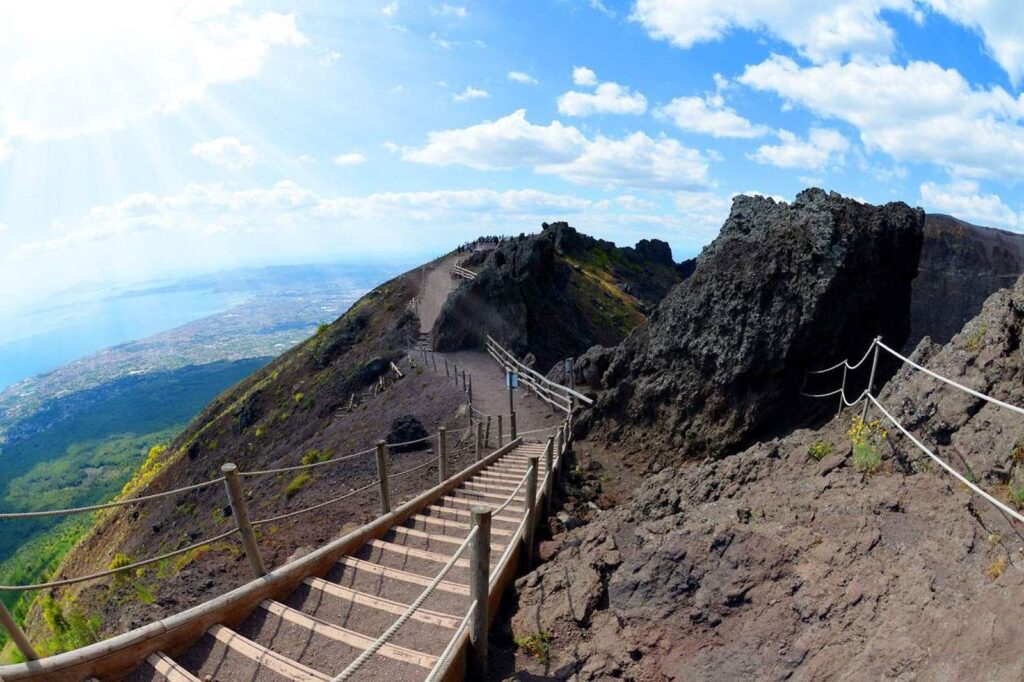
Located in the Campania region of Italy, the National Park of Mount Vesuvius is a unique anomaly in the European park landscape. Established in 1995, it has the daunting task of protecting and showcasing the world’s most famous volcano, while also preserving the surrounding human communities that have developed over time.
Where is Mount Vesuvius National Park Located?
The National Park of Mount Vesuvius covers an area of 8,482 hectares across 13 municipalities: Ercolano, Torre del Greco, Trecase, Boscoreale, Boscotrecase, Terzigno, San Giuseppe Vesuviano, Sant’Anastasia, Ottaviano, Somma Vesuviana, Pollena Trocchia, Massa di Somma, and San Sebastiano al Vesuvio. This territory presents a unique blend of natural and cultural attractions.
Mineralogy and Vegetation
From a mineralogical perspective, Mount Vesuvius National Park is considered one of the most richly endowed regions on Earth. The park’s unique geology supports an incredible variety of plant life, with 906 known species, many of which are rare and endemic to the area.
Understanding the Park
To get a better sense of what Mount Vesuvius National Park has to offer, we recommend watching one of our informative videos. Our video provides an introduction to the park’s natural beauty, history, and attractions.
The Ente Parco Nazionale del Vesuvio
Established in 1995, the Ente Parco Nazionale del Vesuvio is the governing body responsible for managing and protecting the national park. Its mission is to preserve both human settlements and natural habitats, while also promoting sustainable tourism practices that respect the local environment.
Conservation Efforts
The ente has been implementing various conservation initiatives over the past 21 years, focusing on habitat restoration, wildlife protection, and community engagement. Additionally, they work tirelessly to promote cultural heritage sites, such as ancient ruins and historic buildings, while also preserving traditional agricultural practices.
Visiting Mount Vesuvius National Park
To visit the park, we recommend using one of our suggested routes. There are nine hiking trails spanning a total distance of 54 kilometers, each offering a unique perspective on the park’s natural beauty. The trails range from easy strolls to more challenging hikes, and they all offer stunning views of the surrounding landscape.
Getting Around
When planning your trip to Mount Vesuvius National Park, consider using public transportation or driving to one of our designated parking areas. Please note that some areas may be difficult to access without a vehicle.
A Map of the Park
For those looking for a more detailed guide to visiting Mount Vesuvius National Park, we have prepared an interactive map featuring all of our suggested routes and attractions.
Wildlife in the Park
Mount Vesuvius National Park is home to a wide variety of wildlife, including rare and endangered species. Some of the most notable animals include:
- The Italian wolf: A subspecies of gray wolf that is found only in Italy.
- The European rabbit: A small mammal that is common throughout Europe.
- The red fox: A small, adaptable predator that can be found throughout the park.
- The Eurasian bee-eater: A colorful bird that is known for its distinctive calls.
Cultural Heritage
Mount Vesuvius National Park is also rich in cultural heritage, with many ancient ruins and historic buildings scattered throughout the park. Some of the most notable sites include:
- Pompeii: An ancient Roman city that was destroyed by the eruption of Mount Vesuvius in 79 AD.
- Herculaneum: Another ancient Roman city that was destroyed by the eruption of Mount Vesuvius in 79 AD.
- The Castel dell’Ovo: A medieval castle located on the coast of Naples, with stunning views of the Bay of Naples.
Food and Drink
Mount Vesuvius National Park is known for its delicious local cuisine, which features a variety of fresh seafood, meats, and vegetables. Some of the most notable dishes include:
- Pizza margherita: A classic Neapolitan pizza topped with tomato sauce, mozzarella cheese, and fresh basil leaves.
- Spaghetti alle vongole: A simple yet flavorful pasta dish made with spaghetti, clams, garlic, and olive oil.
- Focaccia: A traditional Italian flatbread that is perfect for snacking or as a side dish.
Accommodation
There are many accommodation options available in Mount Vesuvius National Park, ranging from budget-friendly hotels to luxury resorts. Some of the most notable places to stay include:
- The Hotel Villa dei Cedri: A luxurious hotel located near the park’s entrance, with stunning views of the surrounding landscape.
- The B&B Il Girasole: A cozy bed and breakfast located in a historic villa, with comfortable rooms and delicious breakfasts.
- The Camping del Vesuvio: A camping site that offers basic facilities and stunning views of Mount Vesuvius.
Activities
Mount Vesuvius National Park offers a wide variety of activities for visitors, including:
- Hiking: There are nine hiking trails in the park, ranging from easy strolls to more challenging hikes.
- Wildlife watching: The park is home to a wide variety of wildlife, including rare and endangered species.
- Cultural heritage tours: Visitors can explore ancient ruins and historic buildings throughout the park.
- Food and wine tastings: The park is known for its delicious local cuisine, with many opportunities to taste fresh seafood, meats, and vegetables.
Conclusion
Mount Vesuvius National Park is a must-visit destination for nature lovers, hikers, and history enthusiasts alike. With its unique blend of natural beauty, cultural heritage, and stunning landscapes, this park is sure to leave you in awe. We hope that this guide has provided you with the information you need to plan an unforgettable visit.
FAQs
-
What is Mount Vesuvius National Park?
Mount Vesuvius National Park is a protected area located in the Campania region of Italy, covering an area of 8,482 hectares. -
How was the park established?
The Ente Parco Nazionale del Vesuvio was established in 1995 to protect and manage the national park. -
What are some of the park’s unique features?
Mount Vesuvius National Park is home to over 906 plant species, many of which are rare and endemic to the area. The park is also known for its stunning natural beauty, with towering volcanoes, deep valleys, and picturesque towns. -
How can I visit the park?
There are nine hiking trails in the park, ranging from easy strolls to more challenging hikes. Visitors can also use public transportation or drive to one of our designated parking areas. -
What should I bring when visiting the park?
-
Is there public transportation available in the park?
-
Can I drive to certain areas of the park?
-
Are there any specific rules or regulations that I need to follow when visiting the park?
-
How can I support conservation efforts in the park?
-
Are there any guided tours available in the park?


