
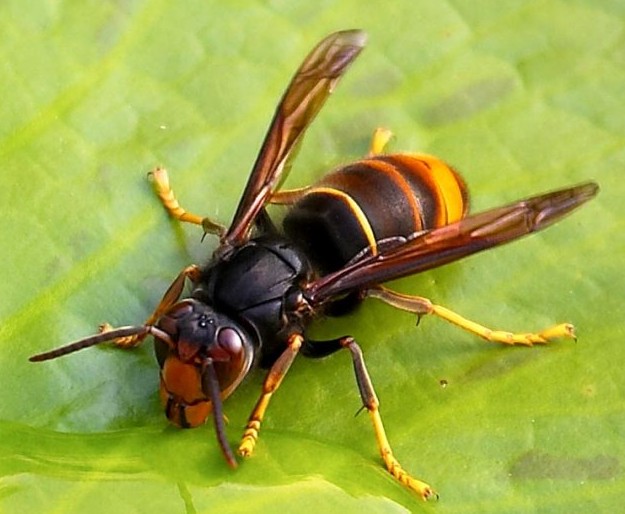
The Vespa Velutina is a small wasp native to Southeast Asia, but its introduction to Europe has caused significant concern. This article will explore the spread of the Vespa Velutina in Italy, its impact on local ecosystems, and what can be done to combat it.
Introduction to the Vespa Velutina
The Vespa Velutina is a species of wasp that is native to Southeast Asia, particularly in India, Indonesia, China, and Java. In recent years, it has been introduced to Europe, initially in the southern region of France, and from there it has spread to other countries including Belgium, Portugal, Spain, and Italy.
The First Recordings of Vespa Velutina in Italy
The first official record of the Vespa Velutina in Europe dates back to 2005 in France. However, some damage had already been reported in 2004 in the same country.
The Spread of Vespa Velutina in Italy
In Italy, the Vespa Velutina has been identified as a significant threat to local ecosystems. The first sightings were reported in Liguria and surrounding regions in 2012. Since then, it has spread rapidly to Piemonte, particularly in the provinces of Cuneo and Turin, and is now being detected in Veneto, Lombardy, and Emilia-Romagna.
The Impact on Bees
Studies have shown that the Vespa Velutina can cause significant damage to bee colonies. According to French researchers, the loss of bees caused by the Vespa Velutina is estimated to be around 50% with a potential expansion of up to 100 km per year.
How Vespa Velutina Affects Bees
The Vespa Velutina affects bees in two main ways: it preys on them directly, and it prevents them from leaving the hive to gather nectar and pollen. This means that entire bee colonies are deprived of food, putting their survival at risk.
A Devastating Scenario
One heart-wrenching scenario is when bees are subjugated by an alien insect like the Vespa Velutina! The thought of such a devastating impact on our ecosystem is alarming, and it’s crucial to understand the extent of this threat.
Combating Vespa Velutina: The Challenge
Talking about fighting Vespa Velutina is not easy. On our territory, there are no natural predators, and introducing new species to fight it could disrupt our ecosystems even further.
Puncture or Sting: Risks for Humans
The Vespa Velutina presents a moderately aggressive behavior towards humans, similar to other European wasps. It has a stinger, so speaking of “sting” is incorrect. However, the risk posed by the Vespa Velutina to humans is comparable to that of other European wasps.
Different Story for Bees
The situation is different for bees: this insect in Europe poses a significant threat to bee communities. The impact on bees is not limited to their numbers; it also affects their behavior and social structure.
Identifying and Countering Vespa Velutina
To recognize and fight the Vespa Velutina through non-violent means and trap usage, we recommend consulting our guide on animal biology dedicated to this formidable predator: “Biologia e riproduzione della Vespa velutina: identificazione, morfologia e predazione”.
The Importance of Early Detection
Early detection is crucial in combating the spread of Vespa Velutina. By identifying the signs and symptoms of its presence, we can take swift action to prevent further damage.
Biological Control Methods
One approach to controlling Vespa Velutina is through biological control methods. This involves introducing natural predators or parasites that specifically target the Vespa Velutina. However, this method requires careful consideration to avoid unintended consequences.
Trapping and Monitoring
Another effective way to combat Vespa Velutina is through trapping and monitoring. Traps can be used to capture individual wasps, reducing their population and preventing further spread. Monitoring programs can also help track the movement of the Vespa Velutina and identify areas where control measures are needed.
Education and Awareness
Education and awareness are crucial in combating Vespa Velutina. By informing the public about the risks posed by this insect, we can encourage individuals to take action to prevent its spread.
Community Engagement
Community engagement is essential in fighting Vespa Velutina. Local communities must work together to share knowledge, coordinate control efforts, and develop effective strategies for managing the Vespa Velutina.
Government Support
Government support is necessary to combat Vespa Velutina. Governments can provide resources, funding, and expertise to support local efforts to control the spread of this insect.
International Cooperation
International cooperation is also crucial in combating Vespa Velutina. Scientists and researchers from around the world must work together to share knowledge, develop new strategies, and coordinate efforts to prevent the spread of this invasive species.
Conclusion
The introduction of the Vespa Velutina to Europe poses an existential risk to bee colonies, making conservation efforts essential. The battle against this alien wasp requires a comprehensive and nuanced approach, taking into account its behavior, habitat requirements, and ecological impact.
Frequently Asked Questions (FAQs)
-
Q: What is the Vespa Velutina?
A: The Vespa Velutina is a species of wasp native to Southeast Asia that has been introduced to Europe. -
Q: Where is the Vespa Velutina most commonly found in Italy?
A: The Vespa Velutina is primarily found in Liguria and surrounding regions, as well as in Piemonte, Veneto, Lombardy, and Emilia-Romagna. -
Q: What impact does the Vespa Velutina have on bee colonies?
A: The Vespa Velutina can cause significant damage to bee colonies, with a loss of 50% of bees reported in some areas, and potentially up to 100 km expansion per year. -
Q: How do Vespa Velutina affect bees?
A: The Vespa Velutina affects bees by preying on them directly and preventing them from leaving the hive to gather nectar and pollen. -
Q: Is there a natural predator for Vespa Velutina in Italy?
A: No, there are no natural predators of Vespa Velutina in Italy, making non-violent measures necessary to combat it. -
Q: What should be done to protect bees from the Vespa Velutina?
A: Conservation efforts and education are crucial for protecting bee colonies from the impact of Vespa Velutina. -
Q: Can humans get stung by Vespa Velutina?
A: The Vespa Velutina presents a moderately aggressive behavior towards humans, similar to other European wasps. -
Q: What is being done to combat Vespa Velutina in Italy?
A: A combination of non-violent measures and education campaigns are being implemented to control the spread of Vespa Velutina in Italy.


