
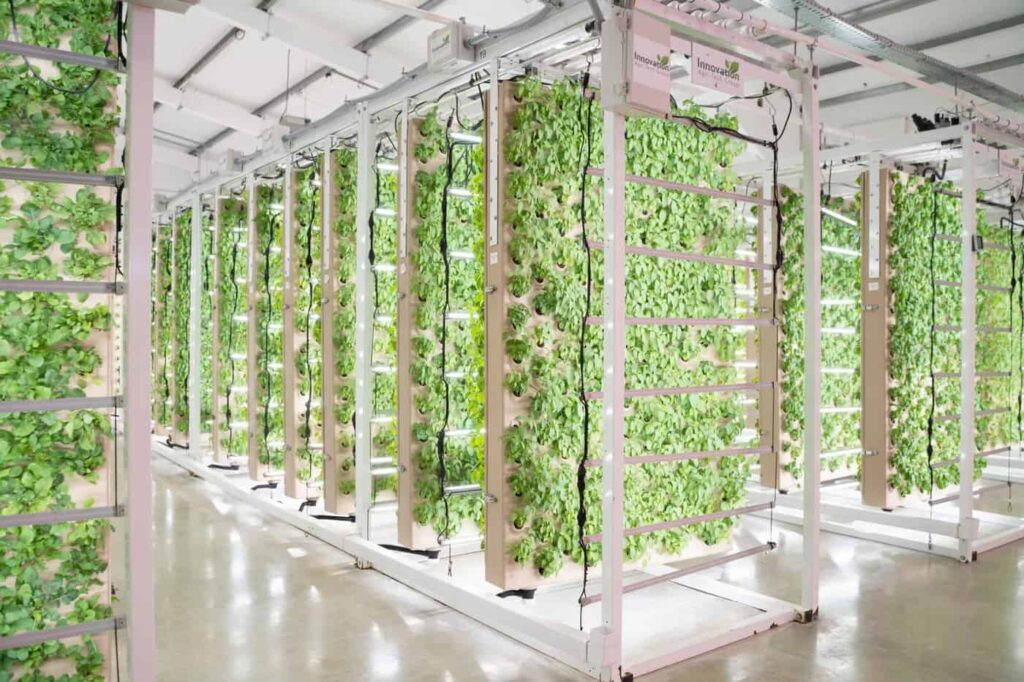
As the world’s population continues to urbanize at an unprecedented rate, with over 3.3 billion people currently living in cities and projected to reach 5 billion by 2025, the need for sustainable food production has never been more pressing. In this context, vertical farming emerges as a promising solution to address the challenges of urbanization, ensuring a more secure and diverse food supply.
What is Vertical Farming?
Vertical farming involves growing crops in vertically stacked layers, often using hydroponics or aeroponics, within an indoor environment. This approach can increase crop yields while minimizing land use, water consumption, and energy requirements. By optimizing light exposure, temperature control, and nutrient delivery, vertical farms can achieve higher productivity rates than traditional agriculture.
The Benefits of Vertical Farming
- Increased Food Security: Vertical farming allows for year-round production, reducing reliance on seasonal crops and ensuring a consistent supply of fresh produce.
- Water Conservation: Hydroponics and aeroponics use significantly less water than traditional farming methods, making vertical farms an attractive solution for water-scarce regions.
- Reduced Energy Consumption: LED lighting and advanced climate control systems minimize energy requirements, reducing the carbon footprint of vertical farms.
- Increased Biodiversity: By growing a wide variety of crops in close proximity, vertical farms can promote biodiversity and reduce the environmental impact of monoculture farming.
- Improved Crop Quality: Vertical farming allows for precise control over growing conditions, resulting in higher-quality crops with improved nutritional content.
- Reduced Transportation Emissions: With vertically integrated farming systems, produce is grown closer to consumers, reducing transportation emissions and promoting a more sustainable food system.
Overcoming Practical Challenges
While vertical farming shows great promise, several practical challenges must be addressed:
- Lighting: In urban environments, natural light is limited, making artificial lighting essential for vertical farm operations.
- Energy Efficiency: The high energy requirements of vertical farms can be significant, necessitating efficient systems and renewable energy sources.
- Cost: Establishing a vertical farm requires substantial investment in infrastructure, including climate control systems, irrigation, and LED lighting.
- Scalability: Vertical farming systems must be designed to accommodate large-scale production, while maintaining optimal growing conditions for crops.
- Labor Requirements: Vertical farms require specialized labor to manage the complex systems involved in crop growth and harvesting.
The Future of Urban Agriculture
As the world’s population continues to urbanize, innovative solutions like vertical farming are essential for ensuring food security and sustainability. By addressing practical challenges through technological advancements and efficient design, vertical farms can become a vital component of urban agriculture, providing fresh produce to local communities while minimizing environmental impact.
Real-World Examples
- Sustainable Vertical Farming: A Swiss company is currently developing a 177-meter-tall building that will integrate vertical farming into its structure, providing a unique opportunity for urban agriculture.
- Urban Hydroponics: In cities like New York and Los Angeles, hydroponic systems are being used to grow crops in indoor facilities, reducing energy consumption and increasing food security.
- Vertical Farming in Africa: In countries like Ghana and Kenya, vertical farming is being implemented as a sustainable solution for food production in urban areas.
- Hydroponic Systems: Companies like GreenSense Farms and Bright Agrotech are developing innovative hydroponic systems that can be used in urban environments.
The Cost of Vertical Farming
Establishing a vertical farm can be expensive, with estimated costs ranging from $83 million to $1 billion, depending on the size and complexity of the operation. However, as the industry continues to evolve and technologies improve, costs are expected to decrease, making vertical farming more accessible to urban communities.
Economic Benefits of Vertical Farming
- Job Creation: Vertical farms can create new job opportunities in fields like agriculture, engineering, and construction.
- Local Economic Growth: By providing fresh produce to local markets, vertical farms can stimulate local economic growth and development.
- Increased Tax Revenue: With vertically integrated farming systems, governments can collect increased tax revenue from urban farms.
Environmental Benefits of Vertical Farming
- Reduced Greenhouse Gas Emissions: Vertical farming reduces the need for transportation, resulting in lower greenhouse gas emissions.
- Conservation of Natural Resources: By using hydroponics and aeroponics, vertical farms conserve water and reduce waste.
- Promotion of Biodiversity: Vertical farming promotes biodiversity by growing a wide variety of crops in close proximity.
Conclusion
As the world’s population continues to urbanize, vertical farming emerges as a crucial solution for ensuring food security, sustainability, and environmental stewardship. By addressing practical challenges through innovative design and technological advancements, vertical farms can become an integral part of urban agriculture, providing fresh produce to local communities while minimizing environmental impact.
Frequently Asked Questions
- Q: What are the main benefits of vertical farming?
A: The main benefits of vertical farming include increased food security, water conservation, reduced energy consumption, and increased biodiversity. - Q: How does vertical farming address urbanization and sustainability?
A: Vertical farming addresses urbanization and sustainability by providing a solution for food production in urban areas, reducing the environmental impact of traditional agriculture, and promoting biodiversity. - Q: What are some practical challenges facing vertical farming?
A: Practical challenges facing vertical farming include lighting, energy efficiency, cost, scalability, and labor requirements. - Q: How can vertical farming promote food security?
A: Vertical farming promotes food security by providing a consistent supply of fresh produce throughout the year, reducing reliance on seasonal crops, and ensuring access to nutritious food for urban communities. - Q: What are some real-world examples of vertical farming in action?
A: Real-world examples of vertical farming include sustainable vertical farming projects in Switzerland and urban hydroponics facilities in cities like New York and Los Angeles.
Future Research Directions
- Development of More Efficient Lighting Systems: The development of more efficient lighting systems is essential for reducing energy consumption and increasing crop yields.
- Advanced Climate Control Systems: The implementation of advanced climate control systems can optimize growing conditions for crops, improving yield and quality.
- Scalability of Vertical Farming Systems: Research on the scalability of vertical farming systems is crucial for ensuring that these systems can meet the demands of large-scale food production.
Conclusion
In conclusion, vertical farming offers a promising solution for addressing urbanization, sustainability, and environmental concerns in the food system. By overcoming practical challenges through technological advancements and efficient design, vertical farms can become an integral component of urban agriculture, providing fresh produce to local communities while minimizing environmental impact. As the world’s population continues to urbanize, it is essential that we prioritize sustainable food production methods like vertical farming to ensure a secure and diverse food supply for future generations.


