
Understanding Venn Diagrams: A Powerful Tool for Visualizing Sets and Relationships
As we explore the world of mathematics, it’s easy to get lost in complex concepts and formulas. However, there’s a tool that can help us make sense of these abstract ideas: the Venn diagram. In this article, we’ll delve into the world of Venn diagrams, exploring their history, uses, and benefits.
What is a Venn Diagram?
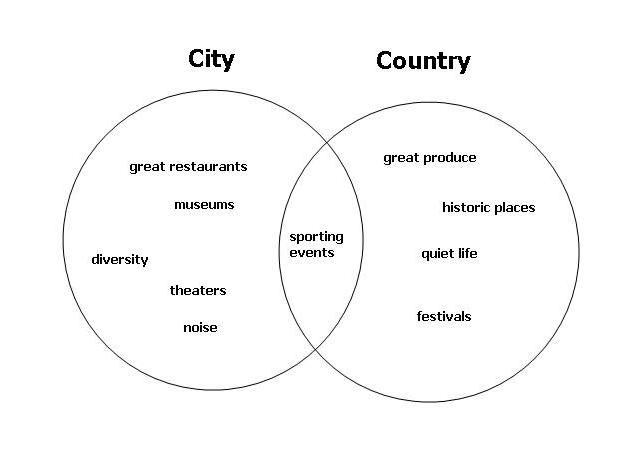
A Venn diagram is a visual representation of sets and their relationships. It was first introduced by John Venn in 1880 and has since become a staple in mathematics education. The diagram consists of multiple circles or ovals that intersect with each other, representing the elements of different sets.
How Do Venn Diagrams Work?
When you create a Venn diagram, you’re essentially creating a series of nested sets. Each circle represents a set, and the overlapping areas represent the intersection between those sets. The elements within each circle are represented by points or shapes, which can be thought of as the individual members of that set.
For example, let’s say we have two sets: A and B. The Venn diagram would show two circles, one representing set A and the other representing set B. If there are any overlapping areas between the circles, those areas represent the elements that belong to both sets.
Why Are Venn Diagrams Useful?
Venn diagrams are incredibly useful for several reasons:
- Visual representation: They provide a clear and concise visual representation of complex relationships between sets.
- Easy to understand: Even young children can grasp the concept of a Venn diagram, making it an excellent tool for teaching mathematics concepts.
- Practical applications: Venn diagrams are used in various fields, including computer science, engineering, and economics.
Types of Venn Diagrams
There are several types of Venn diagrams, each with its unique characteristics:
- Basic Venn diagram: This is the most common type, consisting of two or more intersecting circles.
- Multi-set Venn diagram: This type includes multiple sets, allowing for complex relationships between them.
- Compound Venn diagram: A combination of basic and multi-set Venn diagrams.
Using Venn Diagrams in Education
Venn diagrams are an excellent tool for teaching various mathematics concepts:
- Sets theory: Venn diagrams help students visualize the concept of sets, their elements, and relationships between them.
- Logic and reasoning: They promote critical thinking and problem-solving skills by illustrating complex relationships between sets.
A Brief History of Venn Diagrams
The Venn diagram has a rich history that dates back to the 19th century:
- John Venn’s introduction: In 1880, John Venn introduced the concept of Venn diagrams in his paper “On the Diagrammatic and Mechanical Representation of Propositions and Reasonings”.
- Widespread adoption: The Venn diagram gained popularity throughout the 20th century as mathematics education evolved.
Applications Beyond Mathematics
Venn diagrams have applications beyond mathematics:
- Computer science: They’re used in data analysis, algorithm design, and computer graphics.
- Engineering: Venn diagrams are employed in signal processing, control systems, and network optimization.
Creating Your Own Venn Diagrams
Now that you’ve learned the basics of Venn diagrams, it’s time to create your own:
- Start with a concept: Identify a mathematical concept or relationship you want to visualize.
- Choose a diagram type: Decide on the type of Venn diagram that suits your needs (basic, multi-set, compound).
- Draw and annotate: Use shapes, colors, and labels to create a visual representation of your concept.
Conclusion
Venn diagrams are a powerful tool for visualizing sets and relationships. By understanding how they work, we can unlock new insights into complex mathematical concepts. Whether you’re a student or an educator, Venn diagrams are an invaluable resource for exploring the world of mathematics and beyond.
Frequently Asked Questions (FAQs)
- What is a Venn diagram used for?
- Venn diagrams are used to visualize sets and relationships between them.
- How do I create a Venn diagram?
- Start with a concept, choose a diagram type, and draw and annotate accordingly.
- What types of Venn diagrams exist?
- There are basic, multi-set, and compound Venn diagrams, each with unique characteristics.
- When were Venn diagrams first introduced?
- John Venn introduced the concept in his paper “On the Diagrammatic and Mechanical Representation of Propositions and Reasonings” in 1880.
- What is the history of Venn diagrams?
- The Venn diagram gained popularity throughout the 20th century as mathematics education evolved.
Final Thoughts
As we conclude our journey through the world of Venn diagrams, remember that these visual representations hold immense power and potential. By embracing this tool, you’ll unlock new insights into complex mathematical concepts and explore the depths of human understanding.
In conclusion, Venn diagrams are an indispensable resource for anyone looking to better understand sets and relationships in mathematics. With their versatility and ease of use, they have become a staple in education and research around the world. Whether you’re a student or an educator, we encourage you to explore the world of Venn diagrams and unlock new insights into complex mathematical concepts.
By understanding how Venn diagrams work, we can create powerful visual representations that help us better understand sets and relationships. This tool is incredibly versatile and has numerous applications in various fields, including mathematics, computer science, engineering, and economics.
In conclusion, the world of Venn diagrams is a vast and exciting place, full of possibilities and potential. By embracing this tool, we can unlock new insights into complex mathematical concepts and explore the depths of human understanding.


