
As the cold season approaches, our immune systems are put to the test. It’s essential to protect our bodies and, as always, pay attention to what we eat. Fruits and vegetables are an excellent source of vitamins, fiber, and minerals, but to reap their benefits to the fullest, it’s crucial to choose seasonal produce.
Why Seasonal Produce Matters
So, why should you opt for seasonal vegetables? After harvesting, the nutrient content of fruits and vegetables begins to decline. This means that choosing fresh, in-season products is essential to maintain their nutritional value. Moreover, many out-of-season products are simply waterlogged and grown in greenhouses, lacking flavor and nutrients.
The Importance of Stagionalità
Before heading to the market, it’s indispensable to keep an eye on the seasonal availability of vegetables and fruits. This will ensure that you’re cooking with fresh, nutrient-dense produce that’s at its best. By choosing seasonal ingredients, you’ll not only enhance the flavor of your dishes but also promote overall health and well-being.
A Seasonal Delight: Risotto di Verdure
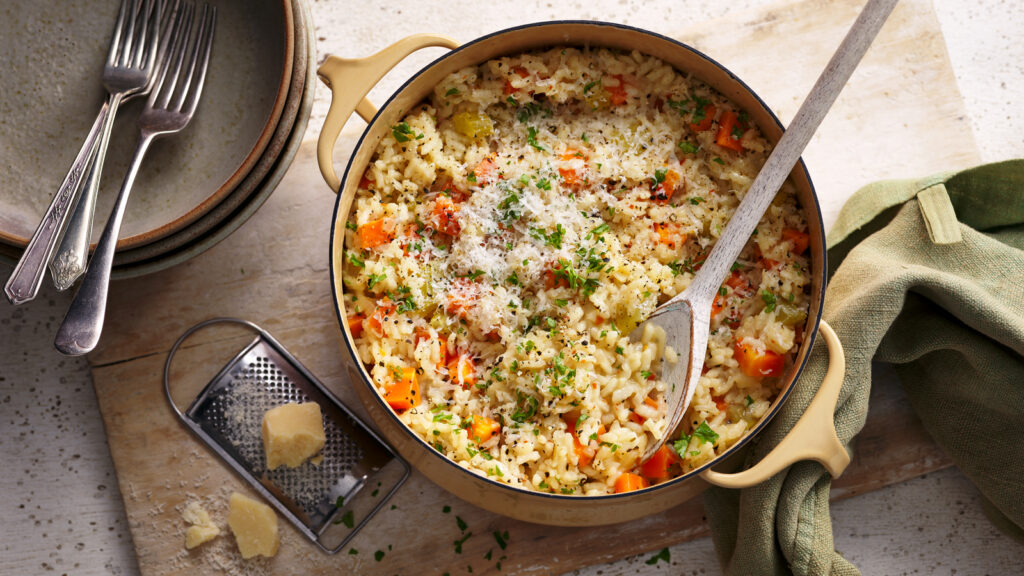
Now, let’s talk about one of our favorite seasonal recipes: Risotto di Verdure (Seasonal Vegetable Risotto). This delicious dish is easy to prepare and showcases the best of what nature has to offer during each season.
Ingredients for 4 People
- 300g Arborio rice
- 4 artichokes
- A few sprigs of broccoli
- 1 onion, finely chopped
- 1 lemon (not treated with chemicals)
- 1 teaspoon saffron threads
- 1 liter vegetable broth
- Parmesan cheese, extra virgin olive oil, salt, and pepper, and butter
Preparing the Risotto
First, chop the onion finely and sauté it in a pan with some extra virgin olive oil until translucent.
Next, purify the artichokes, removing their outer leaves and internal parts. Place them in a vinegar-based water bath with lemon juice for about 5 minutes. After this time, remove two artichokes from the bath and slice them into thin pieces. Add these to the onion mixture and cook briefly.
Now, add the Arborio rice to a pot and toast it lightly before adding vegetable broth. Let the rice simmer while you prepare other ingredients.
Cooking broccoli for 5 minutes or until tender, then drain it and set aside.
Add the remaining artichoke pieces, along with some of the reserved broccoli, to the risotto mixture during its middle stage of cooking.
After that, add the saffron threads to give your dish a distinctive flavor.
To complete this recipe, top your risotto with butter, grated Parmesan cheese, and lemon zest. Season with salt and pepper to taste, then serve hot.
Seasonal Vegetable Pairing Ideas
- Asparagus and Lemon Risotto: A classic combination that will make you fall in love with the freshness of asparagus.
- Roasted Carrots and Ginger Risotto: Sweet carrots pair perfectly with ginger, creating a deliciously spicy flavor profile.
- Sauteed Spinach and Garlic Risotto: Quickly cooked spinach adds a burst of nutrients to this comforting dish.
- Stuffed Bell Peppers Risotto: Fill bell peppers with risotto mixture and enjoy the explosion of flavors in every bite.
Tips for Cooking Seasonal Vegetables
- Choose fresh vegetables to ensure they are at their peak flavor and nutritional value.
- Wash your hands before handling vegetables, and make sure all utensils and cutting boards are clean and sanitized.
- Store cooked vegetables in airtight containers to maintain freshness and prevent bacterial growth.
- Don’t be afraid to experiment with different seasonings and herbs to enhance the flavors of seasonal vegetables.
Conclusion
Incorporating seasonal vegetables into your diet can greatly improve its nutritional value. By choosing fresh, locally grown produce, you’ll not only delight your palate but also support local farmers and promote sustainability.
Frequently Asked Questions: Risotto di Verdure
-
Q: What type of rice is best suited for making risotto?
A: Arborio rice, specifically designed for risotto-making due to its unique texture that absorbs broth nicely. -
Q: How do I select the freshest artichokes?
A: Pick artichokes with tightly closed petals and a vibrant green color. -
Q: Can I use frozen broccoli instead of fresh?
A: Although convenient, using frozen broccoli may lack some of its natural nutrients due to processing. -
Q: How do I store cooked risotto for later consumption?
A: Store it in an airtight container at low temperature (39°F – 41°F or 4°C – 5°C) and use within two days. -
Q: Is risotto di verdure suitable for those following a gluten-free diet?
A: Yes, because Arborio rice is naturally gluten-free. -
Q: Can I make this recipe without saffron?
A: While it provides unique flavor, you can omit the saffron if unavailable; however, its absence will be noticeable. -
Q: How do I prevent artichokes from becoming too soggy after cooking?
A: Avoid overcooking them and adjust cooking time according to their freshness. -
Q: What are some additional vegetables I could add to this recipe?
A: Experiment with other seasonal vegetables like zucchini, carrots, or bell peppers for a different twist on the classic risotto di verdure.
Seasonal Vegetable Buying Guide
- Visit your local farmer’s market to find fresh produce.
- Learn about the different types of seasonal vegetables and their nutritional benefits.
- Choose organic options when possible to minimize exposure to pesticides and other chemicals.
- Shop for seasonal produce at farmers’ markets or through community-supported agriculture (CSA) programs.
Seasonal Vegetable Season
Here’s a comprehensive guide to help you navigate the various seasons:
- Spring: Enjoy asparagus, carrots, peas, onions, potatoes, spinach, and radishes in your cooking.
- Summer: Relish zucchini, bell peppers, green beans, corn, and tomatoes in your seasonal vegetable risotto recipes.
- Autumn: Explore sweet potatoes, squash, Brussels sprouts, kale, and parsnips to add depth and warmth to your dishes.
- Winter: Indulge in hearty root vegetables like beets, turnips, rutabaga, and cabbage.
Unlocking the Power of Seasonal Vegetables
When it comes to seasonal vegetables, there’s no better time than now to explore their potential. Whether you’re a seasoned chef or an avid home cook, incorporating these incredible ingredients into your diet will have a profound impact on both your taste buds and overall well-being.
By embracing the seasonality of produce, you’ll not only discover a world of flavors but also help support local farmers and promote sustainability in our food systems. The next time you visit your market or head to your garden, remember that every seasonal vegetable holds a unique story and nutritional value – simply waiting to be explored!


