
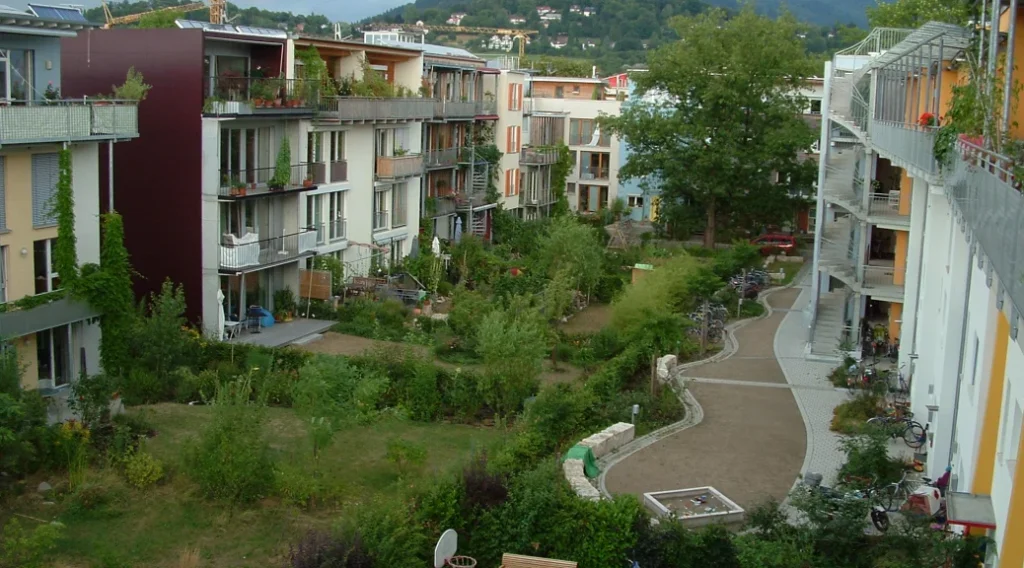
Introduction to Vauban
In the heart of Freiburg, Germany, lies a district that has been making headlines for its remarkable achievements in sustainability. Dubbed Vauban, this eco-friendly neighborhood is home to 5,600 residents who have come together to create a model for environmentally conscious living. With a focus on energy efficiency, waste reduction, and innovative transportation systems, Vauban is an inspiration to cities worldwide.
A Brief History of Vauban
The journey to creating Vauban began in 1993 when the municipality of Freiburg acquired the site of the former French caserma (military base) at Vauban. The project’s inception marked the start of a 20-year endeavor to transform this land into a sustainable community. With a vision to incorporate renewable energy sources and reduce carbon emissions, Vauban has become a pioneering model for eco-friendly urban planning.
The Vauban District: A Green Haven
Spanning an impressive 38 acres, Vauban is more than just a district – it’s a self-sustaining community that showcases the potential for humans to live in harmony with the environment. The district boasts numerous energy-efficient buildings, including 100 passive houses that produce their own energy through on-site cogeneration systems and solar panels.
A New Standard of Housing
Vauban has set a new benchmark for residential architecture by reducing energy consumption per square meter from 100 kWh to just 65 kWh. This achievement is a testament to the district’s commitment to innovative design and sustainable practices. By prioritizing green building methods, Vauban has created a healthier environment for its residents while minimizing carbon footprints.
Transportation Revolution
In addition to energy efficiency, Vauban also boasts an impressive transportation system that discourages the use of personal vehicles. The district features narrow streets designed to encourage walking and cycling, with parking prohibited in front of homes. By promoting alternative modes of transportation, Vauban has reduced its reliance on fossil fuels and created a more livable community.
The Role of Renewable Energy
Renewable energy plays a crucial role in Vauban’s sustainability strategy. The district is powered by a combination of solar, wind, and biomass energy sources, which provide over 70% of the area’s electricity needs. This not only reduces carbon emissions but also ensures a reliable source of energy for residents.
A Model for Other Cities
Vauban’s innovative approach to sustainable living has inspired cities worldwide to adopt similar strategies. As the district celebrates its 20th anniversary, it continues to serve as a model for eco-friendly urban planning. By embracing renewable energy sources, reducing waste, and promoting alternative transportation methods, Vauban demonstrates that humans can live in harmony with their environment.
The Benefits of Vauban
The benefits of living in Vauban are numerous and significant. Residents enjoy:
- Reduced carbon emissions: By prioritizing energy efficiency and renewable energy, Vauban has reduced its carbon footprint by 28 gigajoules annually.
- Improved air quality: The district’s focus on clean energy sources and green transportation systems ensures cleaner air for residents.
- Enhanced quality of life: Narrow streets and pedestrian-friendly zones promote walking and cycling, creating a more enjoyable and healthy lifestyle.
Conclusion
In conclusion, Vauban is more than just a district – it’s a beacon of hope for a sustainable future. As the world grapples with environmental challenges, cities like Freiburg can serve as models for innovative urban planning and eco-friendly living. By embracing green technologies, reducing carbon emissions, and promoting alternative transportation methods, we can create healthier environments for ourselves and future generations.
The Future of Vauban
As Vauban looks to the future, there are plans to continue expanding its sustainability initiatives. The district is exploring new ways to reduce waste, increase energy efficiency, and promote sustainable agriculture. By embracing innovative technologies and strategies, Vauban will remain a model for eco-friendly urban planning and inspire other cities to follow suit.
Case Study: Vauban’s Renewable Energy System
The renewable energy system in Vauban serves as an excellent case study of how communities can transition to clean energy sources. The district’s solar panels generate over 60% of its electricity needs, while wind turbines provide additional power. Biomass energy is also used to heat homes and buildings.
Lessons Learned from Vauban
The success of Vauban offers valuable lessons for other cities and communities looking to adopt sustainable practices:
- Prioritize green building methods: Vauban’s focus on passive houses and renewable energy has set a new standard for residential architecture.
- Emphasize transportation innovation: The district’s narrow streets and pedestrian-friendly zones demonstrate the importance of promoting walking and cycling.
- Invest in renewable energy: Vauban’s commitment to clean energy sources has reduced carbon emissions and ensured a reliable source of electricity.
Conclusion
Vauban is a shining example of what can be achieved through innovative urban planning, green technologies, and sustainable practices. As cities around the world strive to reduce their environmental impact, Vauban will continue to serve as a beacon of hope for a more sustainable future.
Frequently Asked Questions
- What is Vauban?
Vauban is a sustainable district in Freiburg, Germany, that showcases innovative approaches to energy efficiency, waste reduction, and eco-friendly living. - How big is Vauban?
Vauban covers an area of approximately 38 acres (15 hectares). - What are the energy-efficient features of Vauban?
Vauban boasts numerous energy-efficient buildings, including 100 passive houses that produce their own energy through on-site cogeneration systems and solar panels. - How does Vauban reduce carbon emissions?
Vauban reduces carbon emissions through a combination of energy efficiency measures, renewable energy sources, and alternative transportation methods. - What is the parking policy in Vauban?
Parking is prohibited in front of homes to discourage the use of personal vehicles and promote walking and cycling. - How did Vauban come into existence?
Vauban was conceived in 1993 when the municipality of Freiburg acquired the site of the former French caserma at Vauban and began planning a sustainable community. - What sets Vauban apart from other cities?
Vauban’s commitment to innovative design, green building methods, and eco-friendly practices makes it a model for sustainable urban planning. - How has Vauban impacted the environment?
Vauban has reduced energy consumption by 28 gigajoules annually, decreased CO2 emissions by 2100 tons, and conserved 1600 tons of mineral resources.
Additional Resources
- Visit the official website of Vauban to learn more about this innovative district.
- Explore case studies and research on sustainable urban planning and eco-friendly living.
- Contact local authorities or sustainability experts to discuss implementing similar initiatives in your community.


