
As a responsible cat owner, it’s essential to protect your feline friend from various life-threatening diseases. In this article, we’ll delve into the most crucial vaccines available for cats in Italy, explaining what each vaccine does, why they’re recommended, and potential risks associated with them.
1. Vaccination Trivalente (FVRCP)
The Vaccination Trivalente, also known as FVRCP, is one of the most common vaccines for cats. It protects against three significant diseases:
- Rinotracheitis Felina (FVR)
- Calicivirus Felino (FCV)
- Panleucopenia Felina (FPL)
This vaccine protects your cat from these diseases, which can cause severe symptoms like fever, vomiting, diarrhea, and in the case of panleukopenia, potentially be fatal.
1.1 What does the Vaccination Trivalente protect against?
The Vaccination Trivalente protects your cat from three significant diseases: Rinotracheitis Felina (FVR), Calicivirus Felino (FCV), and Panleucopenia Felina (FPL).
1.2 Why is the Vaccination Trivalente recommended?
The Vaccination Trivalente is highly recommended for all cats due to the severity of these diseases. The first dose is usually administered when your kitten is between 6-8 weeks old, followed by periodic boosters.
1.3 Risks associated with the Vaccination Trivalente
Rare and typically mild side effects include fever and loss of appetite. In rare cases, it can cause a severe allergic reaction.
The Vaccination Anti-Rabbia protects your cat against Rabbia, a deadly virus that can be transmitted to humans and is almost always fatal once symptoms appear.
1.1 What does the Vaccination Anti-Rabbia protect against?
This vaccine protects your cat from Rabbia, a serious disease.
1.2 Why is the Vaccination Anti-Rabbia recommended?
In Italy, the Vaccination Anti-Rabbia is only mandatory in certain regions and for cats that travel abroad. However, it’s still strongly recommended for the protection of both your cat and its human family members.
1.3 Risks associated with the Vaccination Anti-Rabbia
Like all vaccines, side effects are typically rare and mild. In extremely rare cases, a severe allergic reaction may occur.
The Vaccination FeLV protects against Leucemia Felina (FeLV), a virus that can cause various health issues, including immune system problems and tumors.
1.1 What does the Vaccination FeLV protect against?
This vaccine protects your cat from Leucemia Felina (FeLV).
1.2 Why is the Vaccination FeLV recommended?
The Vaccination FeLV is highly recommended for cats at risk of exposure to the virus, such as outdoor or infected cats.
1.3 Risks associated with the Vaccination FeLV
Rare and typically mild side effects include a false positive test result for FIV.
The Vaccination FIV protects your cat against Immunodeficiency Felina (FIV), a disease that severely affects the immune system, making it vulnerable to other infections and diseases.
1.1 What does the Vaccination FIV protect against?
This vaccine protects your cat from Immunodeficiency Felina (FIV).
1.2 Why is the Vaccination FIV recommended?
The Vaccination FIV is recommended for cats at risk of exposure, such as those with outdoor lifestyles or who live with infected cats.
1.3 Risks associated with the Vaccination FIV
While generally well-tolerated, it can cause a false positive test result for FIV and rare side effects like sarcomas at injection sites.
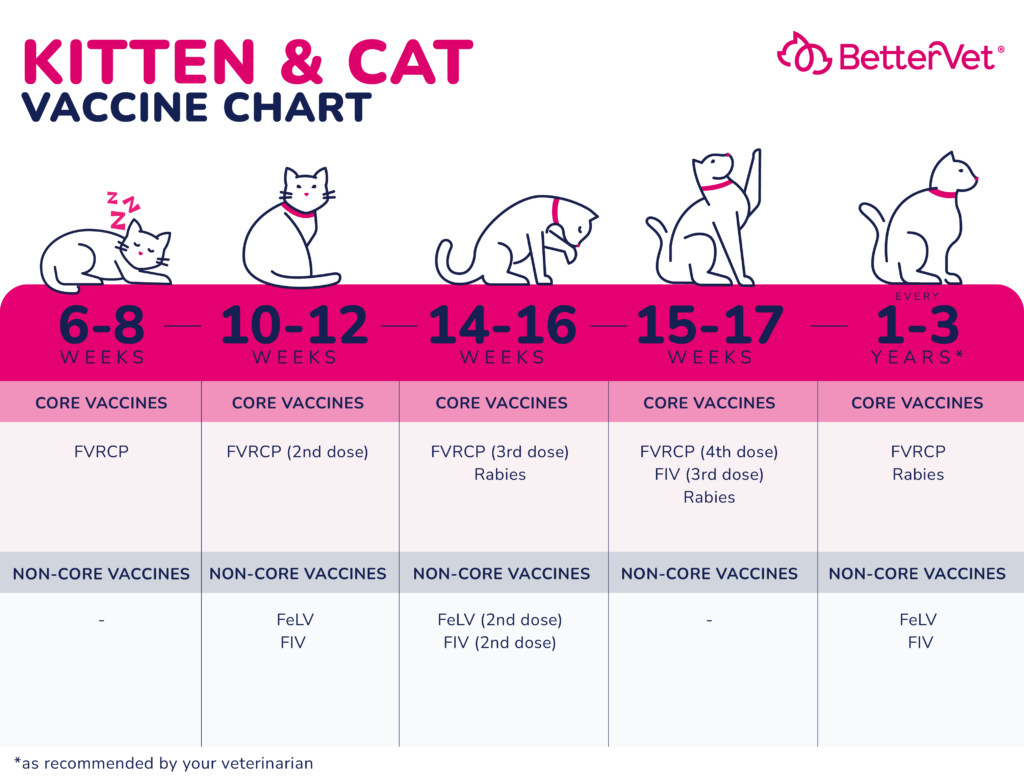
Kittens should typically start their vaccination series between 6-8 weeks old. Here’s an example of a typical vaccine schedule:
- 6-8 weeks: First dose of Vaccination Trivalente (FVRCP)
- 10-12 weeks: Second dose of Vaccination Trivalente (FVRCP)
- 14-16 weeks: Third dose of Vaccination Trivalente (FVRCP), first dose of Vaccination FeLV, and Vaccination Anti-Rabbia (depending on local regulations and individual risk)
After the initial series, your cat should receive periodic boosters based on their age, lifestyle, and health.
How Much Does it Cost to Vaccinate a Cat?
The cost of vaccinations can vary depending on factors like location, vaccine type, veterinarian costs, and additional expenses for visits or tests. Here’s an approximate estimate:
- Vaccination Trivalente (FVRCP): 15-30 euros per dose
- Vaccination Anti-Rabbia: 15-30 euros per dose
- Vaccination FeLV (Leucemia Felina): 20-40 euros per dose
- Vaccination FIV (Immunodeficiency Felina): 20-40 euros per dose
Pacchetti di vaccinazione possono ridurre il costo totale.
In the end, investing in your cat’s health through vaccinations is a long-term investment that can prevent costly and stressful health issues. Consult with your veterinarian to determine the best vaccination plan for your cat based on their age, lifestyle, and risk factors.
Vaccinations Mandatory for Cats
There are two types of mandatory vaccinations for cats in Italy: trivalente (FVRCP) for domestic cats and pentavalente for traveling or roaming cats. The latter includes additional vaccinations against Clamidiosi and Leucemia Felina.
Pros and Cons of Vaccines in Cats
Like human vaccines, feline vaccines offer protection against serious diseases but also come with minor risks of side effects. However, the benefits of preventing life-threatening illnesses far outweigh these minor risks.
In conclusion, understanding the importance of vaccinations for your cat is crucial for their health and well-being. With this comprehensive guide, you can make informed decisions about which vaccines are necessary and schedule them appropriately based on your cat’s needs and risk factors.
Frequently Asked Questions (FAQs)
- What is the most important vaccine for my cat?
- The Vaccination Trivalente (FVRCP) is a top priority, as it protects against three common feline diseases: Rinotracheitis Felina (FVR), Calicivirus Felino (FCV), and Panleucopenia Felina (FPL).
- Are all vaccinations mandatory in Italy?
- No, only the Vaccination Trivalente (FVRCP) is mandatory for domestic cats in Italy, while traveling or roaming cats require the pentavalent vaccination.
- Can my cat get vaccinated at any age?
- Kittens should typically start their vaccination series between 6-8 weeks old. Consult your veterinarian for a personalized schedule based on your cat’s needs and risk factors.
- What are the potential risks associated with vaccinations?
- Rare and typically mild side effects include fever, loss of appetite, false positive test results, and rare allergic reactions or sarcomas at injection sites.
- How often should my cat receive booster shots?
- The frequency of boosters depends on the vaccine type and your cat’s lifestyle. Consult with your veterinarian to determine the best schedule for your cat.
By understanding the importance of vaccinations for your cat, you can make informed decisions about their health and well-being.


