
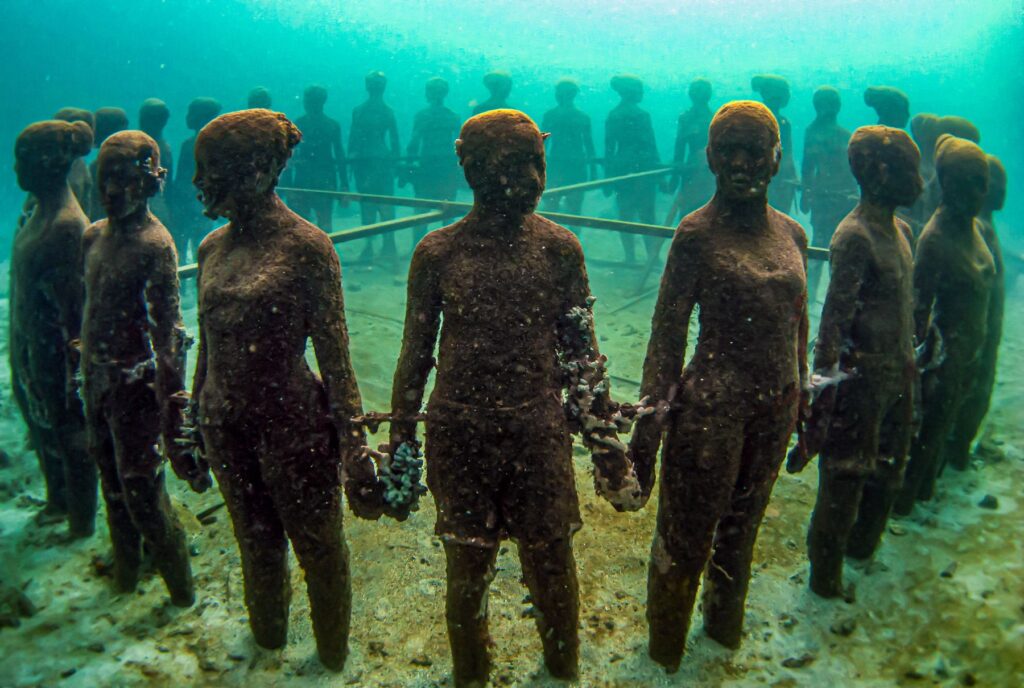
As an artist, the pursuit of creativity is unparalleled. But when the medium shifts from canvas to submerged landscapes, the experience becomes something entirely new. For renowned sculptor Jason deCaires Taylor, the art of sub-aqua sculpture has been a lifelong passion, one that has taken him to the depths of the ocean and back again.
What Drives an Artist to Create Sub-Aqua Sculptures?
Taylor’s journey began as a scuba diver, specializing in conservation and naturalism. His earliest projects involved creating installations in the Caribbean, with the aim of replicating coral reefs. The goal was not only artistic but also environmental – to raise awareness about the delicate balance of these ecosystems and the threats they face from human activities.
Growing up in England, Taylor’s exposure to nature began at a young age. He spent countless hours exploring the countryside, fascinated by the diversity of flora and fauna. This early interest in nature laid the groundwork for his future career as an artist focused on environmental conservation.
Taylor’s fascination with marine life led him to pursue a degree in marine biology, which he later combined with art. He began creating installations that explored the relationships between humans and the natural world. His work soon evolved into sub-aqua sculptures, which would become his signature medium.
The Rise of Time Bomb: A Series Against Overfishing
One of Taylor’s most notable projects is “Time Bomb,” a series that illustrates the devastating effects of overfishing on our oceans. According to the United Nations, three-quarters of commercial fishing activities worldwide are done without proper safeguards, leading to alarming declines in marine life.
Taylor created these installations using recycled metal, which he shaped into artificial reefs. The sculptures were designed to resemble sunken ships, with the intention of attracting marine life and illustrating the impact of human activities on oceanic ecosystems.
By creating these structures, Taylor aimed to raise awareness about the consequences of overfishing and the importance of sustainable fishing practices. His work also serves as a reminder that even seemingly inanimate objects can have a profound impact on the natural world.
The Impact of Human Activity on Marine Ecosystems
As Taylor’s work has shown, human actions – or lack thereof – have severe consequences for the health of our oceans. The destruction of coral reefs, overfishing, and pollution all contribute to the demise of these vital ecosystems. It is this awareness that drives Taylor’s art, as he seeks to educate and inspire a wider audience about the importance of marine conservation.
From plastic pollution to climate change, human activities have significant effects on marine life. Taylor’s sculptures often incorporate elements of waste, highlighting the need for sustainable practices and responsible consumption.
For example, his “Time Bomb” series features artificial reefs made from recycled metal, which he hopes will attract marine life and demonstrate the importance of sustainable fishing practices. By using recycled materials, Taylor aims to emphasize the value of reducing waste and promoting eco-friendly practices.
A Suburban Oasis for Marine Life
Taylor’s latest project, “The Evolutionary Silence,” sees him collaborating with marine biologists and researchers to create an artificial habitat for numerous species of fish, crustaceans, algae, and sea urchins. The result is a complex “suburb” that replicates the conditions necessary for these creatures to thrive.
This project represents a significant milestone in Taylor’s career, as it marks the first time he has collaborated with researchers on a large-scale installation. The partnership allowed him to incorporate cutting-edge technology and expert knowledge into his work, resulting in a more realistic and effective artificial habitat.
A Message from Jason deCaires Taylor
Taylor’s work serves as a poignant reminder of the responsibility we have towards our oceans. As he puts it, “I want to show people that there’s beauty in nature, and also vulnerability. It’s not just about art; it’s about life.” With his latest installations set to debut at Jonathan Levine Gallery in New York, Taylor’s message is clear: the future of our oceans depends on our actions today.
Taylor’s commitment to marine conservation has inspired countless individuals around the world. His work serves as a call to action, urging us all to take responsibility for our impact on the environment and to make sustainable choices in our daily lives.
Understanding the Challenges Facing Marine Conservation
So, what can we do to protect these vital ecosystems? As Taylor notes, “We need to raise awareness about the importance of marine conservation and take action to address the issues that threaten our oceans.” This requires a multifaceted approach, involving governments, industries, and individuals working together to ensure a sustainable future for our planet.
From policy changes to individual actions, there are numerous ways to contribute to marine conservation efforts. Some strategies include:
- Supporting organizations dedicated to ocean conservation
- Making eco-friendly choices in daily life (e.g., reducing plastic waste, using public transportation)
- Advocating for policies that protect marine ecosystems
- Participating in beach cleanups and community initiatives
The Importance of Collaborative Research
Taylor’s work highlights the value of interdisciplinary research in tackling complex environmental challenges. By collaborating with experts from various fields, he is able to create more effective solutions that benefit both humans and marine life.
For example, his partnership with researchers on “The Evolutionary Silence” project has led to significant advancements in our understanding of artificial habitats for marine ecosystems. This collaboration demonstrates the power of collaborative research and its potential to drive meaningful change.
A Call to Action: Supporting Marine Conservation Efforts
As we move forward, it is essential that we support initiatives dedicated to marine conservation. This can involve choosing eco-friendly products, reducing plastic waste, and advocating for policies that protect our oceans. Every small action counts, and collective efforts can lead to significant positive change.
By working together, we can create a brighter future for our planet and its inhabitants. As Taylor says, “I believe in the power of art to inspire people and encourage them to take action.” By supporting marine conservation efforts and making eco-friendly choices, we can all play a role in protecting our oceans and preserving their beauty for generations to come.
Frequently Asked Questions: Sub-Aqua Sculpture and Marine Conservation
Q: What inspired you to create sub-aqua sculptures?
A: My journey as a scuba diver and conservationist led me to realize the importance of marine ecosystems and the threats they face from human activities.
Q: How do you hope your work will impact viewers?
A: I aim to educate and inspire people about the beauty and vulnerability of nature, prompting them to take action in protecting our oceans.
Q: What role does collaboration play in your work?
A: Working with marine biologists and researchers has been invaluable in creating effective solutions for marine conservation.
Q: How can individuals contribute to marine conservation efforts?
A: Simple actions like reducing plastic waste, choosing eco-friendly products, and advocating for protective policies can make a significant difference.
Q: What message do you hope your art conveys?
A: I want people to see the beauty in nature and recognize our responsibility towards preserving it for future generations.
Q: How do you balance artistic expression with environmental concerns?
A: As an artist, I believe my role is not only to create but also to educate. My work serves as a reminder of the importance of marine conservation and our impact on the environment.
Q: What’s next for your art and marine conservation efforts?
A: Continuing to push the boundaries of sub-aqua sculpture while collaborating with experts to develop effective solutions for marine conservation is my primary focus.
Q: How can people engage with your work and stay updated on your projects?
A: Follow me on social media or visit my website for updates on upcoming exhibitions, installations, and initiatives dedicated to marine conservation.


