
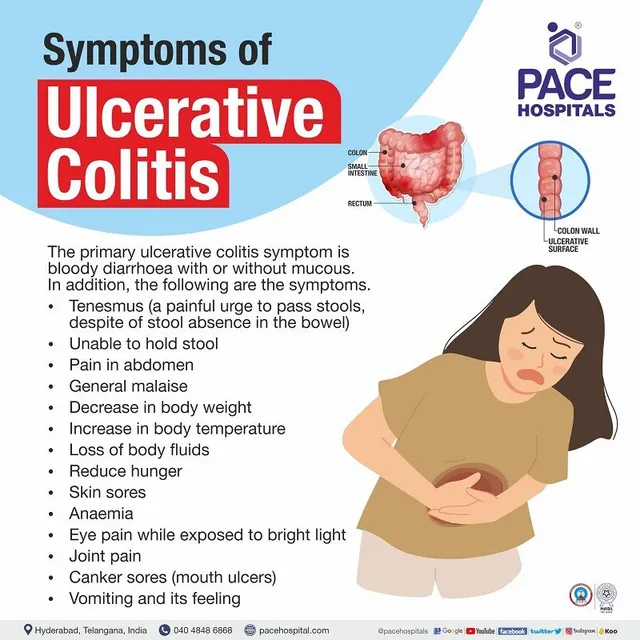
Colitis ulcerosa is a chronic condition characterized by inflammation of the colon and rectum, which can lead to the development of small ulcers on the colon wall. These ulcers can bleed and produce pus.
Symptoms of Colitis Ulcerosa
The primary symptoms of colitis ulcerosa include:
• Diarrhea that recurs frequently, often containing blood, mucus, or pus
• Abdominal pain
• Frequent need to defecate
In addition, people with colitis ulcerosa may experience:
• Extreme fatigue
• Loss of appetite
• Weight loss
The severity of symptoms varies depending on the extent of inflammation in the colon and rectum. Some individuals may experience mild symptoms, while others may have more severe symptoms that impact their daily life.
The Varying Severity of Symptoms
Colitis ulcerosa can present with varying levels of severity. Some people may experience:
• Remission periods where symptoms are minimal or absent
• Periods of increased severity, often referred to as “flare-ups” or “rebound”
• Additional symptoms in other parts of the body, such as:
+ Joint pain and inflammation (arthritis)
+ Skin rashes
+ Eye irritation
In severe cases, individuals may experience:
• Inability to breathe
• Rapid or irregular heartbeat
• High fever
• Blood in stool becoming more pronounced
When to Consult a Doctor?
There is no single symptom that necessitates seeking medical attention. However, it’s essential to consult a doctor if you’re experiencing symptoms of colitis ulcerosa and haven’t been diagnosed with the condition.
A healthcare professional may perform blood tests or fecal samples to help determine the cause of symptoms. If necessary, they may refer you to a specialist for further evaluation.
Causes of Colitis Ulcerosa
Colitis ulcerosa is considered an autoimmune condition, meaning that the immune system mistakenly attacks healthy tissues in the colon and rectum.
The most popular theory behind the causes of colitis ulcerosa suggests that the immune system misidentifies harmless bacteria in the colon as a threat and begins to attack the colon tissue, leading to inflammation.
While the exact mechanisms behind colitis ulcerosa are still unclear, research suggests that a combination of genetic and environmental factors contribute to the development of this condition.
Who is at Risk?
Colitis ulcerosa can affect anyone, regardless of age or background. However, it’s more common in individuals between 15 and 25 years old. The condition tends to be more prevalent among:
• People of European ancestry, particularly those with Ashkenazi Jewish descent
• People of color
• Men and women are equally affected
Risk Factors
In addition to the genetic predisposition, several risk factors can increase an individual’s likelihood of developing colitis ulcerosa. These include:
• Family history: having a first-degree relative with the condition
• Age: typically affects individuals between 15 and 25 years old
• Smoking: cigarette smoking is associated with an increased risk of developing the condition
• Obesity: being overweight or obese increases the risk of developing colitis ulcerosa
Treatment Options for Colitis Ulcerosa
The primary goal of treatment is to alleviate symptoms during acute episodes and prevent future occurrences.
Medications commonly used to treat colitis ulcerosa include:
• Aminosalicylates: help reduce inflammation in the colon
• Corticosteroids: potent anti-inflammatory medications that can be taken orally or via injection
• Immunosuppressants: used to suppress the immune system’s abnormal response to harmless bacteria in the colon
These medications can often be taken at home, but more severe cases may require hospitalization. In some cases, surgery may be necessary to remove the affected colon or create an ileostomy (ileostomy) or colostomy.
Surgical Options
In certain situations, surgery may be necessary to treat colitis ulcerosa. These include:
• Removing the affected portion of the colon: surgery is performed to remove the part of the colon that’s inflamed
• Creating a stoma: a surgical procedure that creates an opening in the abdomen, allowing stool to exit the body through a tube
Complications of Colitis Ulcerosa
While colitis ulcerosa can often be treated effectively with medication, there are potential complications that can arise:
• Primary sclerosing cholangitis: a condition where bile ducts in the liver become scarred
• Increased risk of developing colon cancer
• Growth and development issues in children and young adults
Some medications used to treat colitis ulcerosa may also have side effects, such as osteoporosis (bone weakness).
Conclusion
Colitis ulcerosa is a complex condition that requires prompt medical attention. By understanding the causes, symptoms, and treatment options, individuals can take the first step towards managing their condition and improving their quality of life.
If you’re experiencing symptoms of colitis ulcerosa, consult your doctor as soon as possible to determine the best course of action for your specific situation.
FAQs
- What is the most common cause of colitis ulcerosa?
The exact mechanism behind colitis ulcerosa is still unclear, but research suggests that a combination of genetic and environmental factors contribute to its development. - Can anyone get colitis ulcerosa?
While anyone can develop colitis ulcerosa, it’s more common in individuals between 15 and 25 years old, particularly those with European ancestry. - How is colitis ulcerosa diagnosed?
Diagnosis typically involves blood tests or fecal samples to determine the cause of symptoms. - Can colitis ulcerosa be cured?
Currently, there is no cure for colitis ulcerosa. However, treatment can often alleviate symptoms and prevent future occurrences. - What are the most common medications used to treat colitis ulcerosa?
Commonly prescribed medications include aminosalicylates, corticosteroids, and immunosuppressants. - Can surgery be performed on someone with colitis ulcerosa?
Yes, in some cases, surgery may be necessary to remove the affected colon or create an ileostomy (ileostomy) or colostomy. - Are there any potential complications of colitis ulcerosa?
Yes, individuals with colitis ulcerosa are at risk for developing primary sclerosing cholangitis, colon cancer, and growth and development issues in children and young adults.
Managing Colitis Ulcerosa
To manage colitis ulcerosa effectively, it’s essential to:
• Follow your treatment plan as prescribed by your doctor
• Keep a food diary to track any potential triggers that exacerbate symptoms
• Engage in regular physical activity to improve overall health and well-being
• Attend follow-up appointments with your doctor to monitor the effectiveness of treatment
Conclusion
Colitis ulcerosa is a chronic condition that requires ongoing management. By understanding its causes, symptoms, and treatment options, individuals can take control of their condition and live a fulfilling life.
If you’re living with colitis ulcerosa, don’t hesitate to reach out for support. There are many resources available to help manage the condition and improve overall quality of life.


