
As we navigate the complexities of everyday life, it’s easy to get caught up in the idea that categorization is a straightforward process. We group people, objects, and ideas into neat little boxes, often with ease. However, what happens when these categories aren’t as clear-cut as we’d like? Welcome to the world of the Ugly Duckling Theorem, a concept that challenges our assumptions about classification and acceptance.
The Brutto Anatroccolo Teorema: A Mathematical Concept
In 1969, Satoshi Watanabe proposed the Brutto Anatroccolo Teorema, also known as the Ugly Duckling Theorem. This mathematical concept states that it’s impossible to classify something without a clear criterion of preference. Think about it – whenever we try to group things together, whether it’s people, objects, or ideas, we need a set of rules or characteristics to define what belongs in each category.
Consider the humble task of organizing a fruit salad. We can sort apples from bananas, but what if we wanted to categorize them by color? Or size? Or ripeness? Without a clear criterion, it’s impossible to create meaningful categories. The Brutto Anatroccolo Teorema highlights the importance of having a well-defined set of rules for classification.
The Fable of the Ugly Duckling
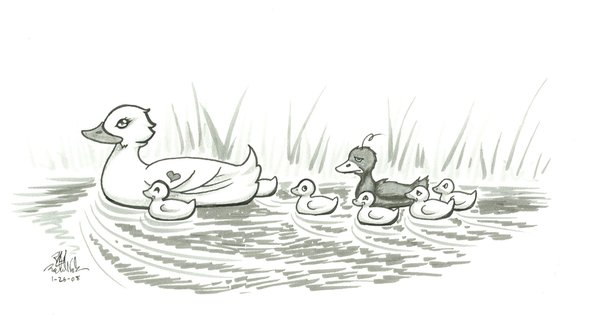
While the mathematical concept is intriguing, let’s delve into its origins in a beloved fable by Hans Christian Andersen. Published in 1843, “The Ugly Duckling” tells the story of an duckling who doesn’t fit in with his siblings due to his appearance and behavior. Despite being rejected by his family, he eventually finds acceptance among a group of swans, only to discover that he has transformed into one himself.
This tale speaks to the universal human experience of feeling like an outsider. The Ugly Duckling’s journey serves as a powerful metaphor for embracing individuality and finding one’s place in the world. By exploring this story, we can gain insight into the complexities of classification and acceptance.
The Impact of Walt Disney on the Ugly Duckling
Walt Disney’s adaptation of “The Ugly Duckling” has become an iconic representation of the tale. His 1931 animated short film, “L’Anatroccolo Eroico,” and 1939 featurette, “Il Piccolo Diseredato,” helped to popularize the story worldwide. While these adaptations added a touch of sugar and spice, they also sanitized the original narrative, glossing over the difficulties faced by the Ugly Duckling.
Disney’s adaptation is a fascinating case study in how art can shape our perception of reality. By simplifying and idealizing the story, Disney created a more palatable version of the tale, one that has captivated audiences for generations. However, this sanitized narrative also detracts from the complexity and nuance of the original fable.
The Significance of the Ugly Duckling
This fable has become a timeless classic, tackling themes that resonate with people of all ages. It highlights the importance of acceptance, self-acceptance, and finding one’s true identity. The Ugly Duckling serves as a reminder that differences are not weaknesses, but rather strengths.
The Brutto Anatroccolo: A Reflection of Our Selves
Andersen’s own life experiences with rejection and isolation inform the narrative of “The Ugly Duckling.” This personal connection adds depth to the story, making it relatable to readers who have faced similar struggles. The Brutto Anatroccolo Teorema and the fable serve as a reminder that we are all works in progress, constantly evolving and growing.
Andersen’s writing style is a masterclass in subtlety, conveying complex emotions and themes through simple yet powerful language. In “The Ugly Duckling,” Andersen explores the tension between individuality and conformity, highlighting the importance of self-acceptance and finding one’s true place in the world.
Real-Life Applications of the Ugly Duckling Theorem
The Brutto Anatroccolo Teorema has far-reaching implications for various fields, including science, philosophy, and everyday life. Here are a few examples:
- Classification systems: The theorem highlights the importance of clear criteria when creating classification systems. Without well-defined rules, categories become ambiguous and ineffective.
- Personal identity: The Ugly Duckling’s journey serves as a powerful metaphor for self-discovery and acceptance. By embracing our uniqueness, we can find true fulfillment and happiness.
- Social justice: The theorem has implications for social justice movements, highlighting the importance of clear criteria when promoting equality and inclusivity.
Conclusion
The Ugly Duckling Theorem offers a profound insight into the complexities of classification and acceptance. By exploring this mathematical concept and its origins in the fable by Hans Christian Andersen, we gain a deeper understanding of our own experiences with identity and belonging. Whether you’re an outsider looking for acceptance or simply seeking to better understand yourself, the Ugly Duckling’s journey serves as a powerful reminder that differences are what make us unique.
FAQs
- What is the Brutto Anatroccolo Teorema?
The Brutto Anatroccolo Teorema proposes that it’s impossible to classify something without a clear criterion of preference. - When was the Ugly Duckling Theorem developed?
Satoshi Watanabe introduced the concept in 1969. - What inspired Hans Christian Andersen to write “The Ugly Duckling”?
Andersen drew from his own experiences with rejection and isolation, as well as his personal struggles with identity. - How does Walt Disney’s adaptation of “The Ugly Duckling” differ from the original fable?
Disney’s adaptations added a touch of sugar and spice to the story, sanitizing the narrative and glossing over the Ugly Duckling’s difficulties. - What is the significance of the Ugly Duckling Theorem in modern times?
This concept highlights the importance of acceptance, self-acceptance, and finding one’s true identity, particularly for individuals who have faced rejection or isolation. - How does “The Ugly Duckling” relate to contemporary themes such as diversity and inclusion?
The fable serves as a powerful reminder that differences are not weaknesses, but rather strengths, promoting acceptance and understanding of individuality. - What can we learn from the Brutto Anatroccolo Teorema about our own experiences with identity?
We can gain insight into the complexities of self-acceptance and finding one’s true place in the world by exploring this mathematical concept and its origins in “The Ugly Duckling.” - Why is “The Ugly Duckling” a timeless classic?
This fable has become a beloved tale due to its universal themes, relatable characters, and exploration of complex issues such as identity, acceptance, and belonging.
Further Reading
For those interested in delving deeper into the world of classification and acceptance, here are some recommended books and resources:
- “The Ugly Duckling and Other Fairy Tales” by Hans Christian Andersen
This collection includes the original fable, as well as other classic tales that explore themes of identity and belonging. - “Classification: A Study of Categories” by Peter Goodwin
This book provides an in-depth exploration of classification systems, highlighting the importance of clear criteria for effective categorization. - “The Self-Discovery Journey” by Dr. Rachel Naomi Remen
This memoir explores the author’s own journey with identity and self-acceptance, offering insights into the complexities of personal growth and development.
By exploring the world of the Ugly Duckling Theorem, we can gain a deeper understanding of our own experiences with classification and acceptance. Whether you’re an outsider looking for acceptance or simply seeking to better understand yourself, this fable serves as a powerful reminder that differences are what make us unique.


