
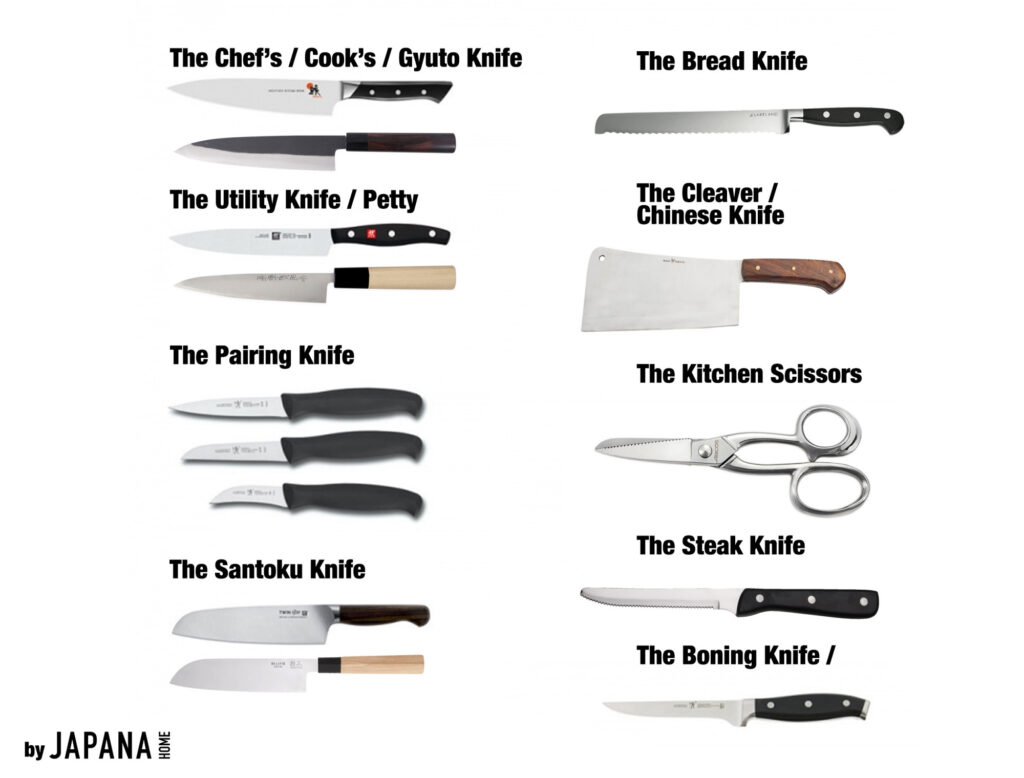
As a home cook, choosing the right kitchen knife can be overwhelming with so many options available. In recent years, the selection has expanded beyond just the type of blade to include materials, handles, and production methods. To help you navigate this world, we’ll explore the various types of knives, their characteristics, and provide recommendations on where to buy them.
Types of Kitchen Knives
Let’s start with the list of names for kitchen knives, followed by a detailed explanation of each type.
- Chef’s Knife (also known as a Trinciante or Chef’s Blade): A triangular-shaped blade, typically 15-30 cm long
- Curved tip for easy maneuverability
- Ideal for chopping, slicing, and mincing vegetables, meat, and other ingredients
- Santoku Knife: Originates from Japan, known for its versatility and ease of use
- Wide, flat blade with a curved tip
- Great for slicing, dicing, and mincing food with precision
- Serrated Utility Knife (also known as a Cleaver): Features a serrated or saw-like edge
- Used for chopping through bones, cutting thick meat, and other tasks that require extra force
- Paring Knife: A small, pointed knife for coring fruit, cutting herbs, and other delicate tasks
- Carving Knife: Long, thin blade with a sharp point
- Ideal for carving large cuts of meat, such as turkeys or roasts
Other Types of Knives
Some knives are used specifically for certain tasks, like:
- Peeling Knife: A small, flat knife for peeling fruits and vegetables
- Slicing Knife: A long, thin blade for slicing ingredients thinly
- Deboning Knife: A curved or angled blade for removing bones from meat
- Filleting Knife: A sharp, flexible blade for filleting fish and other delicate meats
Choosing the Right Knives
When selecting knives, consider the following factors:
- Material: Knives can be made from various materials, such as stainless steel, carbon steel, or titanium.
- Handle: Look for handles that fit comfortably in your hand and provide a secure grip.
- Blade Shape and Size: Choose knives with blades that suit your cooking style and the types of ingredients you work with.
Key Features to Consider
When buying kitchen knives, keep an eye out for these features:
- Edge Retention: A good knife should retain its edge well over time.
- Sharpness: A sharp knife is essential for efficient cutting and preparation.
- Balance: A balanced knife feels comfortable in your hand and allows for smooth cuts.
- Ergonomics: An ergonomic handle provides a secure grip and reduces fatigue.
Where to Buy
You can find high-quality kitchen knives at various retailers, both online and offline:
- Amazon: Offers a wide selection of knives from various brands
- Williams-Sonoma: Features a range of premium kitchen knives from top brands
- Sur La Table: Offers a variety of knives, including specialty and hard-to-find options
- Crate & Barrel: Provides a curated selection of high-quality kitchen knives
Tips for Buying Kitchen Knives Online
When shopping online, keep these tips in mind:
- Read Reviews: Look for reviews from other customers to get an idea of the knife’s performance.
- Check the Return Policy: Ensure that you can return or exchange the knife if it doesn’t meet your expectations.
- Look for Warranties: Check if the retailer offers a warranty or guarantee on the product.
- Verify the Brand: Research the brand to ensure they are reputable and known for producing high-quality knives.
Tips for Choosing the Right Handle
The handle is an essential part of your kitchen knife, as it affects comfort and performance:
- Material: Choose a handle made from comfortable, durable materials like wood or ergonomic plastics.
- Shape: Opt for a handle that fits comfortably in your hand and provides a secure grip.
- Weight: A well-balanced knife will feel light and easy to maneuver.
Blade Materials: What’s the Best Choice?
When it comes to blade materials, some options are better suited for specific tasks or preferences:
- Stainless Steel: Durable and resistant to corrosion, stainless steel is a popular choice.
- Carbon Steel: Ideal for chefs who prefer a sharp edge and a traditional feel.
- Titanium: Lightweight and corrosion-resistant, titanium is an excellent option for everyday use.
The Importance of Blade Sharpening
A well-sharpened knife is essential for efficient cutting and preparation:
- Sharpening Tools: Invest in a good sharpening tool or take your knife to a professional sharpener.
- Regular Maintenance: Regularly hone or sharpen your knives to maintain their edge.
Tips for Caring for Your Kitchen Knives
To keep your knives in top condition, follow these tips:
- Cleanliness: Wash your knives regularly and dry them immediately after use.
- Storage: Store your knives safely and securely to prevent damage or accidents.
- Maintenance: Regularly hone or sharpen your knives to maintain their edge.
The Best Brands for Kitchen Knives
Some brands stand out for their quality, performance, and value:
- Wüsthof: Known for their high-quality German steel blades
- Shun: Offers a range of premium Japanese-style knives
- Global: Provides durable, comfortable knives with ergonomic handles
- Victorinox: Famous for their Swiss-made knives and excellent craftsmanship


