
Understanding Barometers: Types and Functions
As we navigate through our daily lives, it’s easy to overlook the humble barometer that sits on our weather station or attached to our smartphone. But have you ever stopped to think about what a barometer actually does? How does it work, and what are its different types? In this article, we’ll delve into the world of barometers, exploring their history, functions, and various types.
What is a Barometer?
A barometer is an instrument that measures atmospheric pressure. But why is it important? Understanding weather patterns and forecasting is crucial for planning outdoor activities, predicting extreme weather events, and maintaining critical infrastructure like aviation and healthcare facilities. A barometer provides a direct measure of the air’s weight on our bodies, which in turn affects the weather.
Types of Barometers
There are three primary types of barometers: mercury, metallic, and electronic/cellular pressure sensors. Each has its strengths and weaknesses, and we’ll explore them in detail below.
- Mercury Barometer
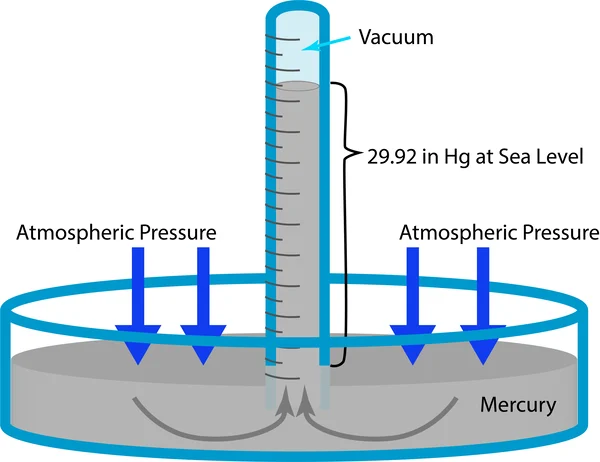
Invented by Evangelista Torricelli in 1644, the mercury barometer is one of the oldest and most iconic types. It consists of a sealed tube filled with mercury, which expands or contracts depending on atmospheric pressure changes. By measuring the height of the mercury column, we can determine the air pressure.
The mercury barometer’s sensitivity and accuracy make it a popular choice for weather forecasting. However, its use is limited due to the toxicity of mercury and the need for regular calibration.
- Metallic Barometer
Lucien Vidi invented the metallic barometer in 1843 as an alternative to the mercury type. This barometer uses a metal capsule that expands or contracts with changes in pressure, which is then amplified by mechanical means to indicate air pressure.
While not as precise as mercury barometers, metallic ones are more practical and affordable. They’re still widely used today, particularly for their simplicity and ease of use.
- Electronic/Cellular Pressure Sensors
Modern electronic barometers have revolutionized weather forecasting with their high accuracy and reliability. These sensors use a tiny cell to measure pressure changes, which is then converted into an electrical signal that’s interpreted by the device.
Electronic barometers are lightweight, compact, and relatively inexpensive, making them perfect for personal weather stations, smartphones, and even smart home devices.
History of Barometers
To fully appreciate the evolution of barometers, let’s revisit their early beginnings. The first recorded attempt to measure atmospheric pressure dates back to 1641 by Giovanni Battista Baliani. His invention used a water-filled container with a narrow neck, which expanded or contracted depending on air pressure changes.
Over time, various improvements were made, leading to the development of mercury and metallic barometers. The modern electronic barometer emerged in the latter half of the 20th century, offering unparalleled accuracy and reliability.
How Barometers Work
So, how do these instruments actually work? Let’s take a closer look at each type:
- Mercury barometers: The sealed tube contains mercury, which expands or contracts with changes in atmospheric pressure. By measuring the height of the mercury column, we can determine air pressure.
- Metallic barometers: A metal capsule expands or contracts with changes in pressure, which is then amplified to indicate air pressure.
- Electronic/cellular pressure sensors: These use a tiny cell to measure pressure changes and convert them into an electrical signal that’s interpreted by the device.
Each type has its unique characteristics, strengths, and weaknesses. Understanding these aspects will help you choose the right barometer for your needs.
Conclusion
In conclusion, barometers are an essential tool for understanding weather patterns and forecasting. With three primary types – mercury, metallic, and electronic/cellular pressure sensors – each with its own strengths and weaknesses, choosing the right one can be a daunting task.
By exploring their history, functions, and characteristics, you’ll gain a deeper appreciation for these instruments and be better equipped to make informed decisions about your daily life.
Frequently Asked Questions
- What is the most accurate type of barometer?
- Electronic/cellular pressure sensors are generally considered the most accurate due to their high precision and reliability.
- Why do mercury barometers contain mercury?
- Mercury has been used in barometers for centuries due to its high sensitivity and low vapor pressure, which allows it to accurately measure atmospheric pressure changes.
- How often should I calibrate my mercury barometer?
- Calibration frequency depends on usage and environmental conditions. Typically, mercury barometers require calibration every 6-12 months to maintain accuracy.
- What is the difference between millibars (mb) and hectopascals (hPa)?
- Millibars (mb) and hectopascals (hPa) are related units of measurement for atmospheric pressure. One hPa is equivalent to 10 mb, making hPa a more precise unit for scientific applications.
- Can I use my barometer indoors or outdoors?
- Most electronic/cellular pressure sensors can be used both indoors and outdoors due to their compact size and weather-resistant designs.
References
- “The History of Barometers” by Science Museum
- “How Barometers Work” by HowStuffWorks



