
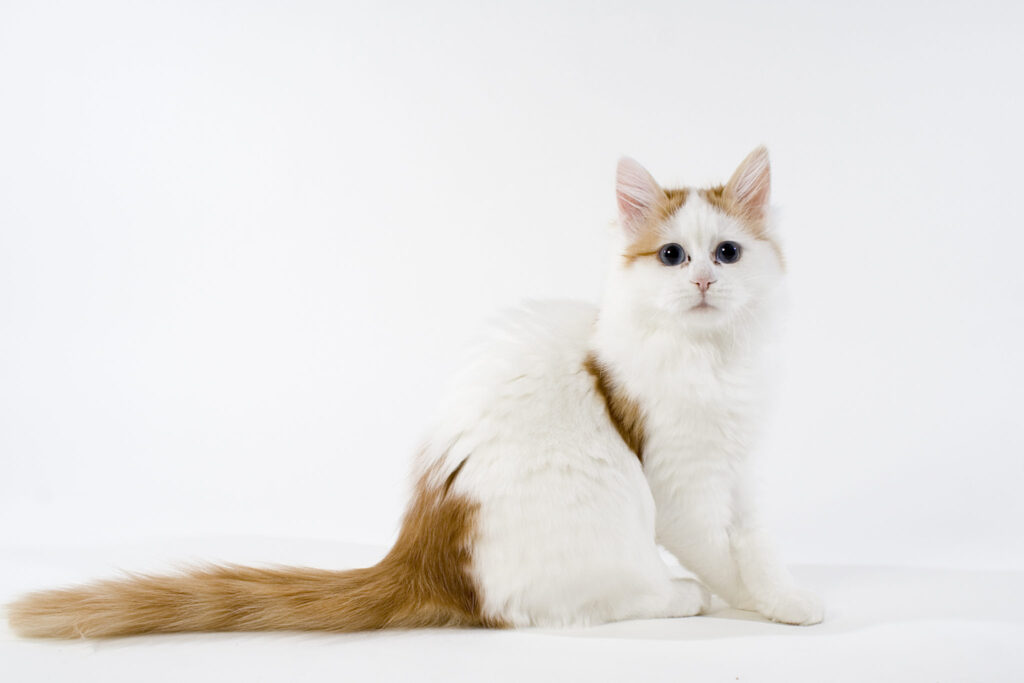
If you’re looking for a cat that’s not afraid of water, looks great with its all-white coat, and has a unique personality, the Turkish Van is your perfect match. This breed is known for its intelligence, agility, and playful nature, making it an ideal companion for many cat lovers.
Characteristics of the Turkish Van Cat
The Turkish Van cat has a medium-length coat that’s white with two small patches on its head – one on each side of the forehead. The patches are always separated by a thin line of fur, which adds to their charm. The cat’s body is muscular and long, with a distinctive triangle-shaped head and prominent cheekbones. Its ears are pointy but not too big, while its eyes are almond-shaped and quite large.
The Turkish Van’s cubs are adorable balls of fluff with the same white coat as adults, although they won’t have the characteristic patches until they mature. Their fur is soft and fine, without an undercoat. The cat’s tail is long and carried low, and it has distinctive pink-colored pads on its paws.
The Turkish Van Cat: A Unique Personality
Turkish Vans are known for their unique personalities, which make them stand out from other breeds. They’re extremely affectionate and loving, often forming strong bonds with one person in particular. However, they don’t always pay attention to the rest of the family, making them perfect for busy households.
These cats are intelligent and curious, always on the lookout for their next adventure. They love playing and interacting with their surroundings, which makes them ideal pets for families with kids or other pets. Turkish Vans are also known for their courage and willingness to take risks, as evidenced by their tendency to jump into water to catch prey.
One of the most notable characteristics of the Turkish Van is its playful nature. They love to chase toys, climb trees, and engage in all sorts of mischief. However, they’re not just playful – they’re also incredibly affectionate. They adore human interaction and will often seek out attention from their owners.
In addition to their playful nature, Turkish Vans are also known for their independence. They can be quite stubborn at times, but this only adds to their charm. They’re not afraid to stand up for themselves or assert their own needs, which makes them a great match for confident and patient owners.
History of the Turkish Van Cat
The origins of the Turkish Van cat are shrouded in mystery, but it’s believed that they originated in Eastern Turkey, near Lake Van. The breed was first recognized in Europe in 1971 and has since gained popularity worldwide.
There are several theories about how Turkish Vans arrived in Western countries. One theory suggests that they were brought over by traders along the Silk Road, while another claims that they were introduced to Europe through the British Isles. Whatever their origins, it’s clear that these cats have become an integral part of feline history.
In terms of breed development, the Turkish Van is believed to have been developed from a combination of local breeds in Eastern Turkey, including the Selkie and the Anatolian cat. These early breeds were known for their distinctive coat patterns and playful nature, which were later combined with European influences to create the modern Turkish Van.
Allevamenti and Prices
Turkish Van cats are relatively rare, which means that prices can be steep. Allevamenti (breeders) often charge high prices for their kittens due to the breed’s popularity and limited supply.
Prices vary depending on factors like color, pattern, and location. However, here are some rough estimates:
- Kittens: $1,000 – $2,500
- Adults: $500 – $1,500
Keep in mind that these prices may not include additional costs like spaying/neutering, vaccinations, and microchipping.
Grooming Needs
Turkish Vans have a medium-length coat that requires regular grooming to prevent matting. They need to be brushed weekly, with an emphasis on the cuspids and paw pads. Additionally, their ears should be cleaned regularly, while their nails should be trimmed every few weeks.
During shedding season (spring), Turkish Vans may require more frequent grooming to manage the amount of loose hair. Be prepared for some serious vacuuming!
In addition to regular brushing, Turkish Vans also benefit from occasional bathing and trimming. Their coat requires regular maintenance to prevent matting and tangling, which can lead to skin irritation and other health problems.
Conclusion
If you’re looking for a cat that’s intelligent, playful, and affectionate, the Turkish Van is an excellent choice. Their unique appearance, intriguing personality, and relatively low maintenance make them an ideal pet for many families.
Before bringing a Turkish Van into your home, consider the following factors:
- Space: Turkish Vans need room to roam and play.
- Family dynamics: They thrive on attention from one person in particular.
- Grooming needs: Regular brushing and ear cleaning are essential.
If you’re willing to provide the necessary care and attention, a Turkish Van can become a loving companion for many years to come.
Frequently Asked Questions
Q: What is the average lifespan of a Turkish Van cat?
A: 18 years
Q: Are Turkish Vans easy to train?
A: Yes, they’re intelligent and responsive to positive reinforcement training.
Q: Can I keep multiple Turkish Vans together?
A: It’s not recommended. Turkish Vans are territorial and may fight with each other if housed together.
Q: How often do Turkish Vans need their nails trimmed?
A: Every few weeks
Q: Are Turkish Vans prone to any specific health issues?
A: Hypertrophic cardiomyopathy (heart disease) is a genetic condition that affects some Turkish Vans.
Q: Can I keep a Turkish Van indoors only?
A: Yes, but they require plenty of space to roam and exercise.
Q: How much do Turkish Vans shed?
A: Medium to high
Q: Are Turkish Vans good with other pets?
A: Generally yes, but it depends on the individual cat’s temperament.
Health Issues
As with any breed, Turkish Vans are prone to certain health issues. Some of the most common problems include:
- Hypertrophic cardiomyopathy (heart disease): This is a genetic condition that can lead to heart failure and other complications.
- Patellar luxation: This is a condition where the kneecap slips out of place, causing pain and discomfort.
- Polycystic kidney disease (PKD): This is a genetic disorder that affects the kidneys and can lead to kidney failure.
However, with proper care and attention, many of these health issues can be managed or prevented. It’s essential to work with a reputable breeder who prioritizes the health and well-being of their cats.
Tips for Owners
If you’re considering bringing a Turkish Van into your home, here are some tips to keep in mind:
- Provide plenty of space: Turkish Vans need room to roam and play.
- Create a stimulating environment: Turkish Vans love to explore and engage with their surroundings.
- Show affection carefully: Turkish Vans can be territorial and may not appreciate over-the-top attention.
By following these tips, you can help ensure that your Turkish Van lives a happy and healthy life. Remember, every cat is unique, so it’s essential to tailor your approach to meet the individual needs of your pet.
Conclusion
The Turkish Van cat is an excellent choice for anyone looking for a playful, affectionate, and intelligent companion. With their unique appearance and intriguing personality, they’re sure to capture hearts and become beloved members of the family.
By understanding their characteristics, grooming needs, and potential health issues, you can provide the best possible care for your Turkish Van. Remember to work with reputable breeders, prioritize their well-being, and show them love and attention in a way that suits their individual needs.
With patience, dedication, and the right guidance, a Turkish Van can become a loyal and loving companion for many years to come.


