
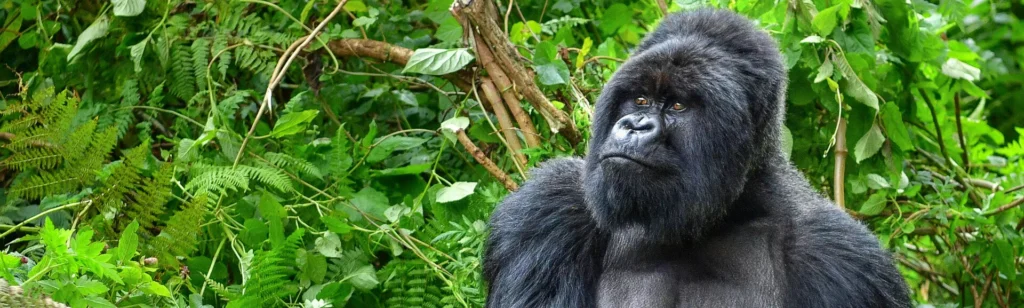
As we recently launched a call to action to protect African elephants, the underlying premise is the same: humans should be honored to admire the beauty of wildlife in its natural habitat, and never threaten their survival. The illicit trade and deforestation are making life difficult for many animals, including the critically endangered mountain gorilla.
The mountain gorilla is one of the most majestic and awe-inspiring creatures on our planet. These magnificent beings have been roaming the earth for millions of years, sharing their space with humans in a delicate balance that has been disrupted by human activities. As we explore the plight of these incredible animals, it’s essential to understand the extent of the problem they face and the urgency of taking action to protect them.
The Unhappy Truth About Mountain Gorillas
There are only 880 remaining mountain gorillas in the world. This number has been dwindling by 75% over the last decade due to poaching for their meat (bushmeat), illegal trade of products derived from them, and deforestation, which is destroying approximately 700,000 hectares of forest in the Congo Basin every year.
The mountain gorillas are surviving only in two designated protected areas: the Bwindi Impenetrable National Park and the Virunga National Park, both of which have been declared UNESCO World Heritage Sites. However, according to the United Nations, if current rates of poaching and habitat loss continue, most populations of gorillas could disappear within 10 years.
The alarming rate at which mountain gorilla populations are declining is a stark reminder of the urgent need for conservation efforts. The devastating impact of human activities on these magnificent creatures cannot be overstated. We must recognize that our actions have consequences and take responsibility for protecting these incredible animals and their habitats.
The Unbelievable Price of a Gorilla
It’s shocking to think that in some areas, a small piece of mountain gorilla hand is sold as a trophy for less than $6. A baby gorilla can be sold illegally for anywhere from $15,000 to $40,000. This outrageous demand highlights the extent of the poaching problem and the willingness of people to profit from the suffering of these innocent animals.
So, how much does a living gorilla cost? In healthy habitats, each gorilla generates an annual income of $25,000 due to the tourism industry, which could potentially bring in $62,000 per year. The total revenue generated by mountain gorillas through responsible tourism is estimated to be around $22 million annually and could reach as much as $54.4 million if sustainable tourism practices are implemented.
The Human-Gorilla Connection
Interestingly, humans share over 98% of their genetic material with gorillas. Can you imagine that your great-great-grandfather was a mountain gorilla? It’s mind-boggling to think that in some areas, a small piece of a gorilla’s hand is sold as a trophy for less than $6.
This shared ancestry highlights the importance of respecting and protecting our fellow living beings. The bond between humans and animals goes beyond biology; it’s about recognizing our shared existence on this planet and taking responsibility for preserving the delicate balance of nature.
A Call to Action
It’s time for us to take action and protect these incredible creatures. The fate of the mountain gorillas hangs in the balance, and it’s up to us to ensure their survival. We must work together to address the root causes of poaching and habitat loss, such as deforestation and corruption.
We can start by supporting organizations dedicated to mountain gorilla conservation, spreading awareness about the plight of these incredible animals, and making informed choices when traveling or purchasing products that may contribute to their decline.
The Future of Mountain Gorillas: A Bleak Outlook
If we don’t act now, the mountain gorillas could disappear within 10 years. It’s a bleak outlook, but one that we can change if we work together. We must recognize the urgency of the situation and take immediate action to protect these incredible creatures.
The extinction of the mountain gorilla would not only be a tragedy for our planet but also a loss of an irreplaceable piece of biodiversity. The consequences of losing these magnificent beings would be felt far beyond their habitat, affecting ecosystems and human societies in profound ways.
Conclusion
The conservation of mountain gorillas is not just an issue of protecting animals; it’s also about preserving our shared human heritage and ensuring the survival of our planet’s precious biodiversity. We must act now to save these incredible creatures before it’s too late.
As we embark on this critical journey to protect the mountain gorilla, we are reminded of the responsibility that comes with being a part of the natural world. It is our duty to ensure that future generations can marvel at the beauty and majesty of these incredible animals in their natural habitat.
Additional Information
- The International Union for Conservation of Nature (IUCN) has listed the mountain gorilla as Critically Endangered on its Red List.
- The Congolese government has launched a national park to protect the mountain gorillas, but more needs to be done to ensure their long-term survival.
- Responsible tourism practices can play a significant role in supporting conservation efforts and generating revenue for local communities.
Frequently Asked Questions (FAQs)
- What is the main threat to mountain gorillas?
The main threats to mountain gorillas are poaching for their meat, illegal trade of products derived from them, and deforestation. - How many mountain gorillas are left in the world?
There are only 880 remaining mountain gorillas in the world. - What is the reason for the decline in mountain gorilla populations?
The decline in mountain gorilla populations is due to a combination of poaching, illegal trade, and deforestation. - Where do mountain gorillas live?
Mountain gorillas are living in two designated protected areas: the Bwindi Impenetrable National Park and the Virunga National Park. - How much does a small piece of a mountain gorilla’s hand cost?
A small piece of a mountain gorilla’s hand can be sold as a trophy for less than $6. - Can we save mountain gorillas with responsible tourism practices?
Yes, responsible tourism practices can help generate revenue for local communities and support conservation efforts. - What is the estimated annual income generated by mountain gorillas through tourism?
The total revenue generated by mountain gorillas through tourism is estimated to be around $22 million annually. - Can we save mountain gorillas if current rates of poaching and habitat loss continue?
No, most populations of gorillas could disappear within 10 years if current rates of poaching and habitat loss continue.
What You Can Do
- Support organizations dedicated to mountain gorilla conservation
- Spread awareness about the plight of these incredible animals
- Make informed choices when traveling or purchasing products that may contribute to their decline
- Advocate for policy changes that protect the habitats of mountain gorillas
By working together, we can ensure the survival of the mountain gorilla and preserve our shared human heritage. It’s time for us to take action and make a difference in the lives of these incredible creatures.


