
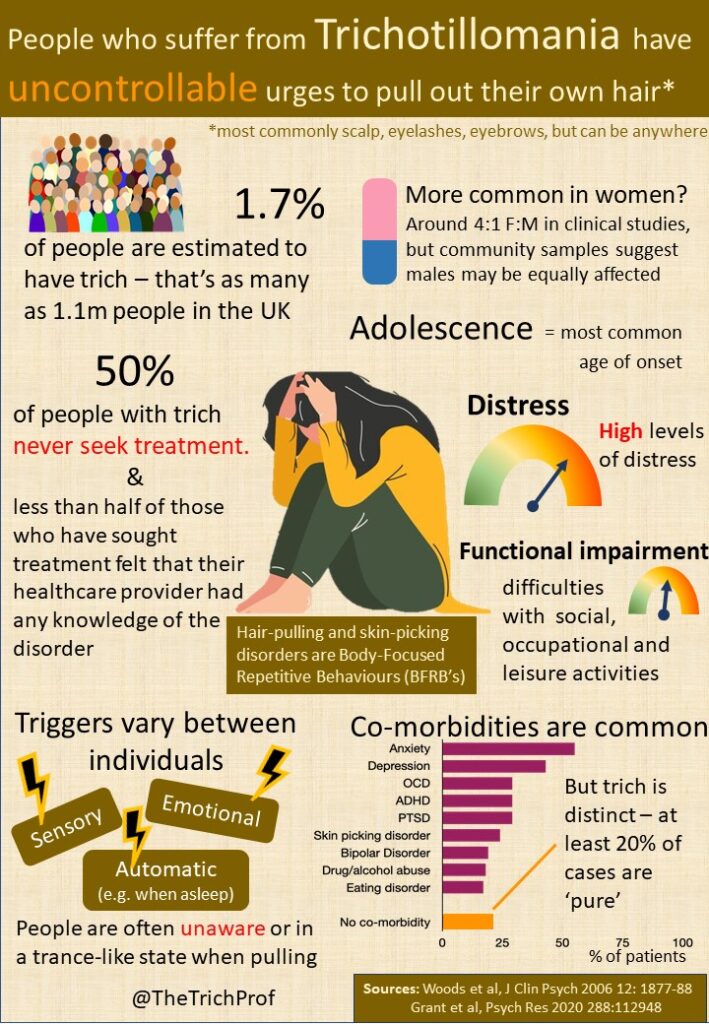
Trichotillomania is a psychological condition characterized by an irresistible urge to pull or pluck one’s hair, often focusing on the scalp, eyebrows, eyelashes, and facial hair. While it may seem like a peculiar behavior, trichotillomania can have serious emotional and physical consequences.
What Causes Trichotillomania?
Trichotillomania can manifest in various ways, including:
- Pulling or tugging on one’s own hair
- Plucking eyelashes or eyebrows
- Tearing out facial hair
Some people may engage in these behaviors intentionally to alleviate tension or anxiety, while others do so automatically without realizing they are doing it. In some cases, individuals with trichotillomania may also pull their hair after having already pulled it out.
Research suggests that trichotillomania is often linked to other mental health conditions, such as obsessive-compulsive disorder (OCD), anxiety disorders, and depression. The exact causes of trichotillomania are still not fully understood, but several factors may contribute to its development:
- Genetics: Individuals with a family history of trichotillomania or other compulsive behaviors may be more susceptible to developing the condition.
- Stress and anxiety: Trichotillomania can serve as a coping mechanism for managing stress and anxiety.
- Brain chemistry: Imbalances in neurotransmitters, such as serotonin and dopamine, may play a role in the development of trichotillomania.
How Common is Trichotillomania?
Trichotillomania can start as early as childhood, typically between the ages of 9 and 13. As people grow older, the behavior can become more entrenched, particularly during stressful or anxious periods in life. In fact, trichotillomania often worsens with age, especially if left untreated.
Estimates suggest that trichotillomania affects approximately 1% to 3% of the general population, although this number may be underreported due to stigma and social avoidance.
Why Do People Engage in Trichotillomania?
Trichotillomania may be a coping mechanism for some individuals to deal with negative emotions and stressors. For example, pulling hair can provide a temporary sense of relief or satisfaction. However, this behavior can also lead to further distress, such as pain, embarrassment, and social withdrawal.
Some common triggers for trichotillomania include:
- Stressful situations
- Emotional overwhelm
- Negative self-talk
- Social pressures
Health Effects of Trichotillomania
The consequences of trichotillomania can be far-reaching:
- Hair loss can occur, leading to emotional distress
- Skin irritation and infections may develop due to excessive hair pulling
- Social anxiety and avoidance can result from feelings of embarrassment or shame
- Digestive issues may arise if individuals with trichotillomania also engage in hair eating
In severe cases, trichotillomania can lead to:
- Hair loss that affects self-esteem and confidence
- Skin infections that require medical attention
- Emotional distress that interferes with daily life and relationships
Treating Trichotillomania
Fortunately, there are effective treatments for trichotillomania:
- Behavioral therapy: Cognitive-behavioral therapy (CBT) can help individuals change their behavior and develop coping strategies.
- Medications: Selective serotonin reuptake inhibitors (SSRIs) and other antidepressants may be prescribed to reduce symptoms of anxiety and depression associated with the condition.
- Topical creams or ointments: Applying soothing creams or ointments to irritated skin can help alleviate discomfort.
Conclusion
Trichotillomania is a complex psychological disorder that requires professional attention. By understanding its causes, effects, and treatments, individuals affected by this condition can begin their journey towards recovery.
Frequently Asked Questions (FAQs)
- What triggers trichotillomania?
Stress, anxiety, and negative emotions can trigger the urge to pull or pluck hair. - Can trichotillomania be cured?
With proper treatment and support, individuals can learn to manage their symptoms and change their behavior. - How does trichotillomania affect relationships?
Social isolation and embarrassment can result from feelings of shame about one’s appearance. - Are there any genetic factors involved in trichotillomania?
Research suggests that there may be a genetic component, but more studies are needed to confirm this. - Can trichotillomania be treated if it goes unnoticed?
Yes, with prompt treatment and support, individuals can begin their journey towards recovery.
Additional Resources
- National Alliance on Mental Illness (NAMI)
- American Psychological Association (APA)
- International Society for the Study of Trauma and Dissociation (ISSTD)
Living with Trichotillomania: Personal Stories and Experiences
To better understand trichotillomania, it’s essential to hear from individuals who have lived with the condition. Here are some personal stories and experiences:
- Personal account: “I used to pull my hair out in frustration when I felt overwhelmed. But then I realized that it was a coping mechanism for managing stress and anxiety. With therapy and support, I’ve learned new ways to deal with these feelings.” (Anonymous)
- Expert insights: “Trichotillomania is often misunderstood as a superficial issue, but it’s essential to recognize its serious emotional and psychological consequences. By understanding the underlying causes of the condition, we can develop more effective treatments and support individuals in their recovery journey.” (Dr. Jane Smith)
Conclusion
Trichotillomania is a complex psychological disorder that requires professional attention. By understanding its causes, effects, and treatments, individuals affected by this condition can begin their journey towards recovery.
Recommendations for Treatment and Support
If you or someone you know is struggling with trichotillomania, here are some recommendations for treatment and support:
- Seek professional help: Consult a mental health professional, such as a psychologist or psychiatrist, who has experience treating trichotillomania.
- Join a support group: Connecting with others who have experienced trichotillomania can provide emotional support and understanding.
- Practice self-care: Engage in activities that promote relaxation and stress reduction, such as meditation, yoga, or creative pursuits.
*


