
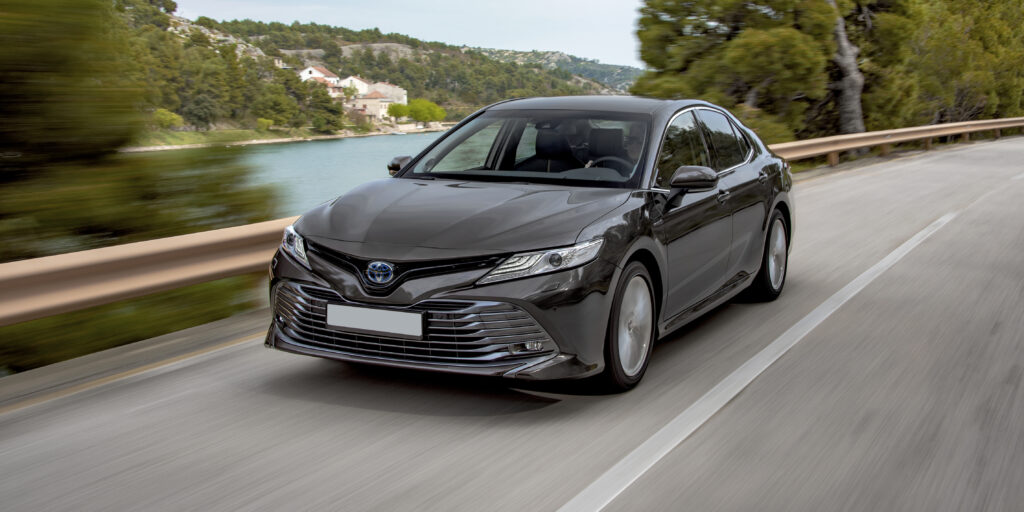
The Toyota Camry has been the best-selling car in the United States for many years, and it’s easy to see why. As a mid-size sedan, it’s larger than its European counterparts, but at a much lower price point. The Camry is designed to appeal to a more affordable market, making it an attractive option for American consumers.
A Brief History of the Toyota Camry Hybrid
Since 2006, the Toyota Camry has undergone significant improvements, culminating in the model year 2013 with luxurious interiors and other enhancements. The base version of the Camry is equipped with a 2.5-liter gasoline engine, which produces 116 kW/158 horsepower. In contrast, the electric motor produces 105 kW/143 horsepower, making the combined system output 149 kW/202 horsepower.
The first generation Camry Hybrid was launched in 2006 and featured an electric motor producing only 33 kW/41 horsepower. However, with each subsequent model year, Toyota has made significant improvements to the powertrain, resulting in a more efficient and powerful hybrid sedan.
Comparing the Toyota Camry Hybrid to its Competitors
The Toyota Camry Hybrid’s powertrain is more efficient than that of some of its competitors, such as the Ford Fusion Hybrid. The urban cycle achieves an impressive 18 kilometers per liter, meaning it consumes just 5.5 liters of gasoline for every 100 kilometers. The extra-urban cycle is equally impressive, with a consumption rate of up to 6 liters per 100 kilometers.
In comparison, the Honda Civic Hybrid has a more efficient urban cycle, achieving 19 kilometers per liter. However, the Camry Hybrid still outperforms its competitors in terms of fuel efficiency and overall performance.
A Notable Improvement: The Electric Motor
While the first generation Camry Hybrid had an electric motor producing only 33 kW/41 horsepower, the newer model year features an improved electric motor with 105 kW/143 horsepower. This increase in power allows the Camry Hybrid to cover up to 1.6 miles at a speed of 40 km/h using only the electric motor.
Additionally, the latest models of the Camry Hybrid come equipped with advanced regenerative braking systems, which help to recharge the battery pack and improve fuel efficiency even further.
Other Hybrid Sedans on the Market
The Toyota Camry is not the only mid-size hybrid sedan available on the international market. Other notable models include the Hyundai Sonata Hybrid, Kia Optima Hybrid, and Volkswagen Jetta Hybrid. In fact, many manufacturers are now offering their own versions of hybrid sedans, including Honda’s entry into the market in 2014.
The Honda Civic Hybrid is a popular alternative to the Camry Hybrid, with a more efficient urban cycle and a lower starting price point. However, some critics argue that the Civic Hybrid’s interior space is slightly smaller than that of the Camry Hybrid.
Comparison Table: Toyota Camry Hybrid vs. Competitors
| Model | Urban Cycle (km/L) | Extra-urban Cycle (L/100 km) |
|---|---|---|
| Toyota Camry Hybrid | 18 | 6 |
| Honda Civic Hybrid | 19 | 5.8 |
| Hyundai Sonata Hybrid | 16 | 7.2 |
| Kia Optima Hybrid | 15.4 | 6.9 |
| Volkswagen Jetta Hybrid | 14.3 | 6.1 |
Conclusion
In conclusion, the Toyota Camry Hybrid is an attractive option for those looking for a reliable and fuel-efficient vehicle. With its improved powertrain and luxurious interiors, it’s easy to see why it has been a top-seller in the United States for many years.
The Camry Hybrid’s impressive fuel efficiency, combined with its spacious interior and comfortable ride, make it a solid choice for anyone in the market for a hybrid sedan.
Frequently Asked Questions (FAQs)
Q: What are the fuel efficiency ratings of the Toyota Camry Hybrid?
A: The urban cycle achieves 18 kilometers per liter, while the extra-urban cycle reaches up to 6 liters per 100 kilometers.
Q: How much does the Toyota Camry Hybrid cost?
A: Pricing varies depending on the trim level and location.
Q: What are the dimensions of the Toyota Camry Hybrid?
A: The mid-size sedan has a length of 4,855 mm, width of 1,785 mm, and height of 1,465 mm.
Q: Can I drive the Toyota Camry Hybrid using only the electric motor?
A: Yes, with an estimated range of up to 1.6 miles at a speed of 40 km/h.
Q: How does the Toyota Camry Hybrid compare to its European counterparts?
A: The Camry is larger and more spacious than many European sedans, but at a lower price point.
Q: What other hybrid sedans are available on the market?
A: Notable models include the Hyundai Sonata Hybrid, Kia Optima Hybrid, Volkswagen Jetta Hybrid, and Honda’s new entry into the market.
Q: Is the Toyota Camry Hybrid as reliable as its non-hybrid counterparts?
A: Yes, the Camry has a reputation for being one of the most reliable vehicles on the market.
Q: Can I purchase a used Toyota Camry Hybrid?
A: Yes, many used models are available for sale at various dealerships and private sellers.
Safety Features
The Toyota Camry Hybrid comes equipped with advanced safety features, including:
- Toyota’s Safety Sense suite
- Electronic stability control
- Anti-lock braking system (ABS)
- Rearview camera
Additionally, the Camry Hybrid has received top ratings from independent testing organizations such as the National Highway Traffic Safety Administration (NHTSA) and the Insurance Institute for Highway Safety (IIHS).
Maintenance Costs
The Toyota Camry Hybrid is known for its reliability and low maintenance costs. According to a study by Kelley Blue Book, the average annual maintenance cost for the Camry Hybrid is $341, which is lower than many of its competitors.
In contrast, the Honda Civic Hybrid has higher maintenance costs, with an estimated annual cost of $423.
Conclusion
In conclusion, the Toyota Camry Hybrid is a reliable and fuel-efficient choice for anyone in the market for a hybrid sedan. With its improved powertrain, luxurious interiors, and advanced safety features, it’s easy to see why it has been a top-seller in the United States for many years.
Whether you’re looking for a practical family vehicle or a stylish commuter car, the Toyota Camry Hybrid is an excellent choice that won’t break the bank.


