
Are you ready for your first camping trip? Do you need some advice to make it a success? Organizing a camping trip is not an insurmountable task, the basic concepts are few and before we dive into what to bring on a camping trip, let’s talk about what to leave at home!
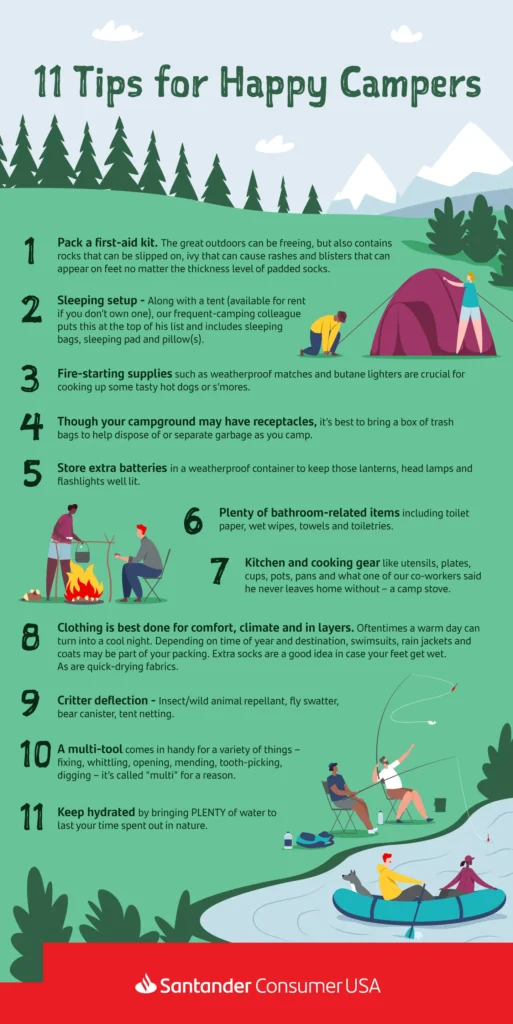
Don’t even think about bringing makeup, fragrances, your entire wardrobe or… a negative attitude! These “frivolities” should be left behind… but you won’t want to miss a Swiss knife, a flashlight, a pair of rubber boots that can get wet, trash bags, bottled water, insect repellent and a good sleeping bag.
Remember that the sleeping bag should be suitable for the climate conditions of the campsite: waking up in the middle of the night shivering with sweat or trembling with cold is not at all fun. A suitable sleeping bag will make your stay more pleasant.
A flashlight can serve in various situations, it’s not uncommon to need to make a midnight pee! It can also come in handy if you want to take an impromptu midnight bath! With a flashlight, it’s better to bring spare batteries or invest in a solar-powered one.
And… won’t you ever leave your trash behind?! Bring plenty of trash bags and inform yourself about the collection days for recyclables. When it comes to water, there are great water purification filters available on the market; it’s best to check ahead of time what the campsite has to say about their policies.
The Essentials: Must-Haves for a Great Camping Trip
Shelter and Sleeping Gear
- Tent: Practical for short camping trips, more spacious and convenient – but harder to set up – for longer stays.
- Sleeping Bag: Essential for any camper, inflatable for those traveling by car, train or plane.
Some additional considerations for setting up your shelter include:
- Tent poles: Make sure you have a sturdy set of tent poles that can withstand wind and rain.
- Stakes and ropes: Bring extra stakes and ropes to secure your tent in case of strong winds.
- Ground tarp: Consider bringing a ground tarp to protect your tent from moisture and damage.
Cooking and Dining
- Camping Stove: A must-have for any camper who wants to cook their own meals.
- Plates, Bowls, Cups: Make sure you have enough dishes for everyone in your group.
- Cooking Utensils: Bring a set of utensils that can be easily packed away.
Some additional considerations for cooking and dining include:
- Fuel: Choose a reliable fuel source for your camping stove, such as propane or white gas.
- Cookware: Select cookware that is durable, non-stick, and easy to clean.
- Utensil organization: Consider bringing a utensil organizer to keep your gear tidy and within reach.
Lighting and Safety
- Flashlight or Headlamp: A must-have for any camping trip.
- First Aid Kit: Always bring a basic first aid kit with you on your camping trips.
- Sunscreen and Insect Repellent: Protect yourself from the sun and bugs.
Some additional considerations for lighting and safety include:
- Light source: Choose a reliable light source, such as a flashlight or headlamp, that can provide adequate light in low-light conditions.
- First aid kit contents: Make sure your first aid kit includes essential items like bandages, antiseptic wipes, and pain relievers.
- Safety protocols: Establish safety protocols with your group, including how to respond to emergencies and what to do in case of inclement weather.
Clothing and Personal Items
- Comfortable Clothing: Pack clothes that are comfortable and suitable for outdoor activities.
- Sleeping Bag Liner: A good sleeping bag liner can make a big difference in your sleep quality.
Some additional considerations for clothing and personal items include:
- Layering: Choose clothing that allows for layering, so you can adjust to changing temperatures.
- Moisture-wicking fabrics: Select moisture-wicking fabrics to keep you dry and comfortable during outdoor activities.
- Personal hygiene items: Bring personal hygiene items like toothbrushes, toothpaste, and biodegradable soap.
Miscellaneous
- Trash Bags: Bring plenty of trash bags to keep your campsite clean.
- Water Purification Tablets or Filter: If you plan on drinking water from the tap, bring a purification system.
Some additional considerations for miscellaneous items include:
- Water storage: Choose a water storage container that is durable and easy to carry.
- Food storage: Select food storage containers that are airtight and bug-proof.
- Campsite supplies: Bring campsite supplies like fire starters, kindling, and matches.
Additional Tips and Reminders
- Make sure to check the weather forecast before your trip and pack accordingly.
- Bring a map and compass (and know how to use them).
- Let someone know where you’re going and when you expect to return.
Frequently Asked Questions
Q: What should I bring to a camping trip?
A: This will depend on the length of your stay, the weather, and the activities you have planned. Make sure to pack everything you need, including clothing, shelter, cooking gear, and personal items.
Q: How do I set up a tent?
A: Setting up a tent can be a bit tricky, but with some practice, it should become second nature. Follow the manufacturer’s instructions and make sure you have all the necessary parts.
Q: What is the best type of sleeping bag for camping?
A: The best type of sleeping bag will depend on your personal preferences and the climate conditions of the campsite. Look for a sleeping bag that is comfortable, durable, and suitable for outdoor activities.
Q: How do I stay safe while camping?
A: There are several things you can do to stay safe while camping, including bringing a first aid kit, being aware of your surroundings, and following basic safety guidelines.
Q: Can I bring my pet on a camping trip?
A: It’s generally not recommended to bring pets on camping trips. Pets can be a distraction and may not be able to handle the outdoors as well as humans do. If you must bring your pet, make sure to follow all local regulations and take necessary precautions.
Q: How do I dispose of trash properly while camping?
A: There are several ways to dispose of trash properly while camping, including bringing plenty of trash bags, packing out what you pack in, and following local guidelines for recycling.


