
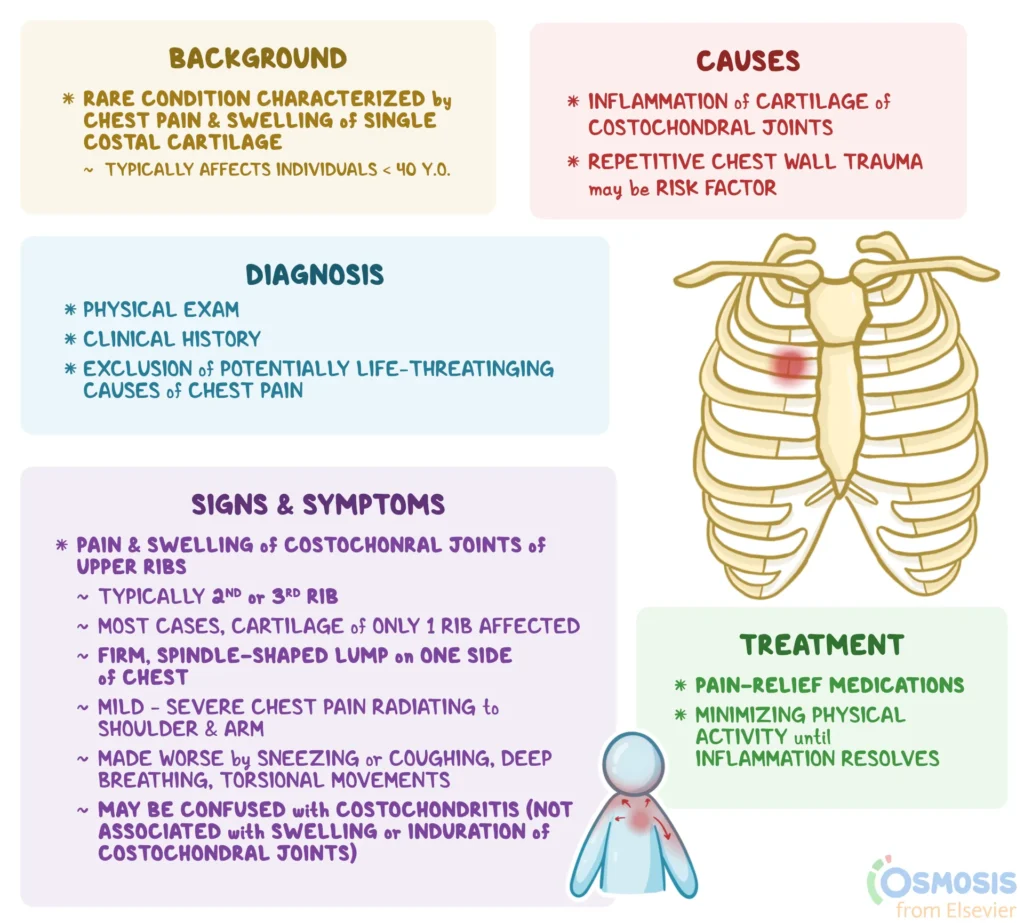
The Tietze syndrome is a condition characterized by inflammation of the cartilage that connects the ribs to the sternum. This condition is often accompanied by pain in the chest area and swelling of the affected cartilage. In this article, we will delve into the characteristics, symptoms, and treatment options for the Tietze syndrome.
What is the Tietze Syndrome?
The Tietze syndrome is a non-inflammatory condition that occurs when there is an abnormality in the cartilage that connects the ribs to the sternum. This cartilage is called the costocondral joint. The symptoms of this condition can vary from person to person, but it is most common among individuals under the age of 40.
Symptoms of the Tietze Syndrome
The symptoms of the Tietze syndrome are typically unilateral and affect one side of the body. They may include:
- Chest pain that ranges from mild to severe
- Swelling or tenderness in the affected cartilage
- Redness and warmth around the affected area
- Pain in the arms, shoulders, and back
- Difficulty breathing
The symptoms can develop gradually or suddenly, and they may worsen with activities such as coughing, sneezing, or heavy lifting.
Causes of the Tietze Syndrome
The exact cause of the Tietze syndrome is still unknown. However, researchers have suggested that small injuries to the ribcage could contribute to the development of this condition. These microtraumas can be caused by accidents, such as car crashes, or minor traumas, like frequent coughing or vomiting.
Is the Tietze Syndrome Hereditary?
There is no conclusive evidence to suggest that the Tietze syndrome has a genetic component. Most cases occur in individuals without a family history of the condition.
Diagnosing the Tietze Syndrome
The diagnosis of the Tietze syndrome involves ruling out other conditions with similar symptoms. A thorough physical examination and various tests may be necessary to confirm the diagnosis. These tests can include:
- Imaging studies, such as X-rays or CT scans
- Electrocardiogram (ECG) to rule out cardiac problems
- Magnetic Resonance Imaging (MRI) to assess cartilage damage
Treating the Tietze Syndrome
In some cases, the symptoms of the Tietze syndrome may resolve on their own without treatment. However, other individuals may require additional strategies to manage their symptoms. These can include:
- Reducing physical activity
- Applying heat or cold packs according to medical instructions
- Taking over-the-counter pain medications and anti-inflammatory drugs
- In some cases, injections of corticosteroids or lidocaine may be prescribed
Prognosis and Outlook
The prognosis for individuals with the Tietze syndrome is generally good. Most people do not experience severe symptoms, and their life expectancy is comparable to that of the general population.
However, it’s essential to consult a doctor if you’re experiencing any unusual symptoms. Early diagnosis and treatment can help alleviate discomfort and prevent complications.
Frequently Asked Questions
- What is the difference between Tietze syndrome and Tietz syndrome?
The Tietze syndrome and Tietz syndrome are two distinct conditions. The Tietze syndrome is an inflammatory condition, while the Tietz syndrome refers to a congenital hearing loss. - Can I treat my Tietze syndrome on my own?
It’s not recommended to try DIY treatments without consulting a doctor. A healthcare professional can help you develop a personalized treatment plan. - How long does it take for symptoms to resolve?
The duration of symptom resolution varies from person to person. Some individuals may experience significant improvement within weeks, while others may require months or even years to fully recover. - Can I prevent the Tietze syndrome?
While there is no guaranteed way to prevent the Tietze syndrome, maintaining good posture, avoiding heavy lifting, and managing stress can help reduce the risk of developing this condition. - Are there any lifestyle changes that can help alleviate symptoms?
Yes, making healthy lifestyle choices such as regular exercise, a balanced diet, and adequate sleep can help manage symptoms and improve overall well-being.
Understanding the Anatomy of the Tietze Syndrome
To better comprehend the Tietze syndrome, it’s essential to understand the anatomy involved. The costocondral joint is a cartilaginous connection between the ribs and the sternum. This joint allows for flexibility and movement while maintaining structural integrity.
The costocondral joint is composed of two main components:
- The costal cartilage: A flexible, fibrocartilaginous structure that connects each rib to the anterior surface of the sternum.
- The sternal cartilage: A bony structure that forms the anterior part of the sternum.
When the Tietze syndrome occurs, inflammation and swelling occur in either or both of these components. This can lead to pain, tenderness, and limited mobility.
Symptom Patterns
The symptoms of the Tietze syndrome can vary depending on the location and severity of the inflammation. Some common symptom patterns include:
- Unilateral chest pain: Pain that occurs only on one side of the body.
- Pain radiating to the arm or shoulder: Pain that spreads from the chest area to the arm or shoulder.
- Swollen ribs: Swelling in the affected cartilage can cause stiffness and limited mobility.
Complications
While rare, complications can arise if left untreated. These may include:
- Infection: Bacterial or fungal infections can occur if the inflammation becomes infected.
- Chronic pain: Prolonged inflammation can lead to chronic pain that interferes with daily activities.
- Limited mobility: Inflammation and swelling can cause stiffness and limited movement.
Treatment Options
While some individuals may experience spontaneous resolution of symptoms, others require medical intervention. Treatment options for the Tietze syndrome include:
- Medications: Over-the-counter pain medications and anti-inflammatory drugs can help manage symptoms.
- Injections: Corticosteroid injections or lidocaine injections may be prescribed to reduce inflammation and alleviate pain.
- Physical therapy: Gentle exercises and stretches can help improve mobility and reduce stiffness.
Preventing Future Episodes
To minimize the risk of future episodes, it’s essential to take preventative measures. These include:
- Maintaining good posture: Avoid slouching or leaning forward, which can put pressure on the costocondral joint.
- Avoiding heavy lifting: Refrain from lifting heavy objects that may cause microtrauma to the ribcage.
- Managing stress: Engage in stress-reducing activities such as yoga or meditation.
The Role of Lifestyle Changes
Lifestyle changes can play a significant role in managing symptoms and preventing future episodes. These include:
- Regular exercise: Engage in gentle exercises that promote flexibility and mobility.
- Balanced diet: Consume a balanced diet rich in nutrients to support overall health.
- Adequate sleep: Get sufficient restful sleep to help your body recover from inflammation.
The Tietze Syndrome: A Rare but Serious Condition
While the Tietze syndrome is often considered a minor condition, it can have significant consequences if left untreated. In rare cases, complications can arise, and pain can interfere with daily activities.
It’s essential to consult a doctor if you’re experiencing any unusual symptoms. Early diagnosis and treatment can help alleviate discomfort and prevent long-term damage.
Conclusion
The Tietze syndrome is a condition characterized by inflammation of the cartilage that connects the ribs to the sternum. While it may seem like a minor issue, it can have significant consequences if left untreated. Understanding the anatomy involved, recognizing symptom patterns, and taking preventative measures can help manage symptoms and prevent future episodes.
By consulting a doctor and following treatment options, individuals with the Tietze syndrome can alleviate discomfort, improve mobility, and reduce pain. Remember to maintain good posture, avoid heavy lifting, and engage in stress-reducing activities to minimize the risk of future episodes.


