
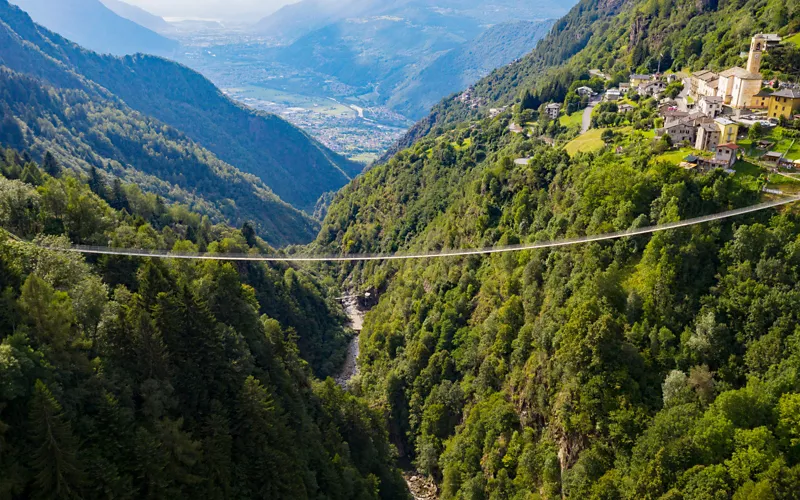
As we hike through the mountains, there’s a good chance we’ll come across a unique type of bridge without even realizing it. These are known as Tibetan bridges, named after their origins in the Himalayas. But what makes them so special?
In this article, we’ll delve into the world of Tibetan bridges, exploring their history, construction, and locations around Italy and beyond.
What Are Tibetan Bridges?
Tibetan bridges are characterized by a three-strand structure consisting of a central cable and two lateral cables, spaced about 1 meter apart. This unique design creates a stable and balanced system, reducing oscillations and making the bridge more secure. The key to their stability lies in the principle that as the tension increases, so does the stiffness of the bridge.
The Origins of Tibetan Bridges
These bridges originated in the Himalayas, where they were used by locals to cross rivers and valleys. Their design was influenced by traditional Tibetan architecture, which emphasized simplicity, functionality, and durability. The use of a three-strand structure allowed for greater stability and safety, making them an ideal solution for traversing challenging terrain.
Tibetan Bridges in Italy
Italy is home to several Tibetan bridges, often found in mountainous regions where these structures were originally used by locals. One notable example can be found in Castelsaraceno, Puglia, which was recently constructed with funding from the Basilicata region.
In Lombardy’s Alta Valtellina, near the Ghiacciaio dei Forni, a scenic path allows hikers to enjoy breathtaking views while crossing a series of Tibetan bridges. This 1995-built trail is not only a natural wonder but also a testament to human ingenuity and the importance of preserving our cultural heritage.
Tibetan Bridges in Switzerland
Just a short distance from Italy lies the picturesque town of Randa, Vallese, Switzerland. Here, you can find the recently inaugurated “Europe Bridge,” a suspended pedestrian bridge that surpasses 500 meters in length and reaches an altitude of 1600 meters above sea level.
However, be warned: this bridge is not suitable for those who suffer from vertigo, as it offers little more than 65 centimeters of clearance between the ground and the walking surface.
The Ponte tibetano Claviere
One of the most famous Tibetan bridges in Italy is located between Cesana and Claviere. This structure consists of three sections: a 70-meter-long initial section, followed by a 408-meter-long suspended bridge, and finally an additional 90-meter-long section.
While not the longest Tibetan bridge, this one is certainly among the most notable, standing at approximately 560 meters in total length. It’s worth noting that there are other bridges of similar length elsewhere, such as the one between Santa Margherita promontory and Vivara island.
History of Tibetan Bridges
The history of Tibetan bridges dates back centuries to the Himalayan region. The first recorded use of these structures was by the indigenous people of Tibet, who used them to traverse rivers and valleys in their mountainous homeland. Over time, Tibetan bridges spread throughout the region, becoming an integral part of local architecture.
In the 19th century, European explorers and traders began to venture into the Himalayas, bringing with them new technologies and ideas that influenced the construction of these bridges. The use of steel cables and wooden beams became more widespread, allowing for longer and sturdier bridges to be built.
Construction of Tibetan Bridges
The construction of a Tibetan bridge requires careful planning and execution. The process begins with surveying the terrain and selecting the ideal location for the bridge. Next, a foundation is laid, often consisting of stone or concrete blocks that provide stability and support.
The next step is to build the cable system, which consists of three main components: a central cable and two lateral cables spaced about 1 meter apart. The central cable provides the primary structural support, while the lateral cables add additional stability and flexibility to the bridge.
Materials Used in Tibetan Bridge Construction
Traditional Tibetan bridges are often built using locally sourced materials, such as wood, stone, and metal. However, modern constructions may employ more advanced materials, like steel cables and concrete blocks.
In Italy, where many of these bridges can be found, the construction process has evolved over time to incorporate new technologies and techniques. For example, the Castelsaraceno bridge was built using a combination of traditional methods and modern engineering techniques.
Cultural Significance of Tibetan Bridges
Tibetan bridges hold significant cultural importance in the regions where they are located. These structures have been passed down through generations, serving as a testament to local ingenuity and craftsmanship.
In Italy, these bridges have become an integral part of the country’s cultural heritage, attracting tourists and locals alike who come to marvel at their beauty and engineering prowess.
Economic Benefits of Tibetan Bridges
Tibetan bridges also offer economic benefits to the regions where they are located. By providing a safe and reliable means of crossing rivers and valleys, these structures enable local communities to connect with neighboring towns and cities, fostering economic growth and development.
In addition, the construction of new Tibetan bridges can create jobs and stimulate local economies, making them an important part of regional development initiatives.
Challenges Facing Tibetan Bridge Construction
Despite their cultural and economic significance, Tibetan bridge construction faces several challenges. One major concern is the environmental impact of these structures on surrounding ecosystems and wildlife habitats.
In Italy, for example, concerns have been raised about the potential disruption to local water sources and habitats caused by the construction of new bridges.
Conclusion
Tibetan bridges may seem like an obscure topic, but they offer a fascinating glimpse into human ingenuity, cultural heritage, and the importance of preserving our natural environment. Whether you’re hiking through the mountains or simply exploring local landmarks, keep an eye out for these unique structures, which are sure to leave you in awe.
Frequently Asked Questions
Q: What is the purpose of Tibetan bridges?
A: Tibetan bridges were originally used to cross rivers and valleys in the Himalayas, providing a stable and secure way to traverse challenging terrain.
Q: How are Tibetan bridges constructed?
A: The three-strand structure consists of a central cable and two lateral cables spaced about 1 meter apart, creating a balanced system that reduces oscillations and increases stability.
Q: Where can I find Tibetan bridges in Italy?
A: Tibetan bridges can be found in various mountainous regions across Italy, including Lombardy’s Alta Valtellina, Puglia’s Castelsaraceno, and other locations.
Q: What is the significance of the “Europe Bridge” in Switzerland?
A: The recently inaugurated “Europe Bridge” is a suspended pedestrian bridge that surpasses 500 meters in length and reaches an altitude of 1600 meters above sea level, offering breathtaking views but also warning against its use for those with vertigo.
Q: Are Tibetan bridges still used today?
A: While their original purpose has been largely superseded by modern infrastructure, Tibetan bridges continue to be appreciated for their cultural significance, architectural design, and natural beauty.
Q: Can I build a Tibetan bridge in my backyard?
A: While it’s technically possible, building a Tibetan bridge may not be the most practical or feasible option, especially considering local regulations, materials, and expertise.
Q: Are there any other notable examples of Tibetan bridges?
A: Yes, there are several other notable examples around the world, including those found in China, Nepal, and other countries where these structures have been used for centuries.


