
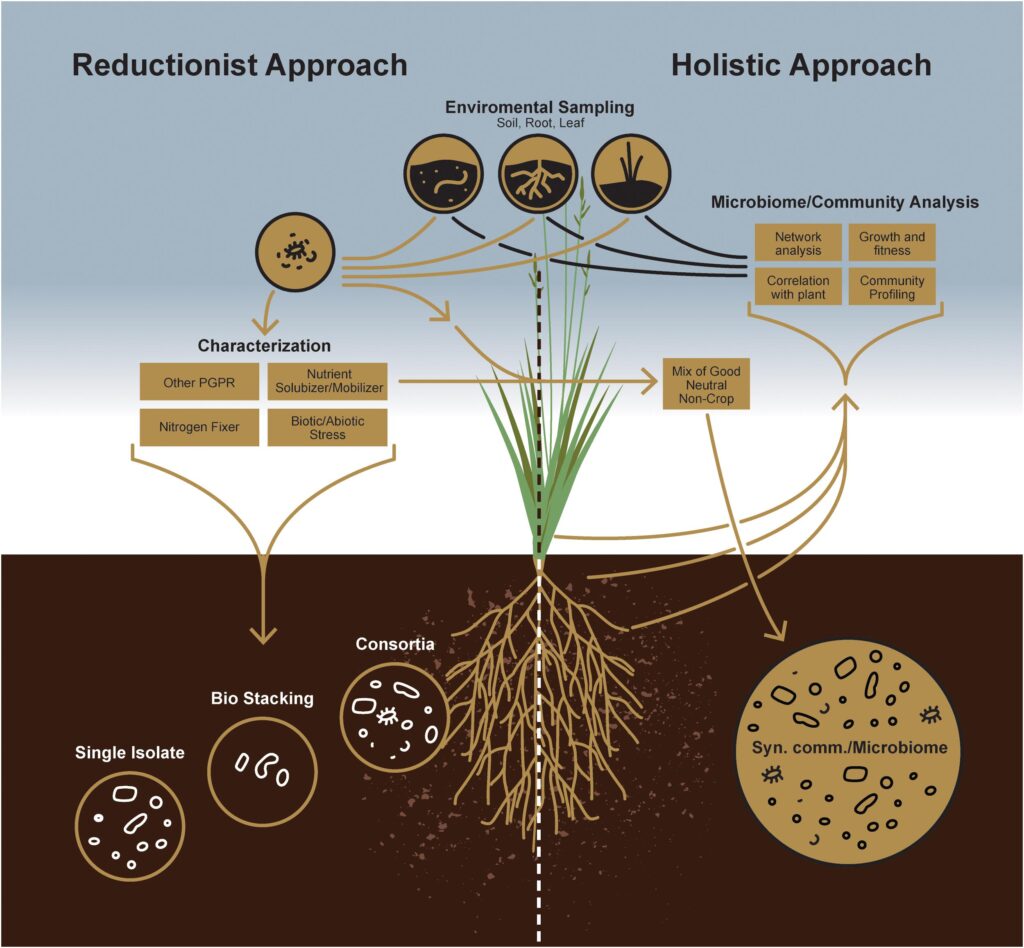
In organic farming, microorganisms play a crucial role in protecting crops. Using living insecticides, farmers are able to combat pest infestations. Fungi, viruses, and bacteria make excellent allies for agriculture. There are various bacterial strains employed for their specificity in crop protection.
Let’s dive into the world of microorganism-plant interactions and explore the different mechanisms of action. For instance, the Bacillus thuringiensis subkurstraki bacterium is able to defeat infestations by attacking the root cause – killing larvae. These bacteria are administered to vegetation in the form of spores and crystals. When ingested by infesting larvae, these crystals break down into toxins that ultimately kill the pest.
But microorganisms aren’t just limited to organic farming; they can also improve yields and stability in any agricultural method. By optimizing microbial communities, crop yields can increase by up to 20% over a period of 20 years, significantly reducing pesticide and fertilizer use.
However, increasing fertilizer and pesticide use is not the only approach for improving crop yields. In fact, this approach has severe environmental consequences. On the other hand, harnessing the power of microorganisms could lead to a whopping 45-70% increase in crop yields! This would have a profound impact on addressing economic and social issues.
To better understand how microorganisms can contribute to agricultural success, we need to explore the complexities of microbial plant interactions. One such study, published by the American Academy of Microbiology, delves into the world of microbes and their potential to feed the world.
The Importance of Microbes in Agriculture
- Natural Pest Control: Microorganisms can be employed as living insecticides to combat pest infestations.
- Improved Crop Yields: By optimizing microbial communities, crop yields can increase significantly.
- Reduced Fertilizer and Pesticide Use: Microorganisms can help reduce the need for synthetic fertilizers and pesticides.
The Science Behind Microbial Plant Interactions
Microbial plant interactions involve complex mechanisms of action, including:
- Competition for Resources: Microbes compete with plants for nutrients and space.
- Plant-Microbe Symbiosis: Plants can form symbiotic relationships with microorganisms to enhance growth and development.
- Pathogen Suppression: Microbes can inhibit the growth of pathogens, reducing disease pressure.
Case Study: The Benefits of Using Microrganismi in Agricoltura
A recent study published by the American Academy of Microbiology highlights the potential for microbes to improve crop yields. By optimizing microbial communities, farmers can increase crop yields by up to 20% over a period of 20 years.
The Future of Agriculture: Harnessing the Power of Microbes
As we move forward, it’s clear that harnessing the power of microbes will play an increasingly important role in agriculture. By understanding how microorganisms interact with plants and optimizing microbial communities, we can create more sustainable and productive agricultural systems.
Frequently Asked Questions (FAQs)
- What are some common types of microorganisms used in agriculture?
- Fungi
- Viruses
- Bacteria
- How do microorganisms interact with plants to improve crop yields?
- Competition for resources
- Plant-microbe symbiosis
- Pathogen suppression
- What are the benefits of using microbes in agriculture?
- Improved crop yields
- Reduced fertilizer and pesticide use
- Enhanced plant growth and development
- How can farmers optimize microbial communities to improve crop yields?
- Conduct soil tests to determine microbial activity
- Implement integrated pest management strategies
- Use microorganisms as living insecticides
Benefits of Using Microorganisms in Agriculture
Using microorganisms in agriculture has numerous benefits, including:
- Reduced Fertilizer and Pesticide Use: Microorganisms can help reduce the need for synthetic fertilizers and pesticides.
- Improved Crop Yields: By optimizing microbial communities, crop yields can increase significantly.
- Enhanced Plant Growth and Development: Microorganisms can enhance plant growth and development by providing essential nutrients.
Methods of Using Microorganisms in Agriculture
There are several methods of using microorganisms in agriculture, including:
- Biological Control: Biological control involves the use of living organisms to control pests.
- Integrated Pest Management (IPM): IPM is a holistic approach to managing pests that incorporates cultural, biological, and chemical controls.
- Microbial Inoculants: Microbial inoculants are used to introduce beneficial microorganisms into the soil.
Challenges and Limitations of Using Microorganisms in Agriculture
While using microorganisms in agriculture has numerous benefits, there are also challenges and limitations to consider:
- Cost: The cost of introducing microorganisms into the soil can be high.
- Regulation: The use of microorganisms in agriculture is regulated by government agencies.
- Safety: There is a risk of unintended consequences when using microorganisms in agriculture.
Conclusion
In conclusion, microorganisms play a crucial role in agriculture. By understanding how microorganisms interact with plants and optimizing microbial communities, we can create more sustainable and productive agricultural systems. The benefits of using microorganisms in agriculture are numerous, including reduced fertilizer and pesticide use, improved crop yields, and enhanced plant growth and development. However, there are also challenges and limitations to consider, such as cost, regulation, and safety.


