
Introduction
Imagine a world without bees. No more honey, no more pollination, and no more beautiful flowers blooming in vibrant colors. This is a scenario that Albert Einstein once described, where humanity would be left with only four years of life without the help of these incredible creatures. Today, we’re not just talking about the importance of bees; we’re also exploring a new frontier: robot bees.
Bees have been on our planet for millions of years, playing a crucial role in maintaining the health of our ecosystem. Without them, many plant species would disappear, and our ecosystems would be severely impacted. But bees aren’t just important for us; they’re also facing numerous threats, including habitat loss, pesticide use, and climate change.
The Importance of Bees
Bees are some of the most fascinating creatures on the planet. They have been at the center of human civilization for thousands of years, providing us with food, honey, and other essential products. Without bees, our lives would be vastly different. They pollinate over 75% of the world’s crop species, including coffee, chocolate, and many fruits and vegetables.
Bees are also incredibly intelligent creatures. They have complex social structures, communicate with each other through intricate dances, and can even solve problems to ensure the survival of their colonies. In fact, bees are so smart that they have been studied extensively by scientists and engineers for their potential applications in fields such as robotics and artificial intelligence.
The Colony Collapse Disorder (CCD)
One of the most significant threats to bee populations is the Colony Collapse Disorder (CCD). This phenomenon has been devastating entire colonies in the United States, leaving researchers scrambling to find a solution. The CCD has already had a profound impact on our food supply, as many crops rely heavily on bee pollination.
The exact causes of the CCD are still unknown, but it’s believed that a combination of factors such as pesticide use, habitat loss, and climate change may be contributing to its severity. Researchers have also noticed that CCD colonies often leave behind “nurse bees,” which are responsible for caring for new bees in the colony. These nurse bees often disappear along with the rest of the colony, leaving researchers wondering what happened to them.
The Quest for Robot Bees
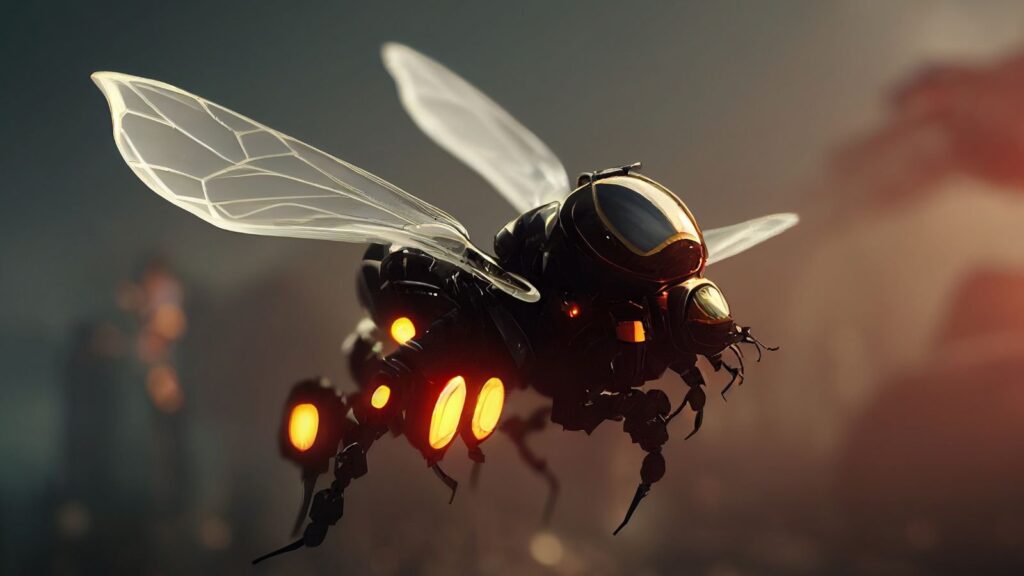
In response to the CCD crisis, researchers at Harvard University and Northeastern University joined forces to create a new generation of bees: robot bees. Dubbed “Micro Air Vehicles,” these tiny robots are designed to monitor and protect real bees, rather than replace them entirely. The goal is to create a symbiotic relationship between humans and bees, where technology complements nature.
The development of robot bees was inspired by the work of Dr. Robby Barbee, a robotics engineer at Harvard University who has been studying bee behavior for years. “I’ve always been fascinated by bees,” he said in an interview with The New York Times. “Their social structure, their communication methods – it’s all so fascinating. And I knew that if we could understand how to replicate some of those behaviors in robots, we might be able to create a new generation of machines that can work together like bees.”
The Science Behind Robot Bees
So how do these tiny robots work? They use artificial muscles to control their flight, mimicking the movements of real bees. But what’s truly innovative about this project is its focus on understanding bee behavior. Researchers want to create a robot that can mimic the social structure and coordination of an alveary (a bee colony). By studying the mentalities of these incredible creatures, they hope to develop a new breed of robots that can work together like bees.
The robots are designed to be small enough to fit inside a hive, where they can observe and learn from the real bees. They use sensors and cameras to gather data on the behavior of the bees, which is then used to improve their own performance. The goal is to create a robot that can not only monitor and protect bee colonies but also help them thrive.
The Benefits of Robot Bees
So what does this mean for us? For one, it could lead to breakthroughs in agriculture and food production. With more efficient pollination, farmers may be able to increase crop yields and reduce waste. It could also have significant implications for our understanding of social behavior and collective intelligence.
Robot bees could also help to mitigate the impact of climate change on bee populations. By monitoring and protecting bee colonies, researchers hope that they can identify areas where human activities are causing harm and develop strategies to address these issues.
Conclusion
As we look to the future, it’s clear that robot bees represent a promising step towards a more harmonious coexistence between humans and nature. While there are still many challenges ahead, researchers are making strides towards creating a new breed of machines that can work together like bees.
The development of robot bees is just one example of how technology can be used to address some of the world’s most pressing environmental issues. By combining advances in robotics, artificial intelligence, and biotechnology, we may uncover new insights into the intricate relationships within our ecosystem.
As Einstein once said, “If I were not a physicist, I would probably be a beekeeper.” The arrival of robot bees is a testament to our growing understanding of the complex web of life that sustains us all. By working together with nature and harnessing the power of technology, we may just create a brighter future for ourselves and for generations to come.
Frequently Asked Questions (FAQs)
- What is the main goal of the Micro Air Vehicles project?
The primary objective is to monitor and protect real bee colonies, rather than replace them entirely. - How do robot bees fly?
They use artificial muscles to control their flight, mimicking the movements of real bees. - Can robot bees pollinate crops?
While they are not designed for this purpose, researchers hope that these robots could potentially assist in improving pollination efficiency. - What inspired the development of robot bees?
The Colony Collapse Disorder (CCD) and concerns about bee health led researchers to explore innovative solutions. - Will robot bees replace real bees entirely?
No, their goal is to work alongside humans to support and enhance bee populations. - How do robot bees interact with their environment?
They are designed to mimic the social structure and coordination of an alveary (bee colony), allowing them to interact with their surroundings in a more natural way. - What are the potential benefits of robot bees for agriculture?
Increased efficiency, improved crop yields, and reduced waste could all be positive outcomes. - Can anyone build or use these robots?
The project is still in its early stages, but researchers hope to make the technology available to researchers and beekeepers in the near future.
Future Directions
As research on robot bees continues to advance, we can expect to see new breakthroughs in this field. Some potential areas of focus include:
- Advanced robotics: The development of more sophisticated robots that can adapt to changing environments and learn from real-world experiences.
- Artificial intelligence: The use of AI algorithms to improve the performance and decision-making capabilities of robot bees.
- Biotechnology: The application of biotechnological techniques, such as genetic engineering, to enhance the health and resilience of bee populations.
By exploring these areas, researchers may be able to create an even more effective and sustainable solution for addressing the challenges facing bee populations today.


