
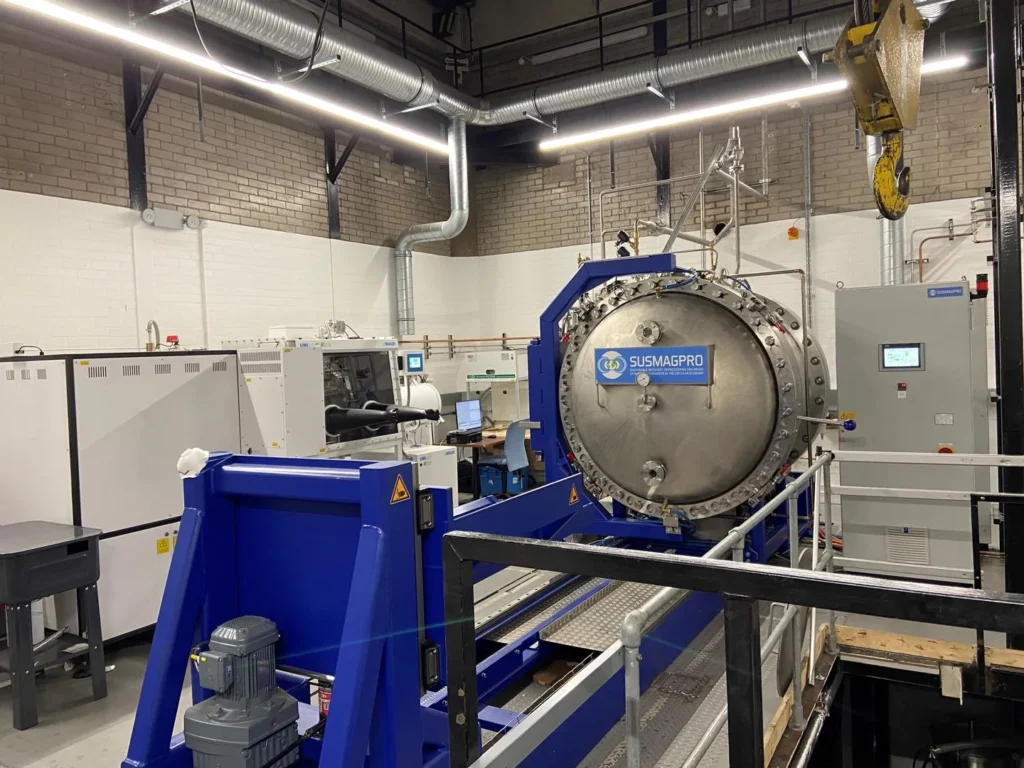
The world is witnessing a significant shift towards sustainable practices, and the recycling of rare earth elements (REEs) is at the forefront of this revolution. Inaugurated today in Ceccano, Italy, the New-RE pilot plant is set to change the game for the industry. This innovative facility will treat over 20 tons of permanent magnets per year, reducing waste and promoting a more circular economy.
The Challenge of Rare Earth Recycling
Rare earth elements are crucial components in modern technology, from electronics to renewable energy systems. However, their extraction has severe environmental consequences, including pollution and depletion of natural resources. The European Union’s Critical Raw Materials Act aims to reduce the EU’s dependence on imported REEs by promoting recycling and innovation.
A New Era for Sustainable Materials
The New-RE pilot plant is a groundbreaking project that combines cutting-edge technology with sustainable practices. Developed in collaboration with seven partners, including Itelyum, Erion, and the University of Aquila, this facility will employ an idrometallurgical process to extract REEs from permanent magnets.
The Idrometallurgical Process
This innovative process uses a solution that can be reused up to five times, minimizing environmental impact. The extracted REEs will be used in various applications, including renewable energy systems and electric vehicles. This technology has the potential to transform the recycling industry, reducing waste and promoting sustainability.
Scaling Up: The INSPIREE Project
The success of the New-RE pilot plant has led to the development of the INSPIREE project, a larger-scale initiative that aims to treat 2,000 tons of permanent magnets per year. This project is part of the LIFE program, which focuses on promoting sustainable practices in Europe.
A Future Without Waste
The recycling of rare earth elements is no longer a niche industry but a critical component of our transition towards a more sustainable future. By closing loops and reducing waste, we can create a more circular economy that benefits both people and the planet. The New-RE pilot plant and the INSPIREE project demonstrate that innovation and sustainability go hand in hand.
The Role of Italy and Europe
Italy has always been at the forefront of innovation, and the recycling of rare earth elements is no exception. With its dynamic industrial landscape and commitment to sustainability, Italy is poised to play a leading role in shaping the future of REE recycling.
Conclusion
The New-RE pilot plant and the INSPIREE project mark a significant milestone in the journey towards sustainable materials management. By embracing innovation and circular practices, we can create a more sustainable future for all. As we look ahead, it’s clear that the ‘mining’ of urban waste will become an increasingly important strategy for reducing our environmental footprint.
Frequently Asked Questions
- What is rare earth recycling?
Rare earth recycling involves the extraction and processing of rare earth elements from recycled materials, such as permanent magnets. - Why is rare earth recycling important?
Rare earth recycling reduces waste, conserves natural resources, and promotes sustainability in various industries. - How does the idrometallurgical process work?
The idrometallurgical process uses a solution that can be reused up to five times to extract REEs from permanent magnets. - What are the benefits of scaling up REE recycling?
Scalable REE recycling reduces waste, conserves natural resources, and promotes sustainability in various industries. - How can Italy and Europe promote sustainable materials management?
Italy and Europe can promote sustainable materials management by investing in innovative technologies, increasing recycling rates, and implementing circular economy policies. - What is the Critical Raw Materials Act?
The Critical Raw Materials Act aims to reduce the EU’s dependence on imported REEs by promoting recycling and innovation. - How does the ‘mining’ of urban waste contribute to sustainability?
Urban mining involves collecting and processing recyclable materials from urban waste streams, reducing the need for primary extraction and minimizing environmental impact. - What is the role of innovation in sustainable materials management?
Innovation plays a critical role in sustainable materials management by developing new technologies and processes that reduce waste and promote circular practices.
The Economic Benefits of Rare Earth Recycling
Rare earth recycling has significant economic benefits, including reducing production costs, increasing resource availability, and creating new job opportunities. By recycling rare earth elements, companies can reduce their dependence on primary sources, minimize environmental impact, and improve their bottom line.
The Environmental Impact of Rare Earth Recycling
Rare earth recycling has a significantly lower environmental impact than traditional mining methods. The idrometallurgical process used in the New-RE pilot plant reduces waste, conserves water, and minimizes greenhouse gas emissions. By adopting sustainable practices, companies can reduce their environmental footprint and contribute to a more circular economy.
The Social Benefits of Rare Earth Recycling
Rare earth recycling has significant social benefits, including creating new job opportunities, promoting economic growth, and improving public health. By increasing recycling rates and reducing waste, companies can contribute to a more sustainable future for all.
Challenges and Limitations
While rare earth recycling has significant benefits, there are also challenges and limitations to consider. These include:
- Scalability: Rare earth recycling is still a relatively niche industry, and scaling up production poses significant technical and economic challenges.
- Regulatory Frameworks: The regulatory frameworks governing rare earth recycling vary widely across countries, creating uncertainty and obstacles for companies operating in this space.
- Public Perception: Public perception of rare earth recycling can be challenging, with some consumers viewing it as a “greenwashing” measure.
Conclusion
The New-RE pilot plant and the INSPIREE project mark a significant milestone in the journey towards sustainable materials management. By embracing innovation and circular practices, we can create a more sustainable future for all. As we look ahead, it’s clear that rare earth recycling will play a critical role in shaping the future of sustainability.
Future Directions
As the industry continues to evolve, there are several areas that require attention:
- Scalable technologies: Developing scalable technologies that can handle large volumes of REEs will be crucial for widespread adoption.
- Regulatory frameworks: Creating robust regulatory frameworks that support rare earth recycling will help drive growth and innovation in the sector.
- Public engagement: Educating the public about the benefits of rare earth recycling will be essential for building support and demand.
Innovative Solutions
Several innovative solutions are being developed to address the challenges facing rare earth recycling. These include:
- Advanced technologies: Developing new technologies that can extract REEs more efficiently and sustainably.
- Recycling infrastructure: Building out recycling infrastructure to handle large volumes of REEs.
- Circular economy models: Creating circular economy models that integrate waste management, material reuse, and recycling.
Conclusion
Rare earth recycling has significant benefits for the environment, economy, and society. By embracing innovation and circular practices, we can create a more sustainable future for all. As we look ahead, it’s clear that rare earth recycling will play a critical role in shaping the future of sustainability.


