
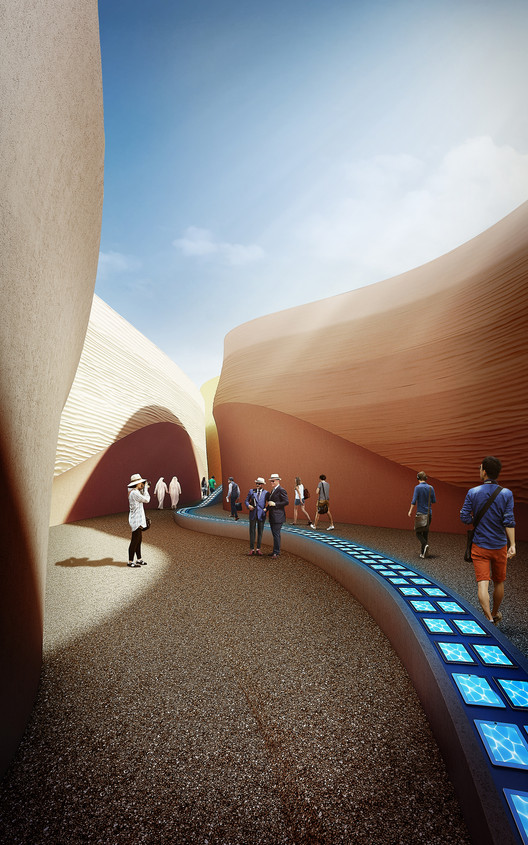
As the curtains opened on the Expo 2015 website yesterday morning, the United Arab Emirates unveiled its stunning pavilion, showcasing its commitment to sustainability and innovation. The project was initiated in March, just a year ago from now, and today, the UAE has finally revealed the blueprint for its new pavilion.
The live streaming event, which included Milan, London, and Abu Dhabi, brought together over 30 countries from around the world. With an innovative web-conference, architects Norman Foster + Partners and UAE Pavilion Commissioner-General Salem Al Ameri presented their groundbreaking space, which will host the history of the UAE: gastronomic experiences, interactive exhibits, augmented reality, culinary presentations, and high-tech solutions.
The pavilion’s theme statement is titled “Food for Thought,” emphasizing the strong relationship between water, food, and energy in the UAE. This concept is reflected in the design, which sets the tone for a sustainable future.
A Home Away from Home: The Pavilion’s Design
Gerard Evenden, Director of Architecture at Foster + Partners, explained that the challenge was to create a building that would thrive in both Milan and Abu Dhabi. “Our goal was not only to design an iconic building but also to build a space that is part of our history and the theme,” he said.
The pavilion’s design takes inspiration from the UAE’s natural landscape, local architecture, and modern designs. The rooftop garden will supply the on-site restaurant with fresh produce, while various clean energy solutions will be employed throughout the pavilion.
The UAE Pavilion’s design is a unique blend of traditional and modern elements, showcasing the country’s rich cultural heritage alongside its commitment to innovation and sustainability. The use of local materials and techniques, such as the incorporation of traditional Arabic architecture into the building’s design, adds an extra layer of depth to the pavilion’s aesthetic.
A Reflection of the UAE’s Commitment to Sustainability
As the Expo 2015 comes to a close, the UAE Pavilion will be dismantled and reassembled in Abu Dhabi. “We had to design thinking about both Milan and Abu Dhabi conditions,” said Gerard Evenden. “It was an incredible architectural challenge!”
The pavilion is more than just a symbol of innovation; it’s a representation of the UAE’s commitment to sustainability. The country aims to reduce its carbon footprint while embracing modern technologies.
In recent years, the UAE has made significant strides in reducing its environmental impact. From implementing new energy-efficient technologies to investing in renewable energy sources, the country is taking steps towards a more sustainable future.
A Taste of the UAE: Gastronomic Experiences and High-Tech Solutions
The pavilion features a unique blend of traditional and modern elements, including gastronomic experiences and high-tech solutions. Visitors can explore the history of the UAE through interactive exhibits, augmented reality experiences, and culinary presentations.
One of the pavilion’s most exciting features is its on-site restaurant, which will serve up local cuisine in an elegant and sophisticated setting. The restaurant’s menu will feature a range of traditional dishes, including kebabs, stews, and salads, all made with fresh ingredients sourced from the pavilion’s rooftop garden.
The pavilion also incorporates high-tech solutions to reduce its environmental impact. From advanced water conservation systems to smart building technologies, the UAE Pavilion is setting a new standard for sustainable design in architecture.
A Look at the Pavilions of Other Countries
While the UAE Pavilion stands out for its unique design, other countries have showcased their own innovative approaches to Expo 2015.
As the Expo 2015 comes to an end in Milan, it’s worth noting that Dubai will take center stage in 2020. The city-state is renowned for its futuristic architecture and commitment to sustainability.
Dubai’s pavilion, designed by Foster + Partners, features a stunning example of sustainable design. The building’s exterior is clad in solar panels, while the interior incorporates advanced water conservation systems.
The pavilion also showcases Dubai’s rich cultural heritage through interactive exhibits and culinary presentations. Visitors can explore the history of the UAE through augmented reality experiences, while enjoying traditional dishes made with locally sourced ingredients.
Frequently Asked Questions
Here are some answers to common questions about the UAE Pavilion at Expo 2015:
Q: What inspired the design of the pavilion?
A: The pavilion’s design takes inspiration from the UAE’s natural landscape, local architecture, and modern designs.
Q: How will the pavilion be powered?
A: Various clean energy solutions will be employed throughout the pavilion to ensure sustainable power. This includes solar panels on the building’s exterior, as well as advanced water conservation systems.
Q: What can visitors expect from the pavilion’s culinary experiences?
A: Visitors can explore the history of the UAE through interactive exhibits, augmented reality experiences, and culinary presentations. The pavilion’s on-site restaurant will serve up local cuisine in an elegant and sophisticated setting.
Q: Will the pavilion remain in Milan after the Expo 2015 ends?
A: The pavilion will be dismantled and reassembled in Abu Dhabi.
Q: What is the theme statement of the pavilion?
A: The theme statement is titled “Food for Thought,” emphasizing the strong relationship between water, food, and energy in the UAE.
Q: How did the pavilion’s design take into account both Milan and Abu Dhabi conditions?
A: The pavilion’s design was influenced by both cities’ climate and architectural styles. This allowed the architects to create a building that would thrive in both environments.
Q: What role will technology play in the pavilion’s sustainability features?
A: High-tech solutions such as clean energy systems, advanced water conservation systems, and smart building technologies will be employed throughout the pavilion to ensure sustainability.
Q: Can visitors explore the history of the UAE through interactive exhibits?
A: Yes, visitors can explore the history of the UAE through interactive exhibits, augmented reality experiences, and culinary presentations.
Q: Will the pavilion’s rooftop garden supply fresh produce for the on-site restaurant?
A: Yes, the pavilion’s rooftop garden will provide fresh produce for the on-site restaurant. This not only reduces the pavilion’s carbon footprint but also showcases the country’s commitment to sustainability.
Conclusion
The United Arab Emirates Pavilion at Expo 2015 is a testament to the country’s commitment to sustainability and innovation. The pavilion’s design takes inspiration from the UAE’s natural landscape, local architecture, and modern designs, showcasing the country’s rich cultural heritage alongside its commitment to embracing new technologies.
As the Expo 2015 comes to an end in Milan, it’s clear that the UAE Pavilion will leave a lasting impact on the world of sustainable design. The pavilion’s unique blend of traditional and modern elements, combined with its high-tech solutions and culinary experiences, make it a truly unforgettable experience for visitors from around the world.
The UAE Pavilion is not just a symbol of innovation; it’s a representation of the country’s commitment to reducing its environmental impact while embracing modern technologies. As we look to the future, it’s clear that the pavilion will inspire a new generation of architects and designers to create sustainable buildings that not only reduce their carbon footprint but also showcase local culture and heritage.
In conclusion, the United Arab Emirates Pavilion at Expo 2015 is a shining example of what can be achieved when innovation, sustainability, and cultural heritage come together. It’s a must-visit destination for anyone interested in architecture, design, or sustainable living.


