
The Environmental Impact of Offshore Wind Farms
The debate surrounding wind farms has been intense. They are said to damage wildlife, produce noise pollution, and cause human health problems, known as “turbine syndrome.” Offshore wind farms have not fared much better in this regard, with fishermen claiming that they take away territory from the fishing industry, while others worry that they may limit the effectiveness of radar systems used for navigation safety.
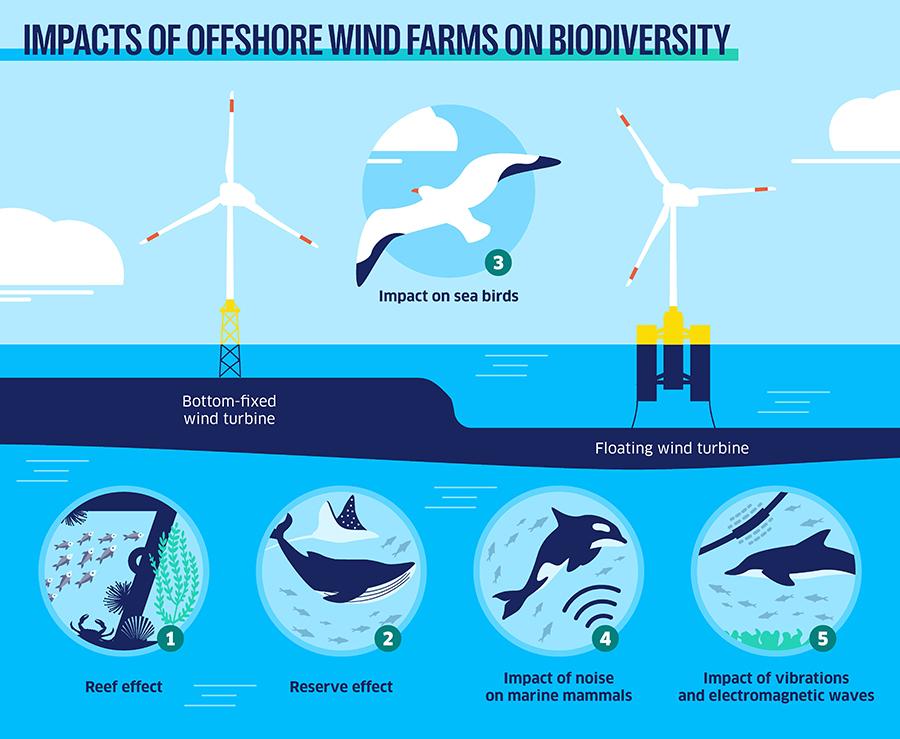
Similar accusations against land-based wind farms are not backed by concrete evidence. In fact, a study conducted by the Marine Institute at Plymouth University suggests that offshore wind farms could have a positive impact on marine life.
According to the research from Plymouth University, offshore wind farms may have a positive effect on marine fauna, as the structures of turbines can create habitats similar to natural barriers. Furthermore, fishing is prohibited in offshore parks, causing fish to “seek refuge” near the park. The energy generated by offshore wind can significantly reduce CO2 emissions without compromising energy security or harming marine life.
“Spreading offshore wind farms is necessary to drastically reduce dependence on fossil fuels and cut harmful emissions that cause ocean acidification, global warming, and all its related consequences. Moreover, spreading offshore wind farms could benefit marine life,” This is what we read in the report (see attached PDF) by Martin Attrill of Plymouth University – Marine Institute
Another positive aspect to consider is that turbines offshore can create an environment with characteristics suitable for certain marine species, such as mussels and crabs. Other concerns about offshore wind farms focus on the fact that their size distorts the coastal landscape.
It’s worth noting that most offshore installations are not visible from coastlines, and it’s more important to combat climate change than preserve something as subjective as a “pleasant view.” For example, I love turbines! Marine life suffers due to ocean acidification, just like humans do with climate change. That’s why we need to focus on clean sources like wind power. Moreover, the negative impact of ocean acidification and climate change on human health should not be underestimated.
What are Offshore Wind Farms?
Offshore wind farms are a type of renewable energy facility located in the ocean, typically several kilometers from the coast. They consist of turbines that harness wind energy to generate electricity. The energy produced is then transmitted back to the power grid.
Benefits of Offshore Wind Farms
- Reduces dependence on fossil fuels
- Cuts harmful emissions
- Can create habitats for marine species
Challenges and Concerns
- Potential impact on fishing industry and marine life
- Limited visibility from coastlines
- Distortion of coastal landscape
Conclusion
The debate surrounding offshore wind farms is complex. While there are valid concerns about their potential impact on the environment, research suggests that they could have a positive effect on marine life and reduce our reliance on fossil fuels.
Frequently Asked Questions
- What are the main benefits of offshore wind farms?
- Reduces dependence on fossil fuels
- Cuts harmful emissions
- Can create habitats for marine species
- How do offshore wind farms affect fishing industry and marine life?
- Potential impact on fishing industry and marine life due to restricted area around the turbines
- Can offshore wind farms be seen from coastlines?
- Most offshore installations are not visible from coastlines, but they can still have an impact on coastal ecosystems.
- How do offshore wind farms contribute to reducing greenhouse gas emissions?
- Offshore wind power can significantly reduce CO2 emissions without compromising energy security or harming marine life.
- What is the current state of research on the environmental impact of offshore wind farms?
- Research suggests that offshore wind farms could have a positive effect on marine life and reduce our reliance on fossil fuels.
Sources
- Plymouth University – Marine Institute
- Martin Attrill’s report


