
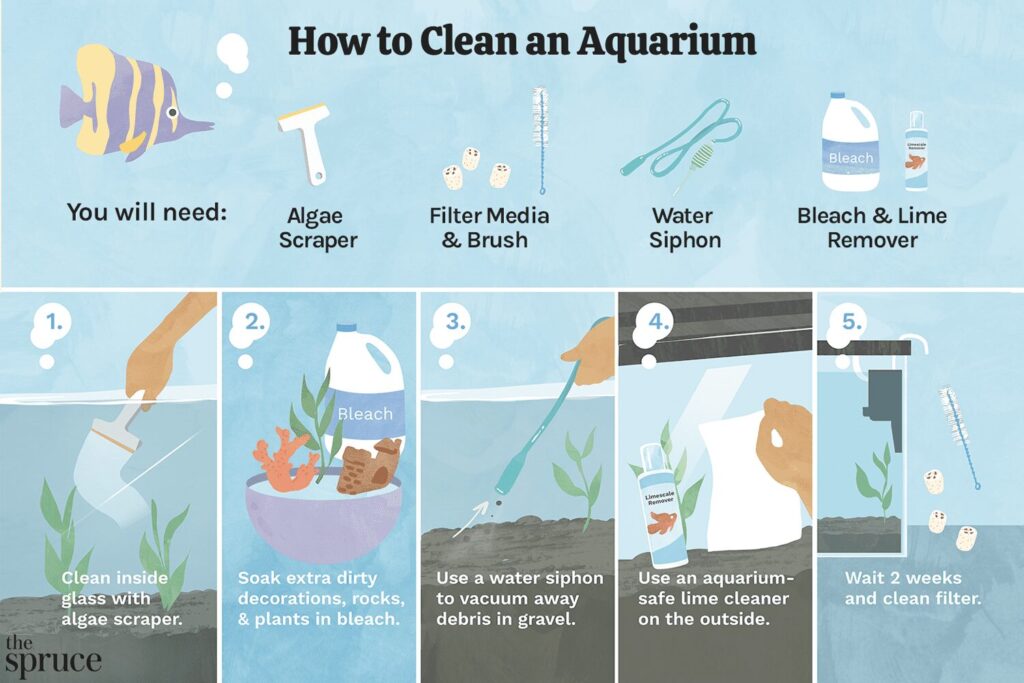
Maintaining the cleanliness of our aquariums is crucial for ensuring the well-being of the animals that inhabit them, whether they are invertebrates, tropical fish, or plants. A clean and well-maintained aquarium not only promotes a healthy environment for your aquatic life but also prevents the buildup of toxins, waste products, and disease-causing bacteria.
In this article, we will discuss the proper cleaning techniques and methods to keep your aquarium clean and thriving. From daily maintenance tasks to deep cleaning procedures, we will cover everything you need to know to keep your aquarium in top shape.
Aquarium Accessories
To perform daily operations on a clean and efficient manner, it’s highly recommended to have a basic set of accessories such as plant tweezers, algae scrapers, and cleaning kits for glassware. These tools can help you with various tasks like trimming algae, pruning plants, and removing debris from the aquarium.
[Image: Aquarium Accessories]
Cleaning an Empty Aquarium
Cleaning an empty aquarium is the simplest process. You won’t have to worry about transferring plants and fish to other tanks or stabilizing the substrate used by the plants. To clean an empty aquarium, simply use a biological detergent specifically designed for aquarium cleaning. This type of detergent is non-toxic and safe for all aquatic life.
Never use common household cleaners, anticalcaries, or detergents on your aquarium. Any residue left behind will contaminate the water and harm future inhabitants.
If you can’t afford a biological detergent, you can clean the interior of an empty aquarium with dechlorinated water. However, keep in mind that this method may not be as effective as using a commercial cleaning product.
Using Dechlorinated Water
Dechlorinated water is a common alternative to commercial cleaning products for empty aquariums. To make dechlorinated water, simply remove the chlorine and chloramines from tap water by letting it sit for 24 hours before use.
You can also use a dechlorinator specifically designed for aquariums to eliminate chlorine and chloramines. These devices are available at most pet stores and can be installed on your tap water supply.
Washing Outer Glass Surfaces
The outer glass surfaces of your aquarium can be washed using any cleaning product you like, such as dish soap or glass cleaner. Make sure to rinse the surfaces thoroughly after cleaning to remove any residue.
Cleaning with Chemical Agents
If you’re dealing with a heavily contaminated aquarium that requires deep cleaning, chemical agents can be used. However, this method should only be employed when necessary, such as in the case of an old and unused aquarium that has been severely impacted by calcareous deposits and dead organisms.
In 2013, the CIR (Club Ittiologico Romano) of Rome successfully restored a school aquarium using chemicals to remove years’ worth of calcium buildup.
Here’s a list of materials used for cleaning:
• Rubber gloves
• Non-abrasive sponges
• 2 liters of acid muriatico (concentrate of 15%)
• Water for rinsing
The cleaning process should be carried out outdoors, ideally near a garden sink. Remove all parts from the aquarium and rinse thoroughly with water before proceeding.
To avoid inhaling harmful fumes when using acid, make sure to wear protective gear in well-ventilated areas.
When working with acids, it’s essential to handle them with care, as they can cause skin irritation and damage clothing.
Safety Precautions
When cleaning your aquarium, always follow these safety precautions:
• Wear rubber gloves to prevent skin contact with chemicals.
• Use a non-abrasive sponge or cloth to avoid scratching the glass surfaces.
• Make sure the area is well-ventilated when working with acids.
• Avoid getting acid on your skin or in your eyes.
• Never clean an aquarium indoors, as the fumes from acids can be hazardous to human health.
Deep Cleaning Techniques
Deep cleaning involves removing debris and waste products from the substrate, decorations, and other areas of the aquarium. Here are some techniques you can use:
- Siphoning: Use a siphon hose to remove waste products and debris from the substrate.
- Agitating: Agitate the gravel and substrate to loosen any debris or waste products.
- Pruning: Prune plants to prevent algae growth and remove dead plant material.
Maintaining Your Aquarium
Once you’ve deep cleaned your aquarium, it’s essential to maintain its cleanliness on a regular basis. Here are some tips:
• Regularly clean the glass surfaces of the aquarium using a cleaning solution.
• Change 10-20% of the water in the aquarium every week to prevent waste buildup and maintain optimal water quality.
• Clean the substrate and decorations regularly to remove debris and waste products.
• Monitor your aquarium’s water parameters and make adjustments as necessary.
Conclusion
Cleaning an aquarium is an essential part of maintaining its health and well-being. By following these techniques and guidelines, you can keep your aquarium clean and thriving, ensuring a healthy environment for your aquatic life. Remember to always follow safety precautions when working with chemicals, and never hesitate to reach out if you have any questions or concerns about aquarium maintenance.
Common Mistakes to Avoid
There are several common mistakes that aquarium owners make when cleaning their tanks. Here are some of the most common ones:
- Over-cleaning: Don’t over-clean your aquarium, as this can cause stress to your aquatic life.
- Using harsh chemicals: Never use harsh chemicals or abrasive cleaners on your aquarium, as these can damage the glass surfaces and harm your aquatic life.
- Not changing water regularly: Failure to change water regularly can lead to a buildup of waste products and toxins in the aquarium.
By avoiding these common mistakes, you can ensure that your aquarium remains clean and healthy for years to come.
Tips for Aquarium Owners
Here are some additional tips for aquarium owners who want to keep their tanks clean and well-maintained:
- Regularly test water parameters: Regularly testing your water parameters can help identify any issues with the water quality, allowing you to make adjustments as necessary.
- Keep a cleaning schedule: Keeping a cleaning schedule can help ensure that you’re maintaining your aquarium regularly and preventing waste buildup.
- Stay organized: Keeping your aquarium supplies organized can make it easier to find what you need when you need it.
By following these tips, you can keep your aquarium clean and thriving for years to come.


