
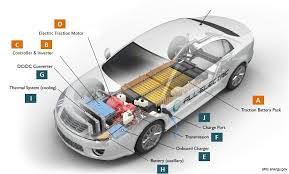
The Components of an Electric Vehicle
When it comes to understanding what makes an electric vehicle tick, some things might be more obvious than others. For instance, the fuel tank is replaced by a battery system capable of providing power to the motor, eliminating the need for combustion and therefore no exhaust pipe (hence why electric cars don’t have a muffler!).
However, this raises a fundamental question: what are the essential components that allow an electric vehicle to function similarly to a conventional gasoline-powered car?
In the design of an electric vehicle, there are several key components that must be present. We’ll explore these in more detail below.
1. Key Components of an Electric Vehicle
To summarize, the following are the fundamental components required for an electric vehicle:
- Battery System: This is where the energy is stored and released to power the motor.
- Motor: The component responsible for converting electrical energy into mechanical energy.
- Inverter: Converts direct current from the battery system into alternating current for the motor.
- Regulator: Manages the flow of power between the inverter, battery, and motor.
These components work together to enable an electric vehicle to operate efficiently and effectively.
2. A Brief History of Electric Vehicles
The concept of electric vehicles dates back to the late 19th century. In 1899, Belgian inventor Camille Jenatzy became the first person to drive an electric car at a speed of over 100 km/h. However, by the early 1900s, gasoline-powered cars had gained popularity due to technological limitations and infrastructure issues.
Despite this setback, electric vehicles have continued to evolve and improve over the years. Today, they offer a more environmentally friendly alternative to traditional fossil-fuel-powered cars.
3. Advances in Battery Technology
One of the key factors that has contributed to the resurgence of interest in electric vehicles is advancements in battery technology. Batteries have become increasingly efficient and powerful, enabling electric vehicles to travel farther on a single charge.
Currently, there are several types of batteries being used in electric vehicles:
- Lithium-Ion (Li-ion) Batteries: These are the most common type of battery used in electric vehicles.
- Nickel-Metal Hydride (NiMH) Batteries: These batteries are often used in hybrid electric vehicles due to their high energy density and long cycle life.
While lithium-ion batteries continue to dominate the market, researchers are exploring alternative technologies like sodium-air batteries and solid-state batteries.
4. The Role of the Inverter
The inverter plays a critical role in converting direct current from the battery system into alternating current for the motor. This process is crucial for ensuring efficient energy transfer between the battery, motor, and other components.
In an electric vehicle, there are two types of inverters:
- Three-Phase Inverters: These inverters convert direct current to three-phase alternating current.
- Single-Phase Inverters: These inverters convert direct current to single-phase alternating current.
The choice of inverter depends on the specific application and requirements of the electric vehicle.
5. Regulator: Managing Power Flow
The regulator is responsible for managing the flow of power between the inverter, battery, and motor. This includes tasks such as:
- Voltage Regulation: Maintaining a stable voltage output from the battery system.
- Current Regulation: Adjusting the amount of current being supplied to the motor.
A well-designed regulator ensures efficient energy transfer and optimal performance from the electric vehicle.
6. The Importance of Reducing Weight
Reducing the weight of an electric vehicle is crucial for improving fuel efficiency, range, and overall performance. To achieve this, manufacturers often use lightweight materials like aluminum and carbon fiber.
In addition to reducing weight, manufacturers also strive to minimize energy consumption by optimizing system design and using advanced technologies like regenerative braking.
7. The Benefits of Electric Vehicles
Electric vehicles offer several benefits over traditional fossil-fuel-powered cars:
- Zero Emissions: Electric vehicles produce zero tailpipe emissions, reducing greenhouse gas emissions and air pollution.
- Lower Operating Costs: Electric vehicles are generally cheaper to run, with lower fuel costs (electricity is often less expensive than gasoline) and reduced maintenance needs.
- Improved Performance: Electric vehicles tend to have faster acceleration and a smoother ride due to the instant torque provided by their electric motors.
Overall, electric vehicles offer an attractive alternative to traditional fossil-fuel-powered cars for those looking to reduce their environmental impact while also saving money on fuel costs.
8. The Future of Electric Vehicles
As technology continues to evolve, we can expect to see even more efficient and capable electric vehicles hit the market. Advances in battery technology, improved manufacturing processes, and innovative designs will all contribute to making electric vehicles an increasingly popular choice for drivers around the world.
Whether you’re looking to upgrade your current vehicle or purchase a new one, electric vehicles are definitely worth considering. With their impressive range, reduced emissions, and lower operating costs, they offer a compelling alternative to traditional fossil-fuel-powered cars.
9. Conclusion
In conclusion, an electric vehicle consists of several key components that work together to enable efficient and effective operation. From the battery system to the regulator, each component plays a critical role in ensuring optimal performance and range.
As technology continues to advance, we can expect to see even more innovative solutions emerge, driving growth and adoption of electric vehicles worldwide.
10. Final Thoughts
In today’s world, where environmental concerns and economic considerations are increasingly important, electric vehicles offer an attractive solution for drivers seeking a sustainable and cost-effective transportation option.
The development of electric vehicles is a rapidly evolving field, with new technologies and innovations emerging regularly. As the demand for electric vehicles continues to grow, it’s likely that we’ll see even more exciting developments in the years to come.
Whether you’re a seasoned car enthusiast or just starting to explore your options, electric vehicles are definitely worth considering. With their impressive range, reduced emissions, and lower operating costs, they offer a compelling alternative to traditional fossil-fuel-powered cars.
In addition to these benefits, electric vehicles also have a positive impact on the environment. By reducing greenhouse gas emissions and air pollution, electric vehicles play an important role in mitigating the effects of climate change.
Overall, electric vehicles are a great choice for drivers looking for a sustainable and cost-effective transportation option. With their impressive range, reduced emissions, and lower operating costs, they offer a compelling alternative to traditional fossil-fuel-powered cars.


