
Have you ever heard of people who are afraid of their own hands or the shape of a word? While phobias may seem like they come out of a science fiction movie, they can have a significant impact on people’s lives. In this article, we’ll delve into the world of phobias, exploring what they are, how to recognize them, and some of the most unusual ones.
What is a Phobia?
A phobia is an intense, irrational fear of something that may seem harmless or even beneficial. For example, someone with a fear of heights might experience panic when looking at pictures of mountains or buildings. This type of fear can be so overwhelming that it interferes with daily life.
How to Recognize a Phobia
Identifying a phobia can be challenging, especially if the person is hiding their true feelings. Some common physical reactions to a phobia include:
- Intense sweating and trembling
- Rapid heartbeat (tachycardia)
- Difficulty breathing or rapid breathing
- Fearful expressions
How Do Phobias Develop?
Phobias can be “innate,” meaning they are inherited from one’s parents, or developed as a result of a traumatic experience. In some cases, the fear may not seem to have an obvious cause.
Overcoming a Phobia
The only way to overcome a phobia is through gradual exposure to the object or situation causing the fear. For example, someone afraid of flying might start by looking at pictures of airplanes, then gradually work their way up to riding in a small plane, and eventually board a commercial flight.
Types of Phobias
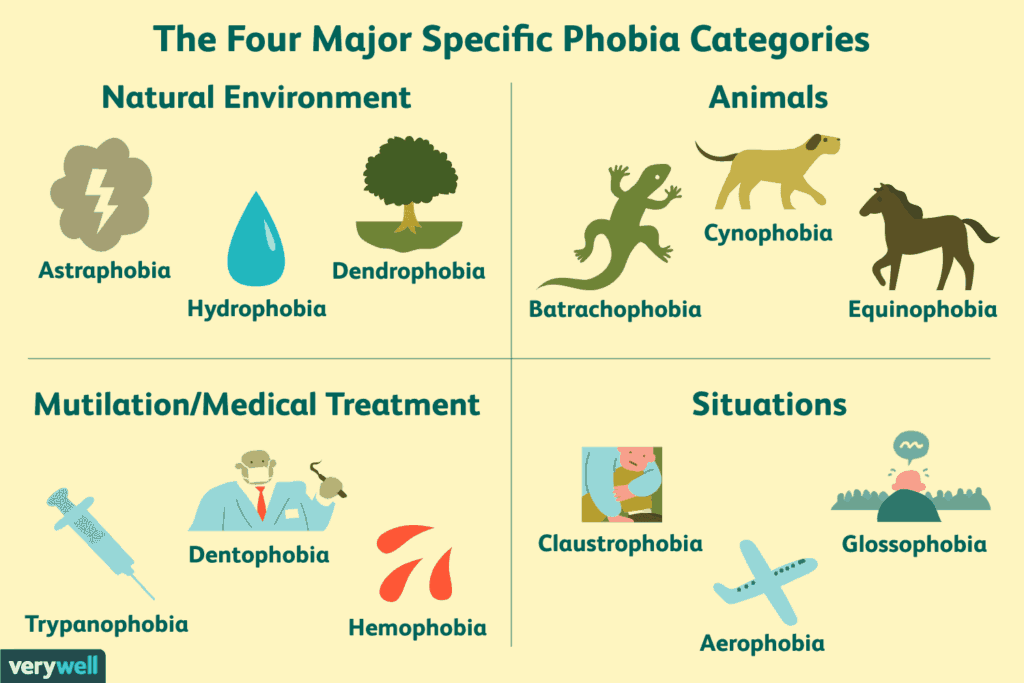
Phobias can be divided into two main categories: social phobias and specific phobias. Social phobias involve fears related to humiliation or abandonment, while specific phobias are linked to environments, objects, people, or situations.
Some unusual phobias include:
- Nomophobia: the fear of being disconnected from the internet
- Chirophobia: the fear of one’s own hands
- Geniophobia: the fear of the chin
The 10 Weirdest Phobias
While it’s difficult to rank phobias, here are ten unusual ones:
- Deipnophobia: the fear of talking about food at meals
- Hipopotomonstrosesquipedaliophobia: the fear of long words
- Turophobia: the fear of cheese
- Omphalofobia: the fear of the navel
- Noctophobia: the fear of night or darkness
- Arachibutriophonia: the fear that butter from peanuts will stick to one’s palate
- Aulophoria: the fear of flutes
- Metrophobia: the fear of poetry
- Pentaphobia: the fear of stepmothers or stepfathers
- Zelophobia: the fear of jealousy
Conquering Your Fears: A Guide to Overcoming Phobias
For those who struggle with phobias, there are resources available to help. The book “Oltre i limiti della paura” (Beyond the Limits of Fear) by Giorgio Nardone offers a comprehensive guide to understanding and overcoming phobias.
Additional Resources:
- How to overcome fear of emptiness
- The impact of music on the brain
- Natural remedies for arachnophobia
- Understanding binge watching
By exploring the world of phobias, we can better understand ourselves and others. Whether you’re afraid of heights or have a more unusual phobia, recognizing and addressing these fears can lead to a more fulfilling life.
Frequently Asked Questions
Q: What is the most common phobia?
A: The most common phobia varies depending on the source, but social phobias are often cited as being among the most prevalent.
Q: Can I overcome a phobia on my own?
A: While it’s possible to make progress without professional help, seeking guidance from a therapist or counselor can significantly increase success rates.
Q: Are all phobias mental health conditions?
A: Phobias can be classified as anxiety disorders, which are recognized by the Diagnostic and Statistical Manual of Mental Disorders (DSM-5).
Q: How do I know if I have a phobia?
A: If you experience intense fear or discomfort in response to a specific stimulus and it interferes with daily life, consult a mental health professional for evaluation.
Q: Can technology help overcome phobias?
A: Yes, virtual reality therapy, exposure therapy apps, and other digital tools can aid in the process of overcoming phobias.
Q: Are all phobias equally debilitating?
A: No, some phobias can have a more significant impact on daily life than others. Social phobias, for instance, may affect relationships and work performance more severely than specific phobias.
Q: Can I still enjoy activities if I have a phobia?
A: Absolutely! Many people with phobias find ways to participate in their chosen hobbies or interests while managing their fears.
Q: Are there any famous people who suffered from phobias?
A: Yes, several notable individuals have spoken publicly about their struggles with phobias. For example, actress Julia Roberts has talked openly about her claustrophobia.


